


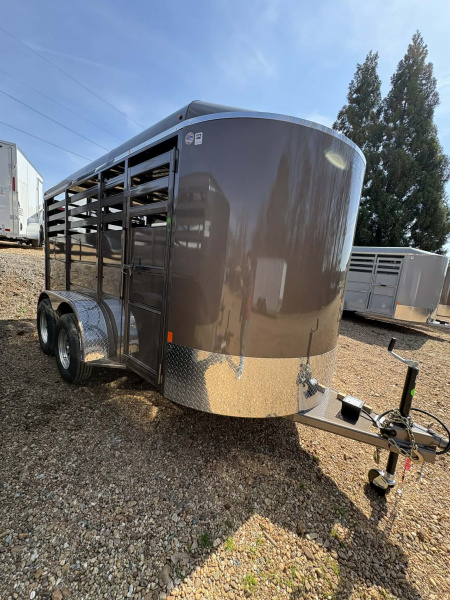
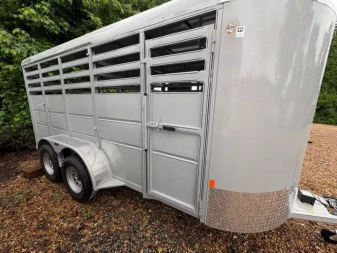
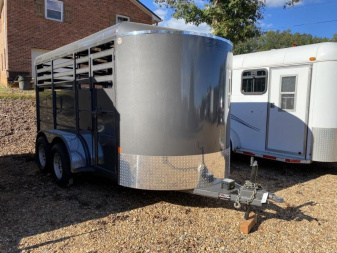
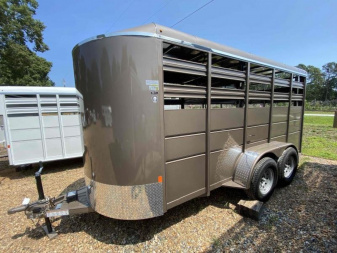
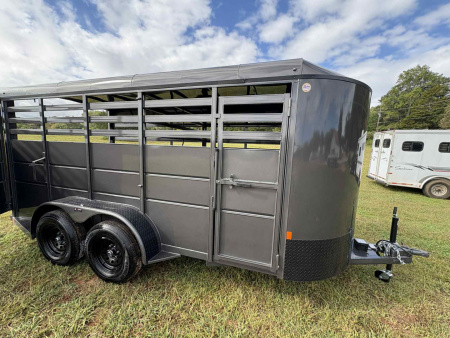
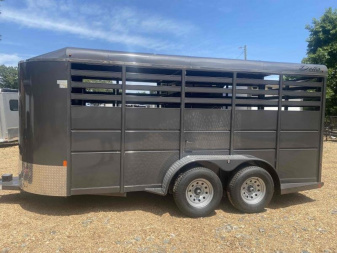
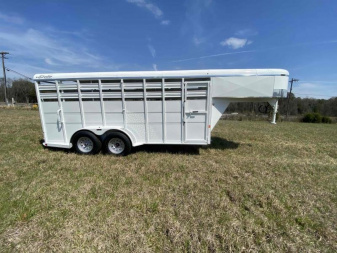
Livestock trailers help you transport cattle, horses, goats, and other animals with better safety, airflow, and control on the road. Choose a livestock trailer that fits your towing vehicle and the demands of your day-to-day hauling.
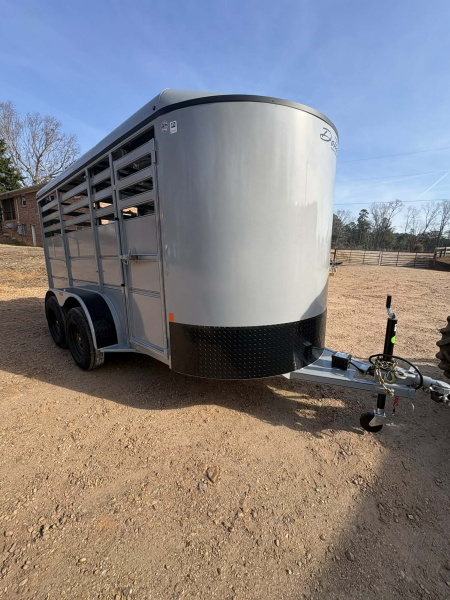
What to consider when buying a livestock trailer
Whether you're running cattle to market twice a month or hauling a few show hogs for 4-H, these features can affect animal safety, stress levels, and how smoothly your operation runs.
- Ventilation: Side slats, adjustable vents, and open-top designs help move air through the trailer, keeping animals cooler and reducing respiratory stress on longer hauls or in summer heat.
- Interior dividers: Removable or swing gates let you separate animals by size, species, or temperament, which prevents injuries and makes loading easier.
- Rear door style: Swing gates, sliding gates, and roll-up doors each handle differently—some are better for tight spaces, speed, or safer handling.
- Interior height: Cattle and larger livestock typically require at least 6'6" of headroom, but smaller livestock can manage less.
How to choose the right size livestock trailer
Trailer size is measured by interior length and width. The right fit depends on what animals you're hauling, how many head, and how often you make trips. Too small means overcrowded animals or multiple trips. Too large adds weight, fuel costs, and harder maneuvering.
10-16' trailers for small herds or occasional hauling
Trailers in the 10ft to 16ft range work well for hobby farmers, 4-H and FFA families, or anyone moving a handful of sheep, goats, hogs, or calves. A 10ft trailer is compact enough to tow with a half-ton truck and easy to back into tight spaces.
20-24' trailers for working ranches or farms
For routine trips to market or moving 6 to 12 head at a time, trailers in the 20ft to 24ft range hit a practical balance. This size handles most working ranch and farm needs without requiring a commercial driver's license in most states.
28' and longer for larger operations
Trailers 28ft and longer suit feedlot operations, commercial haulers, and ranchers moving large groups over distance. Confirm your tow vehicle's capacity and check whether your combined weight triggers CDL requirements in your state. These trailers also require more room to turn and park.
Pro tip: Think about future herd growth when sizing your trailer. Buying slightly larger now can save you from needing a second trailer down the road.
Bumper pull vs. gooseneck livestock trailers
The hitch style you choose affects stability, maneuverability, and what kind of tow vehicle you'll need.
Choose a bumper pull livestock trailer when:
- You're hauling a small number of animals, typically 2 to 4 head
- Your tow vehicle is a half-ton truck or SUV with a standard receiver hitch
- You want tight-space maneuverability and easy storage
- You're newer to livestock hauling and want a simpler setup
Choose a gooseneck livestock trailer when:
- You're hauling larger herds or heavier animals like mature cattle
- You make frequent or long-distance trips
- Your tow vehicle is a three-quarter-ton or one-ton truck with a gooseneck hitch installed
- You want better stability and a tighter turning radius
| Feature | Bumper Pull | Gooseneck |
| Typical capacity | 2–6 head | 6–20+ head |
| Tow vehicle | Half-ton truck or SUV | ¾-ton to 1-ton truck |
| Stability | Good for lighter loads | Better weight distribution |
| Maneuverability | Easier in tight spaces | Tighter turning radius |
| Upfront cost | Lower | Higher |
Owning vs. renting a livestock trailer
If you're hauling animals once or twice a year, renting avoids upfront costs, maintenance, and storage needs. It works well for one-time moves or when you're unsure how often you'll haul.
For working farms and ranches, ownership is more practical. Your trailer is available whenever you need it—no scheduling conflicts or last-minute scrambling. You can also customize the interior with dividers, mats, or tie rings to fit your operation.
- Owning: Better long-term value, always available, customizable, builds equity
- Renting: Lower upfront cost, no maintenance, good for occasional hauls
New vs. used livestock trailers
A quality used livestock trailer can save you thousands upfront while still delivering 10 to 15 years of reliable service when properly maintained. You'll find a wide selection of proven models at lower price points, which works well for budget-conscious operations.
Buying new gives you newer features, full manufacturer warranties, and sometimes the ability to customize details. If you're building a long-term operation or need specific features that are hard to find used, new trailers offer peace of mind.
Both options have their place depending on your budget, timeline, and how you plan to use the trailer.
Why buy a livestock trailer from Ken Feagin Truck & Trailer?
Customers across the Southeast trust our experience and ability to match you with the trailer you need. When you buy from us, you get:
- Deep roots in working trades, built on a lifetime in the horse, rodeo, and automotive business
- A large in-stock selection of new and pre-owned enclosed cargo trailers in a range of sizes and configurations
- Meticulously serviced and inspected inventory, so every pre-owned trailer is ready to haul when it leaves the lot
- Trusted trailer brands known for consistent build quality
- Competitive pricing backed by industry knowledge and long-term manufacturer relationships
Stop by our Campobello, SC location off exit 5 on I-26, or give us a call to talk through what you need. We're happy to answer questions and help you make a confident decision.