


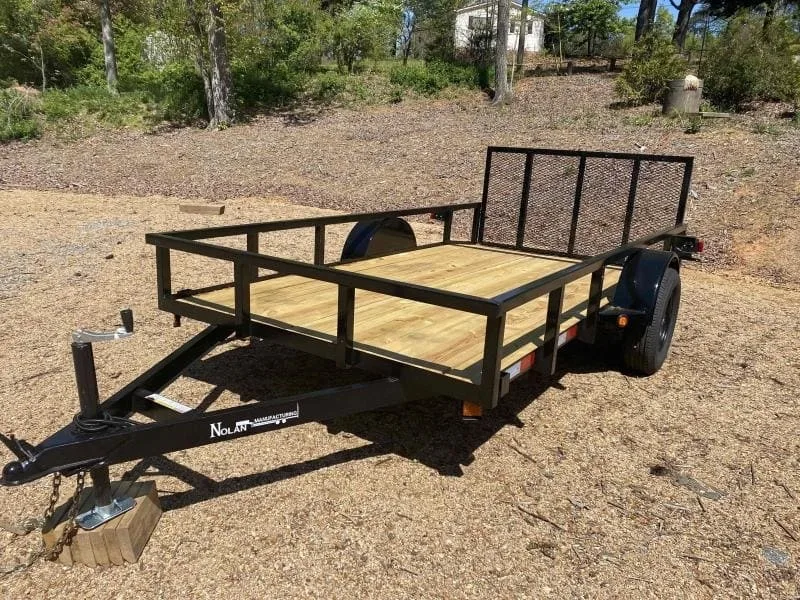
If you're a landscaper, your business depends on having a trailer that’s right for the job. Whether you're hauling heavy equipment or dirt, bark, and brush, you’ll need a durable, versatile trailer that's sized and designed to hold everything you need.
This guide covers the main trailer types landscapers use, how to match size and features to your operation, and what to look for so you buy once and get back to work.
Best landscape trailers for your lawn care business: open vs. enclosed vs. dump
What is a landscape trailer?
A landscape trailer is a towable trailer built specifically for lawn care and landscaping work. Compared to general utility trailers, landscape trailers typically feature lower deck heights for easier mower loading, built-in trimmer racks, and ramp designs that work well with wheeled equipment.
How much do landscaping trailers cost?
Landscaping trailer prices vary depending on the type, size, capacity, and features. Here are the typical price ranges for popular types of landscaping trailers:
- Dump trailers – $7,000 to $16,000 (depending on factors like size, ramps, weight capacity, and construction, as well as whether or not you need a scissor lift)
- Open utility trailers – $2,000 to $8,000 (based on the year, size, axles, and other factors)
- Enclosed cargo trailers – $3,000 to $12,000
- Car haulers – $4,000 to $15,000 (High-end models with added features or larger sizes can exceed this range.)
- Gooseneck trailers – $5,000 to $10,000 for basic models
- Tilt trailers – Smaller models start around $3,000 to $5,000. Larger or more specialized tilt trailers can range from $6,000 to $15,000 or more.
If you're working with a tighter budget or want to get on the road faster, used trailers at a discounted rate offer solid value without the new-trailer price tag.
How to finance a landscape trailer
If you're not paying cash upfront, here's how to approach trailer financing:
- Check your credit and budget. Know what monthly payment works for your operation before you start shopping.
- Compare loan terms. Shorter terms mean higher payments but less interest paid overall. Longer terms reduce monthly costs but increase total financing charges.
- Factor financing into job pricing. Calculate how much additional revenue the trailer will generate and whether it covers the monthly payment.
Ken Feagin Truck and Trailer offers financing options that let you spread payments over time while putting your trailer to work immediately. We'll walk you through the process and help you find a payment structure that makes sense for your operation.
Types of landscape trailers
| Trailer Type | Best For | Weather Protection | Typical GVWR Range |
| Open Utility | Daily mowing routes | None | 2,990–7,000 lbs |
| Enclosed Cargo | Tool security, overnight storage | Full | 2,990–14,000 lbs |
| Dump | Material hauling, debris removal | None | 7,000–16,000 lbs |
| Equipment | Skid steers, excavators | None | 10,000–14,000 lbs |
| Tilt | Low-profile heavy equipment | None | 7,000–14,000 lbs |
Landscapers can choose from several trailer styles depending on equipment size, budget, and daily hauling patterns. Each type serves a different purpose, and understanding the tradeoffs helps you avoid buying more trailer than you actually use—or not enough for the work you're doing.
Open utility landscaping trailers
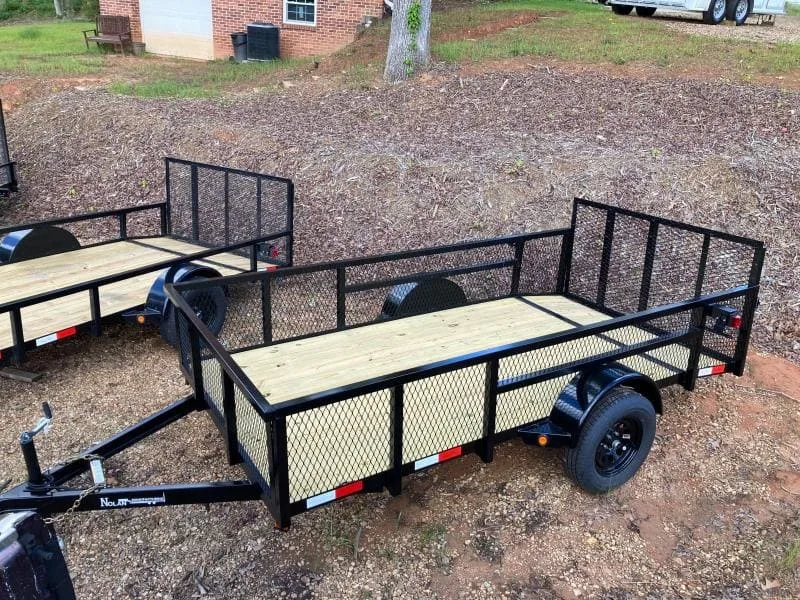 Open utility trailers are the most common and affordable option for lawn service work. With no walls or roof, they provide easy access from all sides, making loading and unloading mowers straightforward. Open trailers are also lightweight, easy to maneuver, and less affected by wind on a highway (which is also a plus for your gas mileage).
The tradeoff is zero weather protection (without a tarp) and visible equipment that can attract theft. If you're parking overnight at job sites or in unfamiliar areas, that's worth thinking through before you buy.
Enclosed landscaping trailers
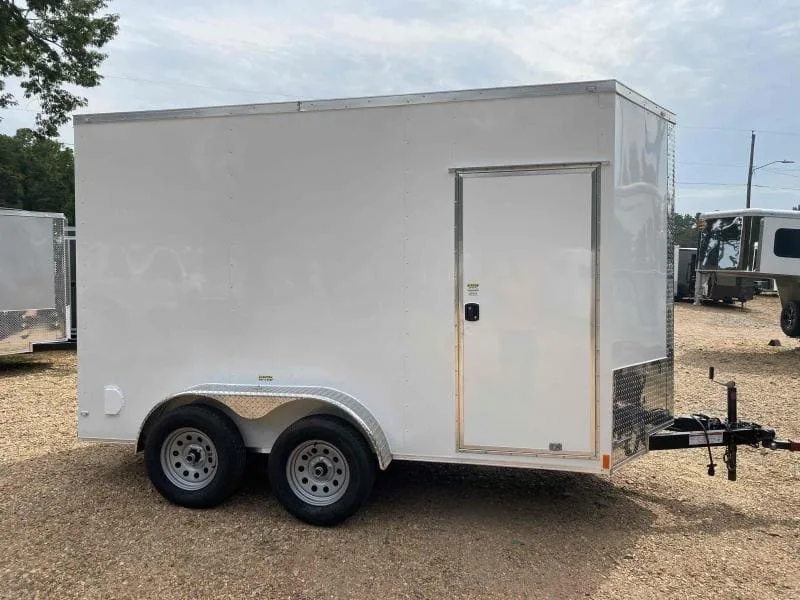 Enclosed trailers offer lockable security and full weather protection for tools and equipment. (Keep in mind, however, that enclosed trailers can be stolen by someone with a truck hitch. It's a smart idea to invest in trailer security accessories like wheel locks.) Many landscapers also take advantage of enclosed trailers by using them as mobile storage units, keeping everything organized and out of sight when parked.
Considerations for an enclosed trailer include the higher upfront cost and added weight, which reduces your available payload capacity. Loading tall equipment can also be trickier with a fixed roof height.
Learn more: Which Size Enclosed Trailer Is Right for You?
Dump landscaping trailers
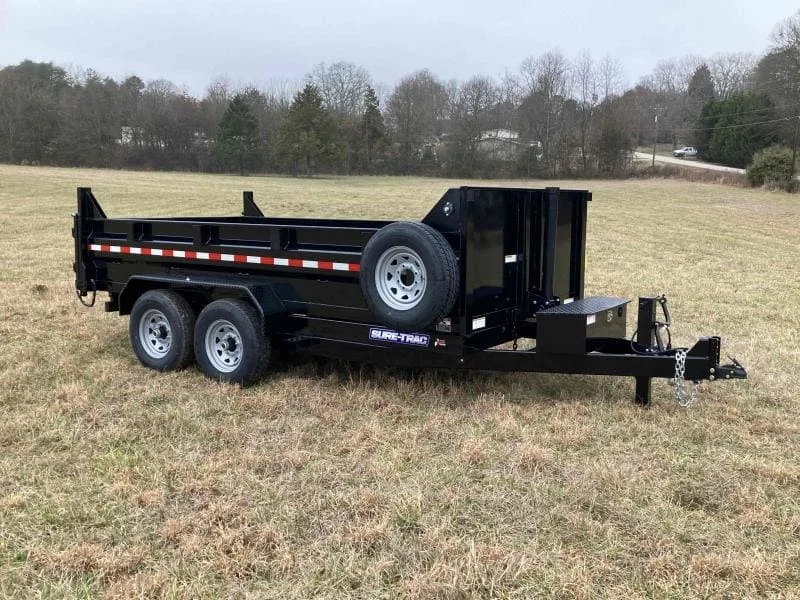
Dump trailers feature hydraulic lift systems for hauling and offloading bulk materials like mulch, gravel, soil, and debris. They're ideal for landscapers doing installation work, large cleanups, or regular debris removal, and can also be the perfect fit for hauling large equipment like mowers, tractors, or small excavators.
Capacities typically range from 7,000 to 16,000 lbs GVWR, so you'll want to match the trailer to your tow vehicle's rating before committing.
Learn more: How to Buy a Dump Trailer
Equipment trailers for landscaping
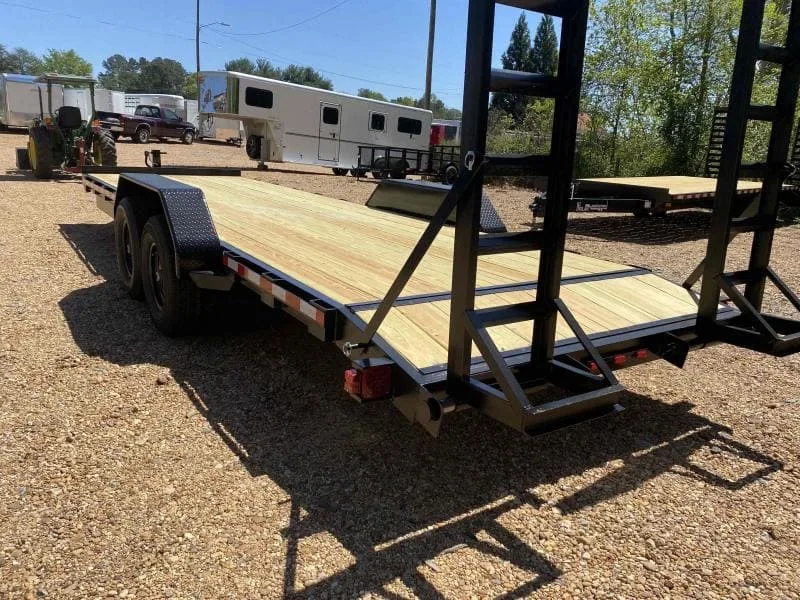
Equipment trailers are heavy-duty options built for skid steers, mini excavators, and compact tractors. They feature reinforced decks, higher weight ratings than standard utility trailers, and wider deck surfaces to accommodate equipment with broader footprints.
The main advantages include robust construction that handles repeated heavy loads, lower deck heights that reduce loading angles, and tie-down systems positioned for securing tracked or wheeled equipment.
Practical considerations include the higher purchase price compared to utility trailers, increased empty weight that reduces available payload, and the need for a tow vehicle with adequate capacity—most equipment trailers require at least a 3/4-ton truck. If you're regularly moving equipment over 5,000 lbs, equipment trailers are designed to handle that load safely over the long haul.
Tilt trailers for landscaping
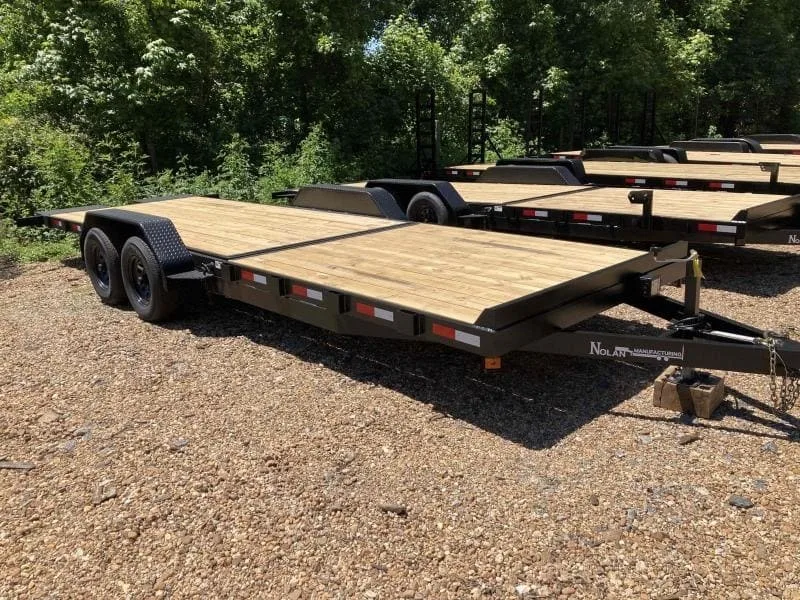
Tilt trailers use a tilting deck mechanism that eliminates the need for ramps. Benefits include easier loading of low-clearance equipment, reduced risk of equipment damage from steep ramp angles, and the ability to load heavy machines without manual ramp handling. Tilt trailers also work well for equipment with limited ground clearance that might scrape on traditional ramps.
Keep in mind that tilt trailers typically cost more than comparable equipment trailers with ramps, and the tilting mechanism requires periodic maintenance to keep it functioning smoothly. The tilt system also adds weight to the trailer, which can reduce your available payload capacity. This design works well for low-profile equipment or heavy machines where a tilt deck outperforms traditional ramps.
How to choose the right size landscape trailer
Trailer size comes down to three factors: your equipment dimensions, total load weight, and what your tow vehicle can handle. Getting this wrong means either struggling with an undersized trailer or towing more weight than your truck can safely manage.
1. Calculate your equipment load
Start by adding up the weight of everything you'll carry on a typical day. Check manufacturer specs for your mowers—a commercial zero-turn can weigh 1,000 to 1,500 lbs alone.
Then add hand equipment, fuel, and any materials you'll transport. Leave at least 10–15% headroom below the trailer's GVWR to account for variations in load weight from job to job.
2. Match trailer size to your tow vehicle
Your truck's tow rating is the maximum weight it can safely pull, including the trailer and everything on it. You'll find this number in your owner's manual or on the door jamb sticker.
Pro tip: The trailer's loaded weight should never exceed your truck's tow rating. When you're close to the limit, size up your trailer rather than push your vehicle's limits.
3. Choose based on your operation size
Your crew size and daily workload determine how much deck space you'll actually use. Here's a practical breakdown by operation type:
- Solo operators: Single-axle trailers (5x10 or 6x10) work well for one mower and basic hand tools
- Small crews: Tandem-axle trailers (6x12 or 7x14) accommodate multiple mowers and full equipment sets
- Larger operations: 7x16 or longer trailers handle extensive equipment inventories and materials
If you're between sizes, go larger—you'll grow into the space faster than you expect, and having extra room beats making two trips or leaving equipment behind.
Key features to consider when buying a landscaping trailer
Once you've narrowed down trailer type and size, the next step is evaluating specific features that affect how the trailer performs in daily use. The details below separate trailers built for landscaping work from generic utility trailers—and they determine whether your trailer makes your job easier or creates unnecessary delays.
1. Single axle vs. tandem axle
Single-axle trailers are lighter, easier to maneuver in tight spaces, and typically cost less upfront. They work well for smaller loads and solo operations where you're hauling one or two mowers and hand tools.
Tandem-axle trailers handle heavier loads and distribute weight across four tires instead of two, which reduces wear and provides a safety margin. If one tire blows, you can still drive to a shop rather than being stranded roadside with a full day's equipment on board. Tandem axles also reduce trailer sway when towing at highway speeds or in windy conditions.
Pro tip: Tandem axles let you continue driving if one tire fails. That's a real advantage when you're miles from your shop with a loaded trailer and a full schedule ahead.
2. Weight limit
Beyond deck space, you need to know how much your equipment weighs. Check your mower's user manual or search the model number online for exact weight specs. For other items, a close estimate works.
Add up everything you'll transport—equipment, tools, fuel, and spare parts. Then compare that total to the trailer's Gross Vehicle Weight Rating (GVWR), which is the maximum weight the trailer can safely carry.
3. Hitch system
The hitch system on any trailer you're considering needs to line up with the truck you'll be using to tow. Hitch systems come in five different classes, each holding a certain weight (ranging from 2,000 lbs to 20,000 — a significant difference). Ensure you have the proper hitch system to support your trailer and vehicle.
4. Ramp and gate style
Rear ramp design affects how easily you can load heavy mowers or access your equipment. Here are a few options:
- Spring-assisted ramps reduce the effort to lift and lower the gate
- Split ramps let you open just one side when you only need partial access.
- Landscape gates with expanded metal mesh provide traction and allow debris to fall through rather than accumulating on the ramp surface.
5. Floor material
The material your trailer floor is made of affects its durability, affordability, and need for maintenance.
- Treated wood: Affordable and easy to replace, but requires periodic maintenance and can rot over time.
- Steel: More durable than wood, though heavier and prone to rust without proper coating.
- Aluminum: Lightweight and corrosion-resistant, but costs more upfront.
6. Tie-down points and trimmer racks
D-rings, stake pockets, and E-track systems keep equipment secured during transport. Look for multiple tie-down points positioned where you'll actually use them based on your equipment layout. For example, trimmer racks and blower holders can mount to trailer rails, keeping hand tools organized and preventing damage from shifting loads.
7. Leaf spring vs. torsion axle suspension
Leaf spring suspension is the most common and affordable option. It's durable, easy to repair at most shops, and handles most landscaping loads without issue. Parts are widely available, and most mechanics can service leaf springs without specialized equipment.
Torsion axle suspension provides a smoother ride and requires less maintenance over time, though repairs are more involved when something does go wrong. The independent suspension on each wheel reduces bouncing and provides better stability on uneven terrain. It's worth considering for enclosed trailers hauling sensitive equipment or if you're regularly driving on rough roads.
8. New vs. used landscape trailers
Both new and used trailers have legitimate advantages depending on your budget and how quickly you want to get rolling.
New trailer benefits:
- Full manufacturer warranty coverage
- Latest features and configurations
- No hidden wear or damage
- Ability to customize options before purchase
Used trailer benefits:
- Lower upfront cost
- Immediate availability
- Depreciation already absorbed by previous owner
Pro tip: When shopping used, inspect welds carefully, check for rust underneath, test all lights and brakes, and verify the title is clean before committing.
4 common mistakes when buying a landscape trailer
Even experienced landscapers make costly errors when purchasing a trailer. Here are a few common pitfalls that can save you money and frustration if you avoid them from the start.
1. Underestimating weight capacity
Many buyers size their trailer based only on current equipment without accounting for business growth or the materials they'll eventually haul. What works today might leave you maxed out in six months.
2. Ignoring tongue weight
Tongue weight directly affects how your tow vehicle steers and brakes, and failing to account for it can push you past your truck's payload limits even when the trailer itself is within tow capacity.
3. Skipping the tow vehicle check
Not every truck can safely handle every trailer, and assuming yours will without verifying actual tow ratings can lead to dangerous situations or mechanical failures.
4. Buying too small to save money
A trailer that seems adequate at purchase can become limiting within one season as your operation grows, forcing you to upgrade sooner than expected and essentially paying twice for the same capability.
FAQs about landscape trailers
What brand of trailer is best for landscaping?
Reputable manufacturers like Sure-Trac, Big Tex, Hawke, Nolan, and Homesteader build durable trailers suited to commercial landscaping use. The best brand depends on your budget, local dealer support, and specific feature requirements.
How long do landscape trailers last with daily commercial use?
A well-maintained landscape trailer can last 10–15 years or more of daily commercial use. Lifespan depends on build quality, materials (aluminum outlasts steel), and consistent maintenance habits, like greasing bearings and inspecting brakes.
Do I need a CDL to tow a landscape trailer?
Most landscapers don't need a CDL for typical landscape trailers. However, requirements vary by state and depend on combined vehicle and trailer weight. Check your state's commercial vehicle regulations if you're towing equipment trailers with GVWR over 10,000 lbs.
Let us help you find the best landscape trailer for your business
We understand the needs of the equipment you're hauling and the daily demands you're up against as a landscaper. Ken Feagin Truck and Trailer carries a selection of open trailers, enclosed trailers, and dump trailers from trusted brands like Sure-Trac, Homesteader, and Hawke. If you'd like help narrowing down your options, come on by or give us a call—we're located in Campobello, SC, off exit 5 on I-26, serving landscapers throughout the Carolinas.
You may also like: