


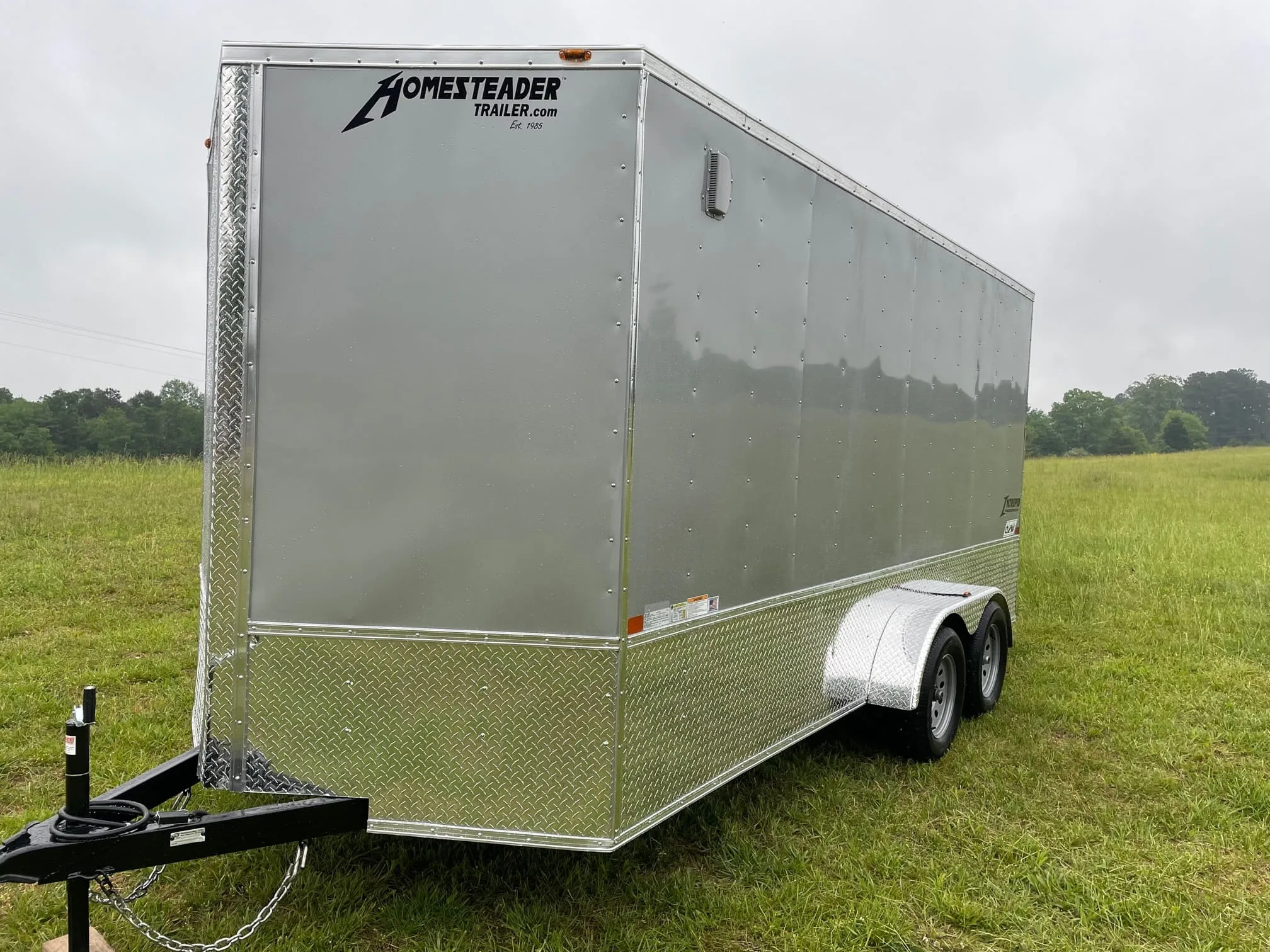
You can find excellent trailer options in aluminum and steel, but the two materials are ideal for different situations. Aluminum trailers are lightweight and low-maintenance, with modern features and a higher resale price. And the durability of steel trailers makes them an excellent option for heavy loads and rough terrain. Picking the right trailer boils down to one question: What are you hauling?
In this guide, we’ll walk you through the pros and cons of aluminum versus steel trailers and explain the factors to consider when deciding which trailer material is right for you.
What is a steel trailer?
Steel trailers are known for their robust construction and durability. This trailer material is ideal for heavy-duty applications that require rough handling.
Pros of a steel trailer
- Strength: Steel trailers can easily handle heavy loads and withstand rough terrain.
- Durability: Steel trailers are built to last. Often, they have powder-coated paint.
- Affordability: Steel is generally less expensive than aluminum, making it a budget-friendly option. Repair and maintenance costs on steel trailers are often lower, too.
- Versatility: Steel trailers come in a wide variety of styles and sizes. They’re suitable for almost any hauling need.
Cons of a steel trailer
- Weight: Steel is heavier than aluminum. This can impact fuel efficiency and towing capacity.
- Rust: Steel is susceptible to rust and corrosion over time, especially in coastal or humid environments. Certain trailer manufacturers add a protective layer of zinc or powder-coated paint to their steel trailers to minimize rust.
- Maintenance: While maintenance costs can be more affordable than aluminum trailers, steel trailers require regular maintenance to prevent rust and corrosion.
What is an aluminum trailer?
Aluminum trailers are gaining popularity thanks to their lightweight construction and resistance to corrosion. They’re a great choice if you want to balance strength and weight savings.
Pros of an aluminum trailer
- Weight: Aluminum is significantly lighter than steel. This improves fuel efficiency and towing capacity, making aluminum trailers ideal for hauling lighter loads.
- Modern features: Often, aluminum trailers have advanced features and sleek designs.
- Corrosion resistance: Unlike steel, aluminum naturally resists rust and corrosion.
- Low maintenance: Aluminum trailers require minimal maintenance compared to steel.
- Resale price: The routine maintenance and corrosion resistance on aluminum trailers allow owners to get a higher resale price for used inventory.
Cons of an aluminum trailer
- Cost: Aluminum is more expensive than steel, so these trailers are pricier.
- Strength: Aluminum isn’t as strong as steel, so it might not be suitable for heavy loads or rough terrain.
- Repairs: Aluminum trailers can dent or deform more easily than steel. Repairing aluminum, including welding, can be challenging and expensive.
Aluminum vs. steel trailers
Aluminum and steel trailers are each good for different scenarios. One isn’t “better” than the other overall. But depending on what you’re hauling, where you’ll be using the trailer and your budget, there is certainly a “best choice” for your specific application. Here are some factors to consider as you compare aluminum to steel trailers.
Use case
What are you planning to haul with your trailer? Do you need to transport livestock? Will you be carrying heavy equipment or delicate furniture? We recommend steel for heavy loads and aluminum for lighter cargo.
Towing vehicle
Check the vehicle’s towing capacity you plan to use with the trailer. How much weight can the vehicle safely tow? Pick a trailer weight that won’t overload your vehicle. A towing vehicle that’s smaller or older will work best with a lightweight aluminum trailer. A heavy-duty steel trailer will require a truck that can pull heavy loads.
Budget
Steel trailers are more affordable if you’re looking to save money upfront. However, while aluminum trailers are pricier initially, their lower maintenance costs might even out over time. Also, aluminum trailers usually have longer warranties, which may make that higher price point worthwhile.
Weight
Since aluminum trailers are lightweight, they can significantly improve fuel efficiency and towing capacity, especially with smaller vehicles. But if you’re planning to haul heavy loads or tow on rough terrain, the additional strength of steel might outweigh the fuel efficiency benefits of aluminum.
Location
If you’re frequently in areas with harsh weather conditions, corrosion resistance may be a significant factor. In this case, opt for an all-aluminum trailer. Aluminum products are also recyclable and more eco-friendly.
Trailer type
Trailer type also matters in choosing between aluminum and steel.
- Utility trailers: Aluminum is best for smaller utility trailers for occasional DIY projects or weekend getaways. Steel makes more sense for regularly hauling heavy equipment or construction materials.
- Enclosed trailers: Since aluminum trailers are lightweight and resist corrosion, they’re a good choice for enclosed trailers. You might prefer a steel enclosed trailer if you need to carry heavy cargo or want extra durability.
- Horse trailers: If you’re considering steel or aluminum for a horse trailer, either can be suitable. The smooth towing of an aluminum trailer might make your horse more comfortable.
Trailer lifespan
While steel trailers traditionally have longer lifespans, a well-maintained aluminum trailer can last just as long, if not longer. The corrosion resistance of an aluminum trailer helps it withstand harsh environments. And its lighter weight minimizes stress on the aluminum trailer frame.
Which trailer material is right for you?
An aluminum trailer is best for you if:
- You’ll be transporting lighter cargo.
- You’re okay with a higher upfront financial investment in return for lower ongoing maintenance costs.
- You’re frequently in areas with harsh weather conditions.
A steel trailer is the right choice if:
- You need to haul heavy loads (particularly on rough terrain).
- You want to save money upfront.
- You want a robust and durable trailer with a long lifespan.
As you compare trailers, look beyond material and consider additional factors like construction quality, features, and warranty. Inspect the trailer carefully before purchasing. Once you’ve decided, remember to properly maintain your trailer over time to ensure its longevity and performance.
If you have questions about the best trailer material for you or you’re shopping for a trailer in Asheville or Greenville, SC, we’re right down the road in Campobello, SC. Come visit us, or give us a call–we’re always happy to help.
You may also like: