


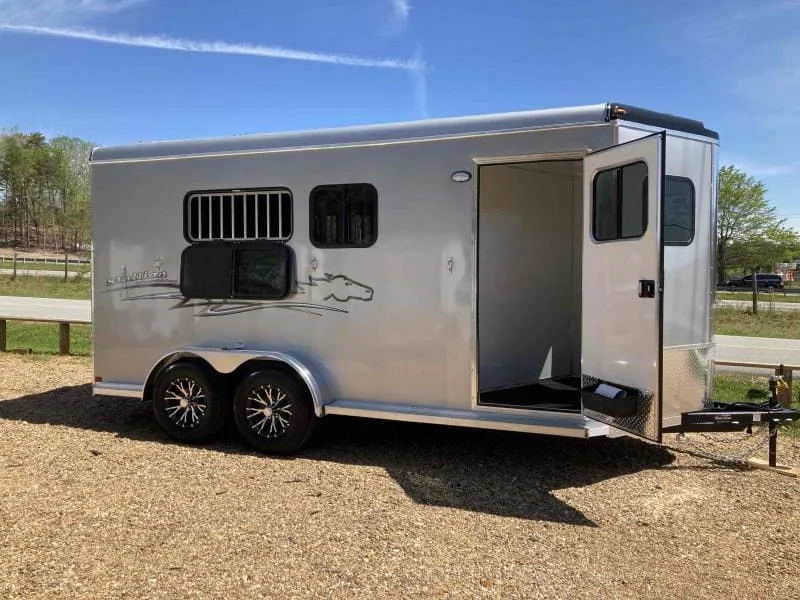
Buying a horse trailer is one of the bigger decisions you'll make as a horse owner, and the options can feel overwhelming. Bumper pull or gooseneck? Slant load or straight load? Aluminum or steel? Each choice affects how safely and comfortably your horses travel.
This guide breaks down the main types of horse trailers by hitch type, load style, capacity, and construction material—plus how to match a trailer to your tow vehicle and what features matter for your horses.
5 factors that will help narrow your choice of horse trailer
Before you start comparing specific models, these practical factors will point you in the right direction:
- Number of horses: A 2-horse bumper pull works for most recreational riders who primarily go on trail rides, while competitors may require 4-6 horse goosenecks for horse shows.
- Horse size: Warmbloods and drafts require taller ceilings and wider stalls than standard trailers provide.
- Travel frequency: Occasional local trips call for different features than weekly long-hauls to competitions.
- Tow vehicle: Your truck's towing capacity and hitch type determine which trailers are safe to pull.
- Budget: Aluminum trailers cost more upfront but weigh less, while steel trailers are more affordable but heavier.
Horse trailer types by hitch type
Horse trailers are sorted into categories based on two main factors: how they attach to your truck (hitch type) and how horses stand inside (load style).
The hitch type affects stability, maneuverability, and which trucks can safely pull the trailer.
Bumper pull horse trailers
A bumper pull trailer attaches to a standard ball hitch mounted on your truck's rear frame. These trailers typically carry 1-3 horses and work well for shorter trips.
Bumper pulls cost less than goosenecks, are easier to back into tight spaces, and can be towed by half-ton trucks or large SUVs with adequate towing capacity. The trade-off is a higher risk of trailer sway at highway speeds when loaded near capacity.
Pro tip: Check your vehicle's tongue weight capacity, not just the towing capacity. Bumper pulls put more stress on the rear of your truck than goosenecks.
Gooseneck horse trailers
A gooseneck trailer connects to a ball hitch mounted in the truck bed, placing the connection point over the rear axle. This design distributes weight more evenly and provides better stability, which is why goosenecks are the standard for hauling 3 or more horses.
Most equestrians prefer goosenecks for the improved handling, additional storage space in the nose, and smoother ride. You'll typically want a 3/4-ton or larger truck to tow safely.
Fifth wheel horse trailers
Fifth wheel trailers use a kingpin that locks into a large plate mounted in the truck bed, similar to semi-trucks. This setup offers maximum stability and is typically reserved for heavy-duty hauling, large living quarters configurations, or commercial operations.
Fifth wheels are less common for everyday horse hauling because the hitch system is heavier and more expensive. However, if you're pulling a large trailer with full living quarters across long distances, the added stability can be worth the investment.
Horse trailer types by load style
The load style, or how horses stand inside the trailer, affects their comfort, the trailer's overall length, and how easy loading will be.
Stock and stock combo trailers
Stock trailers have open interiors without fixed stalls, originally designed for hauling cattle. Stock combo trailers add a separate tack room while keeping the open livestock area.
Stock trailers offer excellent ventilation and versatility—you can haul horses one day and cattle or equipment the next. The trade-off is less individual protection for each horse, which matters more for valuable show horses or long trips.
Slant load horse trailers
In a slant load trailer, horses stand at an angle (typically 35-45 degrees) to the trailer's length. Horses load from the rear and walk into angled stalls separated by dividers.
Slant loads often fit more horses in a shorter trailer length, and many horses load more willingly because they can see where they're going. The rear tack area is usually larger and more accessible. Some horses, however, find the angled position less natural for balancing during travel.
Straight load horse trailers
Straight load trailers position horses facing forward (or sometimes rearward), parallel to the trailer's length. Horses typically load through a rear door and walk straight into their stall.
This configuration is often preferred for larger horses that benefit from more width to balance comfortably. Some owners also find straight loads easier for horses that resist loading at an angle.
Slant load vs straight load comparison chart
| Feature | Slant Load | Straight Load |
| Loading ease | Horses can see where they're going | More direct entry path |
| Space efficiency | Fits more horses in shorter length | Requires more length for same capacity |
| Long-haul comfort | Some horses travel well at an angle | Often preferred for larger horses |
| Best for | Compact size and efficient capacity | Larger horses or reluctant loaders |
Horse trailer types by horse capacity
Trailer capacity directly affects size, weight, and tow vehicle requirements.
Two-horse trailers
Two-horse trailers are the most common entry-level size, available in both bumper pull and gooseneck configurations. They're popular with recreational riders and single-horse owners who want space for a companion horse. Many 2-horse bumper pulls can be towed by half-ton trucks, with typical GVWR ranging from 7,000-10,000 lbs.
Three-horse trailers
Three-horse trailers are a popular mid-size option for families or small training operations. Most are gooseneck configurations, and you'll typically want at least a 3/4-ton truck to tow safely.
4-to-6-horse trailers
Larger trailers designed for competitors, breeders, and professional trainers are almost always gooseneck or fifth wheel. These require 3/4-ton or 1-ton trucks and often include living quarters, large tack rooms, and dressing areas.
Warmblood and draft horse trailers
Standard trailers may not fit larger breeds comfortably. Warmblood and draft trailers feature taller ceilings (typically 7'6" or higher), wider stalls, and reinforced floors for heavier horses. If you own a large horse, measure your horse's height and width before shopping and compare those numbers to the trailer's interior dimensions.
Aluminum vs. steel horse trailers
The choice between aluminum and steel affects weight, durability, maintenance, and price over the long term.
Aluminum horse trailers
Aluminum trailers are lighter, which means better fuel economy and the ability to tow with smaller trucks. They resist rust and typically hold resale value well. The trade-off is higher upfront cost and a tendency to dent more easily than steel.
Steel horse trailers
Steel trailers cost less to purchase and offer excellent strength and dent resistance. They're heavier, which requires more towing capacity, and they're prone to rust if the finish is damaged.
Pro tip: When looking at used steel trailers, inspect the frame and floor carefully for rust, especially around welds and in areas where moisture collects.
How to match a horse trailer to your tow vehicle
One of the most common—and dangerous—mistakes horse owners make is mismatching their trailer to their tow vehicle. Even if you find the perfect trailer for your horses, it won't matter if your truck can't pull it safely.
Matching your trailer to your truck comes down to three straightforward steps: checking your vehicle's ratings, calculating your actual loaded weight, and confirming your hitch setup. Here's how to do it right.
Step 1: Check your truck's towing capacity
Find your vehicle's maximum towing capacity on the door jamb sticker or in the owner's manual. Look for the Gross Combined Weight Rating (GCWR), which is the maximum total weight of your truck, passengers, cargo, and trailer combined.
Step 2: Calculate loaded trailer weight
The trailer's Gross Vehicle Weight Rating (GVWR) is the maximum safe weight when fully loaded. To estimate your actual loaded weight, add up the empty trailer weight, weight of horses (typically 1,000-1,500 lbs each), hay and water, tack and equipment, and any gear stored in living quarters.
Pro tip: Weigh your loaded trailer at a truck scale before your first long trip. Many buyers are surprised how quickly weight adds up.
Step 3: Confirm hitch and brake controller setup
Your hitch rating has to match or exceed the trailer's tongue weight (bumper pull) or pin weight (gooseneck). Most horse trailers require trailer brakes and a brake controller installed in your truck's cab. For bumper pull trailers near your vehicle's capacity, a weight-distributing hitch can improve stability.
Safety and comfort features to look for
Beyond type and size, specific features affect how well your horses travel.
Flooring and mats
Common flooring options include aluminum, treated wood, Rumber (a recycled rubber/plastic composite), and rubber mat overlays. Good flooring provides traction, cushioning, and durability while being easy to clean.
Pro tip: Inspect your trailer floor regularly, especially if it's wood. Moisture and urine can cause hidden rot that compromises safety.
Ventilation and windows
Adequate airflow is critical for horse health during transport. Look for drop-down windows, roof vents, head windows, and side slats. In summer, screens keep insects out while allowing airflow. In winter, you may want to close some vents to prevent drafts.
Dividers, tie rings, and padding
Dividers come in solid, partial, and removable configurations. Solid dividers offer more protection but less airflow. Removable dividers add flexibility for different-sized horses. Check that tie rings are positioned to allow comfortable head movement, and look for padding on walls and dividers to help prevent injury during sudden stops.
New vs used horse trailers
New trailers cost more but come with warranties and customization options, and used trailers offer significant savings but require inspection to ensure quality. Your choice depends on budget, timeline, and whether you need specific features or can work with existing configurations.
Buying a new horse trailer
New trailers offer manufacturer warranties coverage, the latest safety features and design improvements, and the peace of mind that the quality hasn't been affected by wear or poor maintenance.
The trade-off is cost. New trailers typically run 20-40% more than comparable used models, and you'll take an immediate depreciation hit once you drive off the lot. However, if you plan to keep the trailer for many years and want specific features, buying new often makes sense.
Buying a used horse trailer
Used trailers offer significant savings, depending on age and condition. Well-maintained trailers from quality manufacturers can deliver years of reliable service at a fraction of new-trailer cost.
The risk of buying a used trailer is condition. Used trailers may have hidden damage, deferred maintenance, or wear that isn't obvious during a quick walk-through. However, if you purchase from a trusted seller that has inspected the trailer thoroughly and repaired or replaced worn parts, you can get a long life from a used trailer for a fraction of the price.
Find the right horse trailer at Ken Feagin Truck and Trailer
Ken Feagin Truck & Trailer has been serving the Southeast equestrian community for nearly 50 years with hands-on experience with horses, rodeo, and trailer service.
We typically stock over 50 trailers, including new and used horse trailers from Sundowner Trailers, Featherlite, Delta, and Homesteader. Whether you're looking for a 2-horse bumper pull or a 4-horse gooseneck with living quarters, our team can help match the right trailer to your horses and tow vehicle.
Come on by or give us a call to see what's in stock.
You might also like: