


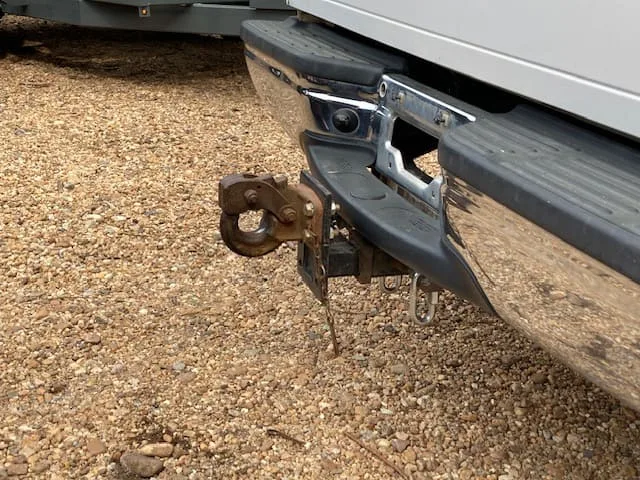
Towing a trailer requires a hitch to form a secure connection. The type of hitch you choose—whether a bumper, receiver, or gooseneck hitch—plays a crucial role in your towing setup. Understanding the unique functions and advantages of each is essential for selecting the right hitch to meet your towing needs.
This guide is your go-to for understanding different types of trailer hitches, how they function, and which one fits your towing needs. We’ll help you gear up with the right hitch so you can focus on the journey ahead.
Trailer hitch classes
Before diving into different types of trailer hitches, you need to understand trailer hitch classes to determine how much weight it can hold.
Trailer hitches are grouped into five classes based on the maximum weight capacity (gross trailer weight capacity) each hitch can hold.
- Class I — 2,000 lbs (Cars & Small SUVs)
- Class II — 3,500 lbs (Cars & Small SUVs)
- Class III — 8,000 lbs
- Class IV — 10,000 lbs
- Class V — 20,000 kg (commercial duty)
Types of trailer hitches
As you shop trailer hitches, note factors like vehicle compatibility, installation requirements, and hitch class. Here’s a breakdown of the types of trailer hitches you might use for your towing needs.
Bumper hitch
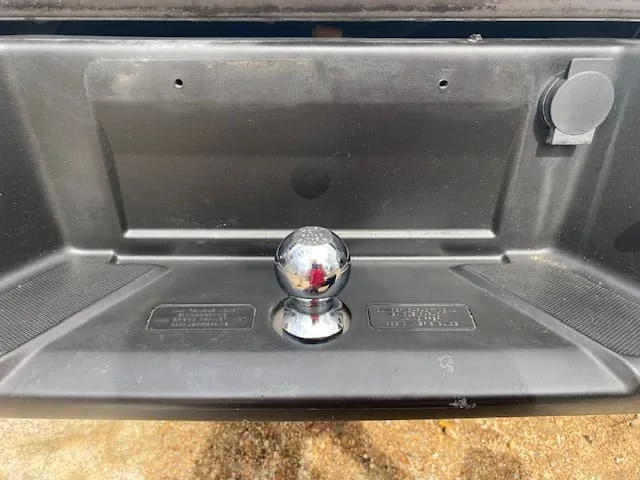
A bumper hitch (not to be confused with a receiver hitch) is often molded into the bumper or is attached directly to your vehicle’s bumper. This often looks like a hole in the middle of the bumper through which to thread the ball connector. While this is not the safest hitch type, it can be a good fit for lightweight loads, like hauling bike racks or small utility trailers. Bumper hitches are not suitable for heavy loads or frequent towing.
- Pros: If not already integrated into the vehicle bumper, it can be easy to install; budget-friendly; compatible with various vehicles
- Cons: Limited weight capacities; not as secure or strong as other hitches; may affect vehicle handling and stability
- Hitch classes: Ranging from Class I to III (typically Class I or II)
Receiver hitch
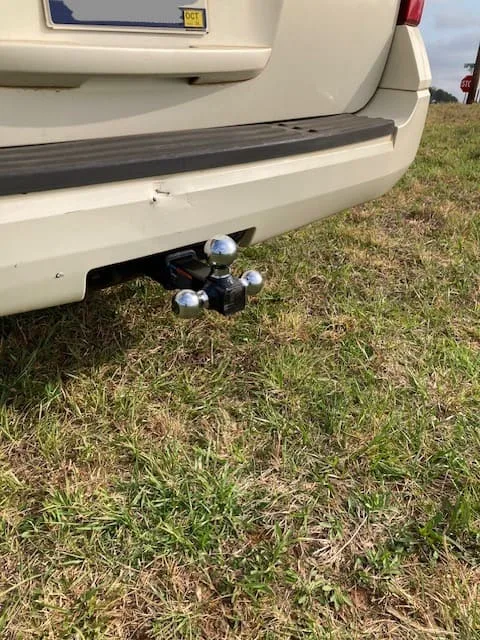
A receiver hitch is the most common type because of its versatility. With a receiver hitch, a square metal receiver tube is mounted to the vehicle’s frame, allowing you to add various hitch-mounted accessories, such as tow balls, cargo carriers, or bike racks.
- Pros: Strong; secure; versatile; flexible with various hitch accessories
- Cons: May affect vehicle’s ground clearance; may require professional installation (recommended); limited to towing capacities based on the hitch class and vehicle’s towing capacity
- Hitch classes: Class I to V
We recommend hiring a professional to install a receiver hitch to ensure the hitch is mounted securely and properly. Different hitch-mounted accessories (such as a bike rack or cargo carrier) can be easily inserted and removed from the receiver tube and secured with a hitch pin and clip or a locking mechanism.
Gooseneck hitch
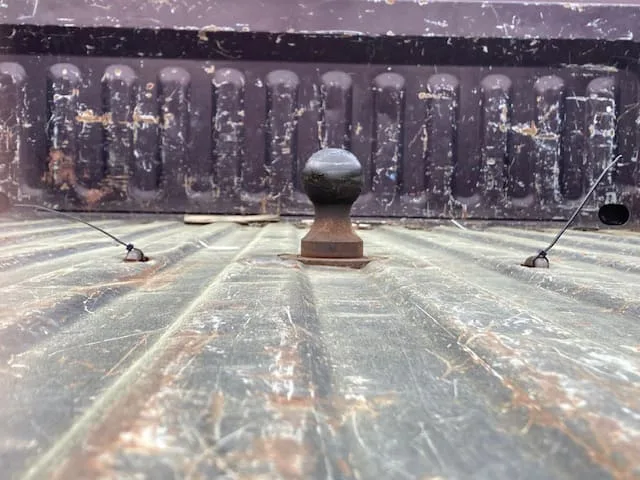
A gooseneck hitch is a heavy-duty hitch mounted in the bed of a pickup truck for a more stable towing connection with a gooseneck trailer. It features a vertical ball that connects to a matching coupler on the trailer.
- Pros: Enhanced stability and maneuverability; tighter turning radius
- Cons: Requires drilling into the truck bed for installation; limits cargo space in the truck bed when not towing (this can be avoided by installing a fold-down bed ball); not compatible with all trucks
- Hitch classes: Not classified by standard hitch classes due to heavy-duty towing applications
Thanks to their superior stability and weight distribution, gooseneck hitches are best for towing large trailers, such as larger horse trailers and livestock trailers. They offer the highest weight capacity of all hitch types—up to 35,000 lbs. However, you’ll need a compatible gooseneck trailer and a reinforced truck bed.
To use a gooseneck trailer hitch, attach the trailer’s coupler to the hitch ball in the truck bed. Since the truck bed will need modifications, this may require professional installation.
Pintle hitch
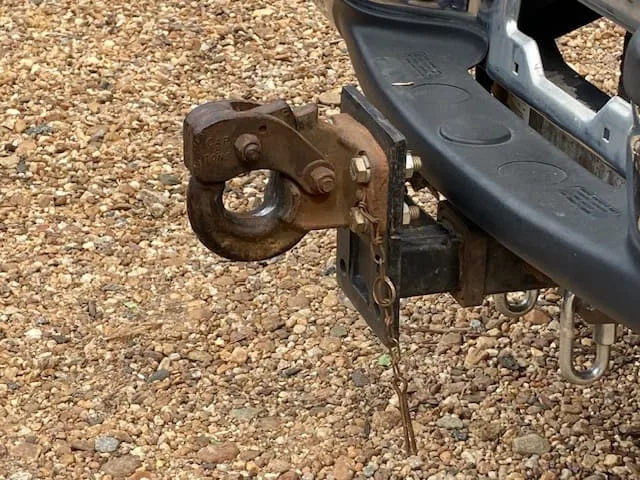
A pintle hitch is a heavy-duty hitch often used for commercial applications, like construction, logging, or military. It consists of a pintle hook mounted on the towing vehicle that connects to a lunette ring on the trailer.
Pintle hitches offer very high weight capacities (up to 60,000 lbs) and are often used on rugged terrain or for off-road conditions. You’ll need a compatible pintle trailer and a heavy-duty towing vehicle.
- Pros: Secure attachment; highly durable; suitable for rough terrain and heavy loads
- Cons: Limited use for non-commercial applications; can be noisy and less convenient to connect; may require periodic maintenance
- Hitch classes: Not classified by standard hitch classes due to heavy-duty towing applications
To use a pintle hitch, align the lunette ring with the pintle hook and lower it onto the hook. Secure it with a safety pin or locking mechanism.
Fifth-wheel hitch
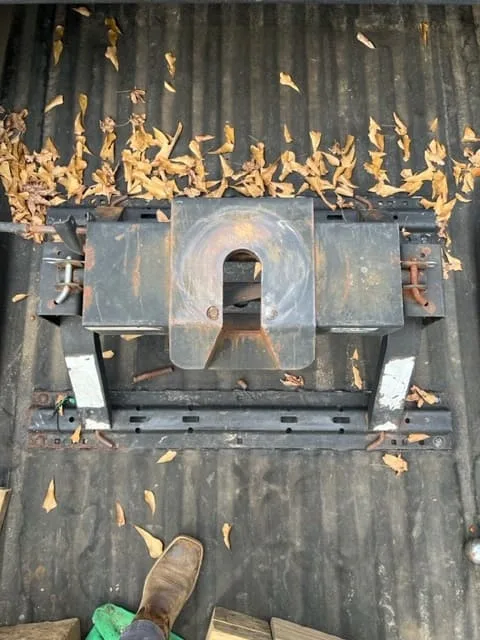
A fifth-wheel hitch is designed for towing large fifth-wheel trailers or RVs. It mounts in the bed of a pickup truck and connects to a kingpin underneath the trailer's front.
Fifth-wheel hitches come in various weight capacities to match the size and weight of the fifth-wheel trailer (typically 16,000 lbs to 30,000 lbs). They require a compatible fifth-wheel trailer with a kingpin and a heavy-duty pickup truck.
- Pros: Excellent stability and maneuverability; smoother towing experience
- Cons: Significant installation effort and modification to a truck bed, which may limit cargo space when not towing; higher initial cost
- Hitch classes: Not classified by standard hitch classes, but weight capacities are similar to Class IV and V receiver hitches
Learn more: How to Load a Trailer with Proper Weight Distribution
How to choose the best trailer hitch type for you
As you research and consider different types of trailer hitches to find the best option for your needs, consider the following factors:
- Towing weight: Match the trailer hitch class or the hitch’s weight capacities to the weight of the trailer you plan to tow.
- Vehicle compatibility: Seek the advice of a professional or consult with your automotive brand dealer to ensure the hitch is compatible with your specific vehicle’s make and model.
- Frequency of use: If you frequently need to tow a trailer or you plan on using your hitch for other purposes beyond towing, invest in a stronger, more versatile hitch, like a receiver hitch.
- Budget: Consider the initial cost of the hitch and its installation alongside the long-term benefits of a strong, versatile hitch.
- Trailer type: Certain trailers might require specific hitch types. For example, gooseneck trailers need a gooseneck hitch.
- Safety: Never exceed the weight capacity of your chosen hitch and trailer. Ensure proper installation by enlisting a professional’s help. Or, if you go the DIY route, carefully follow the manufacturer’s instructions.
Understanding the differences in trailer hitch types will help you select the right hitch to get your towing job done easily. If you have questions about the types of trailer hitches or you’re shopping for a trailer in Asheville or Greenville, SC, we’re right down the road in Campobello, SC. Come visit us, or give us a call–we’re always happy to help.
You may also like: