


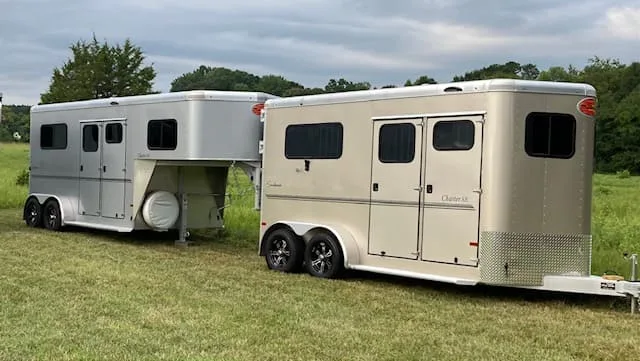
If you’re looking for a dump trailer or horse trailer, chances are you’ve come across both bumper pull and gooseneck models. But which one should you choose? The truth is, there’s no one-size-fits-all answer. Bumper pull and gooseneck trailers each have their own strengths and drawbacks, so the best choice hinges on your specific needs. With over 45 years of experience helping people like you find their ideal trailer, we’re here to equip you with the knowledge you need to make an informed decision between a bumper pull or gooseneck trailer.
What is a bumper pull trailer?
The bumper pull trailer is the most common type of hitch. Bumper pull trailers attach to a ball hitch installed under the tow vehicle’s rear bumper for a straightforward hookup process. Because the tow vehicle simply drags the trailer, bumper pulls are also easy to maneuver. While they’re generally less expensive than gooseneck trailers, they are not able to carry as much weight.
What is a gooseneck trailer?
A gooseneck trailer hitches to the bed of a pickup truck directly over the rear axle. It’s named for its distinctive “gooseneck” shape that arches over the truck’s tailgate. This shape allows for better weight distribution, making it ideal for towing heavier loads over long distances. Unlike a bumper pull trailer, a gooseneck trailer requires a pickup truck with a special hitch installation. While it can handle more weight, it’s typically more difficult to maneuver.
Considerations for choosing gooseneck or bumper pull
When deciding between a gooseneck or bumper pull trailer, it’s important to weigh several key factors, including what kinds of loads you’ll be towing, what tow vehicle you’re using, and how much experience you have towing a trailer. Understanding these considerations will help you determine which type of trailer better meets your specific needs and preferences.
- What size trailer do you need? If you need to transport cargo that’s especially long or tall or travel with several horses at a time, you may need a large trailer size. Gooseneck trailers extend over the truck bed, allowing for more cargo space.
- What tow vehicle do you have? If you have a pickup truck, either trailer type will work with your vehicle. However, if you have any other tow vehicle, you’ll need a bumper pull trailer. If you’re looking for a new tow vehicle, Ken Feagin Truck & Trailer has a selection of pickup trucks and SUVs to choose from.
- How much weight will you tow? Both trailers and tow vehicles have limits for how much weight they can tow. Never tow above the capacity of the weakest part of your setup. That is, if your truck tows less weight than your trailer, do not exceed its tow capacity. For heavier loads, the gooseneck trailer disperses the weight, putting less pressure on your tow vehicle.
- Is the trailer for commercial or personal use? Most personal uses involve smaller loads, making a bumper pull trailer sufficient to carry the weight. Commercial uses often require a higher tow capacity. If you’re towing over five tons, you usually need a CDL.
If you overlook your towing needs and choose the wrong type of trailer, you risk safety issues when towing. For example, exceeding weight limitations can cause the trailer to sway or lead to trailer tire blowouts. To ensure your trailer meets your expectations, consider which hitch type will maximize performance for your use case without sacrificing safety.
Learn more: Guide to Trailer Weights by Trailer Type
Gooseneck vs. bumper pull
Now, we’ll explore the advantages and disadvantages of both gooseneck and bumper pull trailers. By comparing these two trailer types, you’ll gain a clearer understanding of which one aligns with your towing needs. Whether you’re new to towing trailers or you tow for a living, this breakdown will help you make an informed decision.
Gooseneck trailer pros & cons
Gooseneck trailers are known for their high tow capacity, increased stability, and maneuverability, but they are bulkier, more expensive, and can be more difficult to drive.
Pros
- Stability: Since the hitch type distributes the load weight directly over the rear axle of the tow vehicle and not on the bumper, gooseneck trailers offer greater stability than bumper pull trailers for larger loads.
- Tighter turn radius: Gooseneck trailers are designed for a tighter turn radius, making them easier to maneuver in confined spaces.
- Increased capacity: They can handle heavier loads and offer more cargo space, making them ideal for transporting larger or multiple items.
- Long-distance driving: Gooseneck trailers are well-suited to tow over long distances, providing a smoother and more stable ride along the way.
Cons
- Bulky size: Because gooseneck trailers are heavy, they may require a larger pickup truck than what you have. Their bulk can also be challenging to store when not in use.
- Special hitch installation: Installing a gooseneck hitch can be expensive and takes up space in the truck bed when the trailer is attached.
- Higher cost: Gooseneck trailers are generally more expensive than bumper pull trailers of the same size.
- Driving challenges: Although they provide a tighter turn radius, there’s a learning curve to driving gooseneck trailers.
Gooseneck trailers can be pricey, but did you know you can easily finance your next trailer purchase? Contact us or fill out an application to learn more.
Bumper pull trailer pros & cons
Bumper pull trailers are popular because they’re easy to use, versatile, and affordable, but they tend to have less space and lower tow capability.
Pros
- Affordability: Bumper pull trailers are generally more affordable, making them a budget-friendly option for many buyers.
- Tow vehicle options: Bumper pull trailers can be towed by a variety of vehicles, providing greater flexibility.
- Easy maneuverability: They’re easier to maneuver, especially for those with less towing experience.
- Truck bed space: Bumper pull trailers don’t require a special hitch installation, leaving the truck bed free for extra cargo space.
Cons
- Lower tow capacity: They can have a lower towing capacity compared to gooseneck trailers, restricting the weight you can safely haul to about 20,000 lbs..
- Wide turns: When towing a bumper pull trailer, you must take wider turns, which can be challenging in tight spaces.
When towing a bumper pull trailer, loading with proper weight distribution is crucial. Check out this article to learn how to safely load a trailer.
Which option is right for you?
If you need to tow heavy-duty loads, a gooseneck trailer is your best bet. Not only can it handle heavier cargo, but it can transport more on each load for more efficient hauling. With the weight distributed over the rear axle, the gooseneck provides a more stable ride, making it reliable over long distances. If you’re transporting horses, a gooseneck trailer offers the capacity to haul multiple horses at once, as well as enough space for a living quarters or dressing room.
Bumper pull trailers are a more practical choice if your work involves frequent drop-offs and pickups since they are much easier to hook up and unhook than goosenecks. Bumper pull trailers are often used for personal hauling purposes, such as transporting one or two horses. They’re also a great option for first-time trailer owners due to their budget-friendliness and easy maneuverability. While they might not carry as much weight as gooseneck trailers, they can still handle substantial loads, with some capable of towing up to 20,000 pounds.
If you’re shopping for a new trailer for your business or personal hauling needs in Asheville or Greenville, SC, we’re right down the road in Campobello, SC. Come visit us, or give us a call–we’re always happy to answer your questions and help you find the right bumper pull or gooseneck trailer for you.
You might also like: