


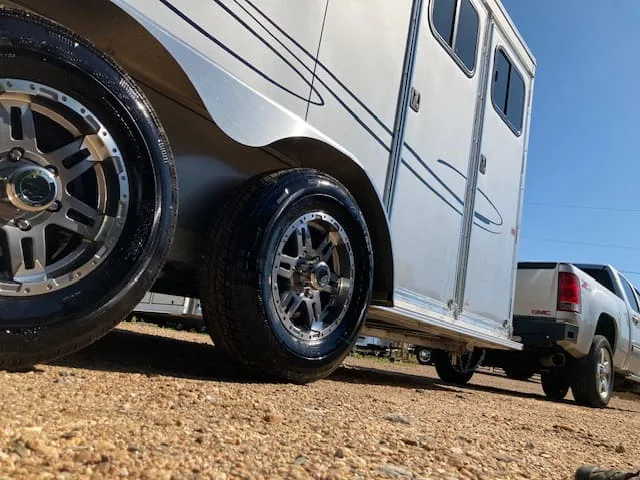
Whether for savings or convenience, most people try to squeeze every last mile out of their tires. But when it comes to your horse trailer tires, skimping can be a recipe for disaster. Think of it this way: your trailer is only as good as what’s keeping it on the road. That’s why replacing your horse trailer tires is an important part of routine maintenance, just like getting your oil changed.
Here at Ken Feagin Truck & Trailer, we value your safety. That’s why we’ve put together a guide to help you figure out when to buy new tires and how to choose the right ones. We’ve even highlighted some of the best options on the market to make your shopping experience easier.
When should you replace your horse trailer tires?
Horse trailer tires need to be replaced every three to six years. Unlike passenger car tires, horse trailer tires will often age out before they appear physically worn out. As a good rule of thumb, plan for a routine replacement every four years. If you put a lot of miles on your trailer each year, it may be worth checking your tread depth to see if your tires need to be replaced sooner.
You can find out your tire’s age from the date code on the side wall. This code includes two, two-digit numbers that indicate the week of the year (from 01 to 52) and the year the tire was manufactured. For example, if the date code were to read “1722”, you would know that the tire was manufactured in the 17th week of 2022.
Learn how to change your trailer tires →
What type of tires does your horse trailer need?
Specialty trailer tires
Horse trailers require specialty trailer (ST) tires. While some websites or dealers recommend LT tires, these are made for “light trucks” which do not require the same level of durability and load capacity as trailers. ST tires are made with stronger, more rigid sidewalls, so they are capable of absorbing the additional road shock that trailers require. LT tires, on the other hand, depend on the truck's suspension system to absorb shock and can cause your trailer to sway, making your horse uncomfortable.
Radial tires
There are two types of specialty trailer tires: radial and bias-ply. Radial tires are constructed with cords that run perpendicular to the sidewall to make it more flexible, whereas the cords in bias-ply tires are placed diagonally, resulting in a stiff sidewall. But what does that mean for the quality of the tire? The more flexible sidewall of radial tires results in longer tread life, better heat dissipation, reduced rolling resistance, and improved contact with the road.
So while bias-ply tires may be the more economical choice, radial tires last longer and keep you safer. Plus, you’ll save on gas with radial tires’ superior fuel efficiency, and your horse will thank you for the smoother ride.
Used vs. new tires
There are many second-hand tire dealerships across the country, but it’s wise to avoid them for a few reasons. Firstly, they might not stock the ST radial tires in the specific size required for your horse trailer. Secondly, used tires often come with significant wear since they were discarded by their previous owners. Most importantly, used tires have a lot less life left than new ones, considering the average horse trailer tire lasts only four years. Buying a three-year-old tire, for instance, would leave you with just a year of usability, whereas investing in new tires offers a full four-year lifespan.
Purchasing a used trailer is an excellent choice if you’re on a tight budget or don’t plan to use it often. However, be careful to check the age of the tires that come on a used trailer. It’s possible that the previous owner neglected routine tire replacements or sold the trailer with aged-out tires. Before driving a used trailer, inspect the tread and sidewall of the tires, and verify they were manufactured within the past six years. If they are damaged or aged out, you’ll need to purchase new tires for your trailer.
Learn more: Used Horse Trailer Buyer’s Guide
How to choose horse trailer tires
When searching for new horse trailer tires, there are four factors to keep in mind as you evaluate your options:
1. Know your trailer’s tire size
The most common sizes for horse trailer tires include 205/75R15, 225/75R15, 235/80R16, and 235/85R16. Your horse trailer likely requires one of these sizes, but check your owner’s manual for the manufacturer’s recommended size for optimal performance.
A tire size may look like a jumble of numbers, but each group of numbers refers to the tire’s measurements. Here’s how to read a tire size:
- The first three-digit number is the tire’s width in millimeters
- The two-digit number after the slash indicates the tire’s aspect ratio, or what percentage of the height equals the width
- The letter refers to the tire’s construction type, with an “R” indicating radial and a “D” indicating bias-ply
- The final number specifies the tire’s diameter in inches
2. Consider the speed rating
Every tire is limited to a maximum speed, so think about where you will drive your horse trailer and how fast those roads require you to drive. Most specialty trailer tires are rated for 65 mph, but some are rated higher or lower. It is crucial that you drive below your tires’ maximum speed rating, so make sure you find tires that can handle speeds several miles per hour above the speed you plan to go.
3. Look for a high load range
Typically, horse trailers weigh a lot. Between the horse (or horses), tack, other supplies, and the trailer itself, your tires need to be capable of bearing a heavy load. It’s best to purchase tires with the highest load range, or carrying capacity, you can find.
To find each tire’s minimum required load capacity, check the owner’s manual for your trailer’s Gross Vehicle Weight Rating (GVWR) Then, divide this number by the number of tires on your trailer. Load range is indicated by letters C through F, with F being the highest load capacity. An overloaded trailer increases the risk of a blowout, so be sure to keep the load weight within your tires’ combined load range.
4. Research durability
Because horse trailers are not used on a daily basis, it’s important that the tires can last a long time without daily use. For maximum durability, choose tires with radial construction, made with strong material and rib or rib-block tread patterns.
5 of the best tires for your horse trailer
We’ve done the research so you don’t have to. Below are five of the best tires for horse trailers, each offered in a variety of popular horse trailer tire sizes.
Goodyear Endurance
The Endurance Trailer Tire from Goodyear is top-rated over and over. It’s designed for a smooth ride and heavy hauling, making it the perfect horse trailer tire. The one negative: you’ll pay for the extra quality.
| Sizes available | Speed rating | Load range | Warranty | Price |
| ST205/75R15 | 87 mph | D | 6 years | $180 |
| ST225/75R15 | 87 mph | E | 6 years | $199 |
| ST235/80R16 | 87 mph | E | 6 years | $237 |
| ST235/85R16 | 87 mph | E | 6 years | $269 |
Carlisle Radial Trail HD
The Carlisle Radial Trail HD is another stand-out tire. Made for horse trailers, this tire wears evenly, can withstand heat, and has low rolling resistance for maximum durability.
| Sizes available | Speed rating | Load range | Warranty | Price |
| ST205/75R15 | 81 mph | C or D | 2 years | $101-$107 |
| ST225/75R15 | 81 mph | C, D, or E | 2 years | $119-$135 |
| ST235/80R16 | 75 mph | E | 2 years | $161 |
| ST235/85R16 | 75 mph | E or F | 2 years | $170-$181 |
Kenda Karrier
Constructed with durability in mind, the Kenda Karrier offers long tread life, efficient heat dissipation, and smooth rides. Kenda goes above and beyond the DOT requirements to give their customers the quality they need.
| Sizes available | Speed rating | Load range | Warranty | Price |
| ST205/75R15 | 81 mph | C or D | 5 years | $135-$140 |
| ST225/75R15 | 81 mph | B | 5 years | $165 |
| ST235/80R16 | 81 mph | D or E | 5 years | $170-$220 |
| ST235/85R16 | 81 mph | E | 5 years | $235 |
Greenball Tow-Master ASC
Designed specifically for heavier trailers, the Greenball Tow-Master ASC offers exceptional durability, even at highway speeds. The strong construction reduces trailer sway, while the tread compound and design offer added stability.
| Sizes available | Speed rating | Load range | Warranty | Price |
| ST225/75R15 | 81 mph | F | 4 years | $165 |
| ST235/80R16 | 75 mph | G | 4 years | $170 |
| ST235/85R16 | 75 mph | G | 4 years | $178 |
Thunderer ST Radial R501
The Thunderer ST Radial R501 is an all-season trailer tire built for strength and durability. The steel-belted construction allows for a higher load capacity, making it a great option for heavy horse trailers.
| Sizes available | Speed rating | Load range | Warranty | Price |
| ST205/75R15 | 75 mph | D | limited | $105 |
| ST225/75R15 | 75 mph | E | limited | $120 |
| ST235/80R16 | 75 mph | E or F | limited | $155-$175 |
What should the tire pressure be for horse trailer tires?
Inflate your horse trailer tires to the maximum PSI indicated on the sidewall. A tire’s maximum load capacity is rated according to the maximum PSI rating, so it is vital to maintain the proper tire pressure. Additionally, low tire pressure is the leading cause of blowouts, making it dangerous to drive with low tire pressure.
To maintain the maximum PSI, check tire pressure every time you hook up your trailer, or consider installing a pressure monitoring system. Keep in mind that when your trailer is parked, air gradually escapes at a rate of one to three PSI per month, depending on the climate. Before driving with the trailer, always fill your horse trailer tires to the maximum PSI, exercising extra vigilance during the winter months.
How long do horse trailer tires last?
Depending on their durability, horse trailer tires typically last three to six years, but most last no more than four. Tread is less of an indicator for horse trailer tires since they often age out before the tread wear warrants a replacement.
Over time, the tires experience degradation from factors like rain and UV exposure, extreme temperatures, and time in storage. These conditions weaken the rubber and can even lead to dry rot in the sidewall. Sometimes, this degradation is evident in the form of sidewall cracks, but this aging out is often undetectable, making routine tire replacement all the more important.
How to make your horse trailer tires last
While the longevity of horse trailer tires primarily depends on the quality of construction, there are some things you can do to prevent them from degrading as quickly:
- Travel below the speed rating. The maximum speed rating pushes the tires’ limits, which can cause overheating or damage to the belt. Stay in the right lane, and drive below the speed rating.
- Don’t overload the trailer. Excessive weight creates a greater risk for blowouts. Ensure that the total weight of your load remains within the combined load capacity of all the tires on your trailer.
- Maintain the correct tire pressure. Low air pressure also puts your tires at risk for blowouts. Consider installing a tire pressure monitoring system to receive alerts when PSI is low.
- Rotate tires periodically. In the case of long term storage, the UV resistant substance inside the tires can settle to the bottom and seep out. To prevent settling and help the substance more evenly coat your tires, turn your tires every few months.
- Store your trailer indoors. Rain and sun exposure can cause your tires to deteriorate more quickly. Park your trailer indoors or in a shaded area when possible, and for extended periods of storage, remove the tires and store your trailer on blocks.
- Use tire covers. If you can’t store your trailer indoors, covering horse trailer tires can help prevent damage from rain and UV exposure.
If you have questions about what kind of tires are best for your trailer or you’re shopping for a horse trailer in Asheville or Greenville, SC, we’re right down the road in Campobello, SC. Come visit us, or give us a call–we’re always happy to help.
You might also like: