


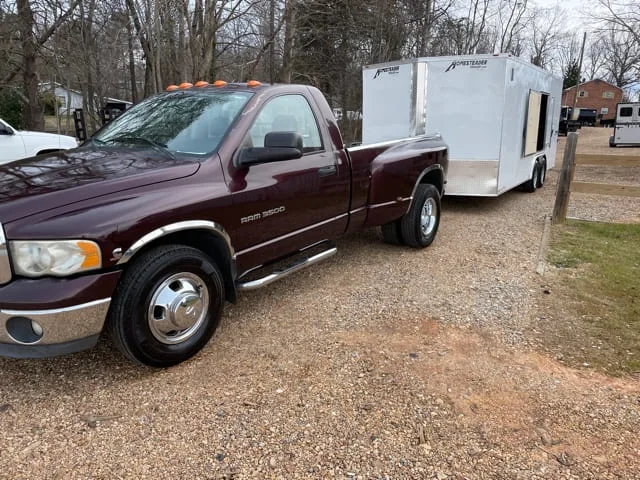
Towing a trailer safely can be overwhelming, especially the first few times. You need to know how much weight and speed your trailer can handle, the proper way to attach and load your trailer, how to drive your tow vehicle with a trailer attached, and more. Without adequate knowledge and preparation, pulling a trailer can be dangerous. In this guide, we’ll walk you through the essential steps to prepare for towing, how to hook up a trailer, and safety tips for hauling.
What to know when towing a trailer for the first time
Before towing a trailer for the first time, here are a few things you should know that can be easily overlooked.
Know your vehicle’s limits
First, check your truck’s towing capacity to ensure it can handle your trailer’s loaded weight. Excessive weight can negatively affect your vehicle’s handling and braking and even damage your vehicle. Assess your vehicle’s tow limits using its Gross Vehicle Weight Rating (GVWR), or the vehicle’s maximum towing weight, and the Gross Combined Weight Rating (GCWR), or the total weight your vehicle can handle, including the vehicle, passenger, and trailer load weight. You can find these ratings in your vehicle’s owner’s manual.
You should also make sure you don’t exceed your trailer’s hitch, tongue, and axle weight ratings. This information should be labeled on your hitch. Don’t exceed the towing capacity of the weaker element. For example, if your vehicle has a greater towing capacity than your hitch, do not exceed the hitch’s towing capacity.
Learn how to find your trailer’s weight.
Practice operating your vehicle with a trailer
Before operating your vehicle with the trailer attached, familiarize yourself with the trailer’s dimensions. Then, practice parking, turning, and maneuvering in tight spaces in a safe environment like an empty driveway, parking lot, or another low-traffic area. You’ll become more aware of how your trailer moves as you practice pulling it, but give yourself plenty of space when turning and parking at first, if possible.
Learn the laws
Laws surrounding insurance and driver’s license requirements vary from state to state, so you will need to ensure you meet those requirements before towing a trailer. If you’re hauling a trailer above a certain weight threshold, you may need a commercial license. Check out our guide to trailer towing laws to ensure compliance with federal and state regulations.
You’ll also need to check your existing auto insurance policy to make sure your trailer is covered in the case of an accident. If you own the trailer, it is likely covered in your policy, but the contents of the trailer may not be covered. Regardless, it is worth checking with your agent on the details of your insurance policy to find out what exactly is covered.
How to tow a trailer
When it’s time to hook up your trailer to your tow vehicle, follow these simple steps to maximize safety on the road:
1. Ensure the ball is the right size for the coupler and your vehicle is rated to tow the trailer load.
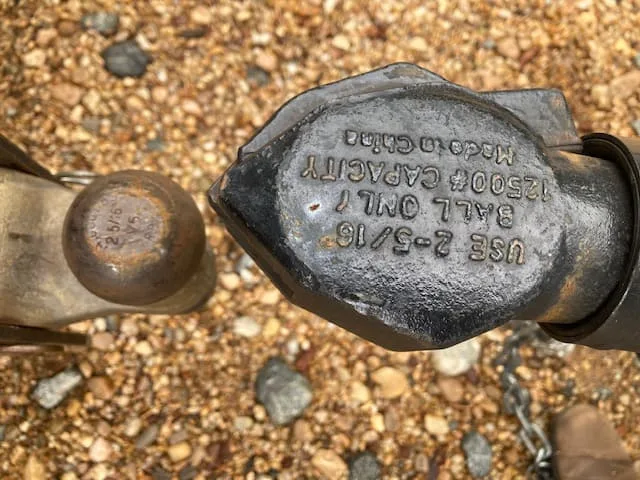
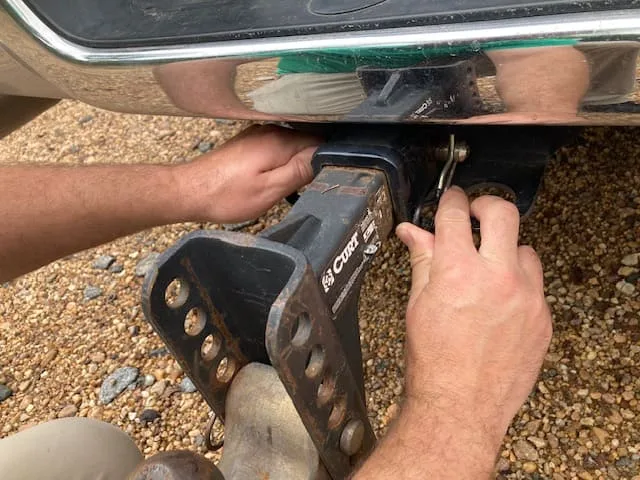
2. Fit the ball mount into the hitch’s receiver, and place the kingpin in to hold it.
3. Slowly back up the truck so the ball sits directly underneath the trailer coupler. Use your backup camera or a friend to help guide you.
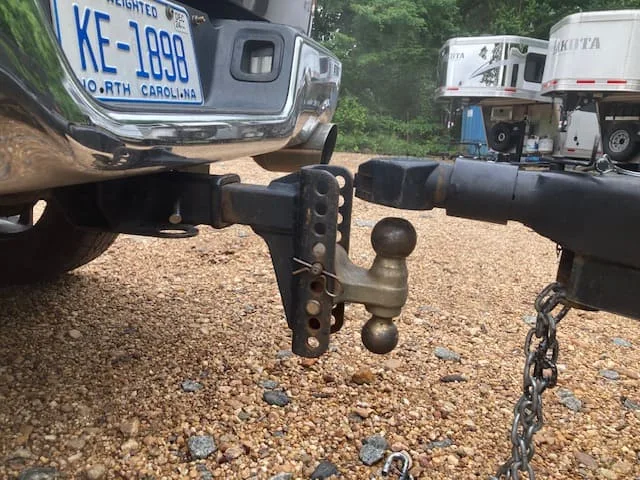
4. Twist the jack to lower the trailer until the coupler fits over the ball.
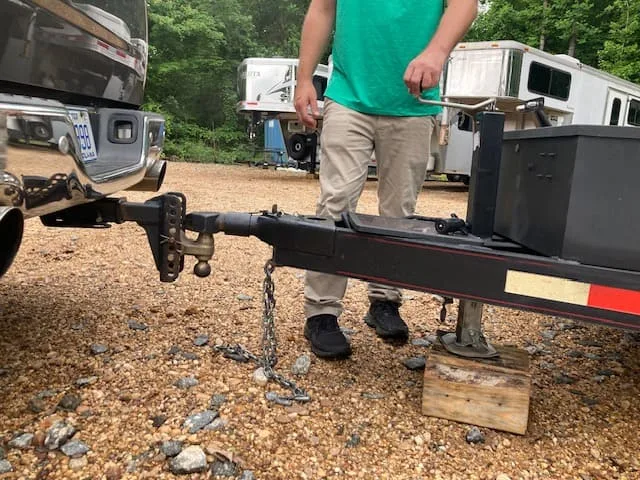
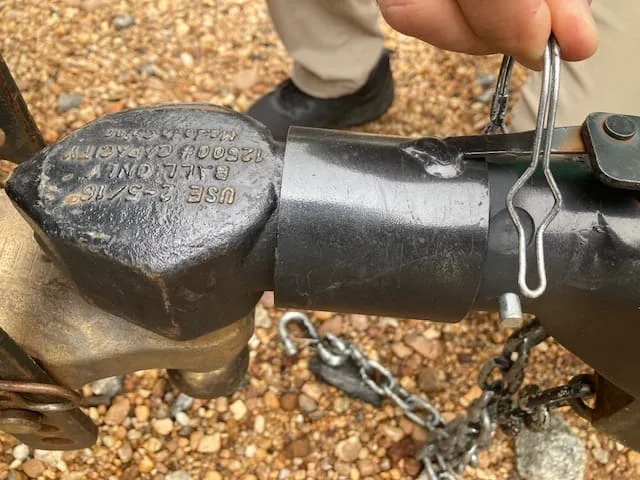
5. Close the hitch ball lock, and secure the coupler to the ball with the cotter pin on the latch.
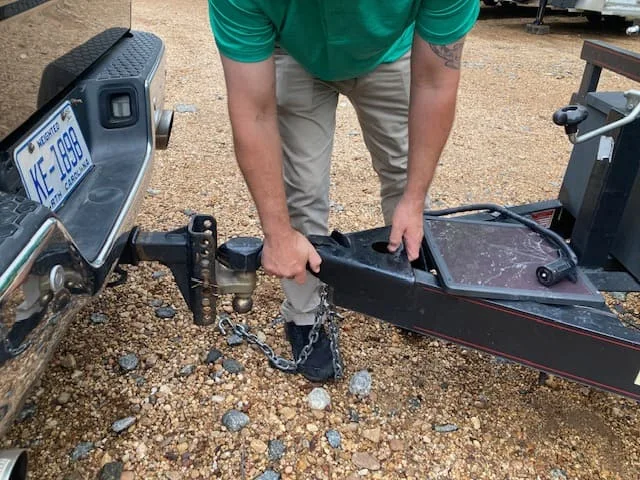
6. Make sure everything is connected by lifting up on the tongue.
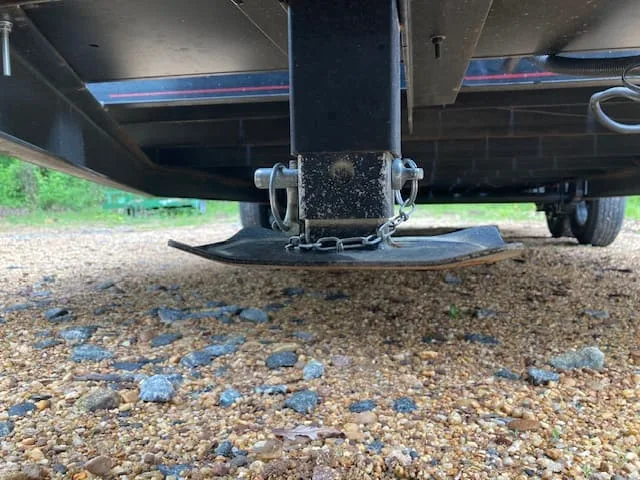
7. Stow the trailer jack by cranking or rotating it up.
8. Connect the safety chains, crossing them to be sure they’ll create a cradle to catch the trailer tongue if it ever becomes disconnected.
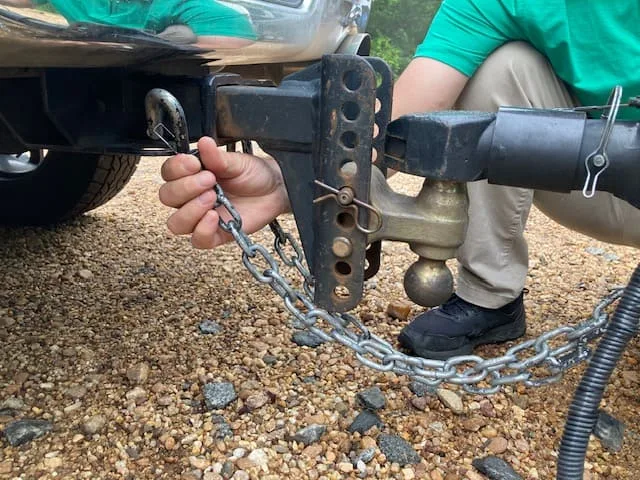
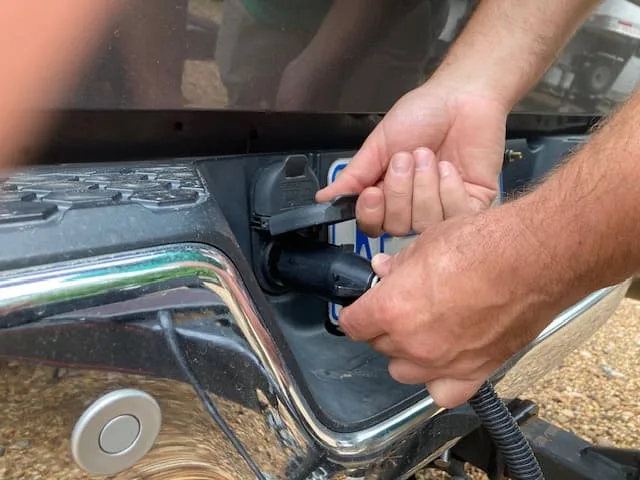
9. Hook up the electrical connector, and check your lights.
10. Now, you can load your trailer, positioning the majority of the weight above the axle. Secure the load with ratchet straps, tie-ins, and/or tarps.
Once you’ve finished hooking up and loading your trailer, be sure to do one more safety check. Walk around your truck and trailer, checking the hitch hook-up, brake lights, turn signals, tires, and brakes. If everything looks good, you’re good to go!
Learn what equipment is required to be on a trailer →
Dos and don’ts when towing a trailer
There are a number of best practices and common mistakes to avoid when towing a trailer. Whether you’re hauling a trailer for the first time or the hundredth time, follow these “dos and don’ts” to keep yourself and others safe on the road.
When towing a trailer, you should:
- Use a lower gear when going up or down hills to save your truck’s transmission and brakes.
- Keep it level to prevent swaying and uneven wear on tires and suspension.
- Take wide turns around corners and turns so the trailer tires do not hit curbs or fall off the road.
- Increase stopping distances to account for the extra weight you’re hauling.
You should not:
- Stay on the brakes, putting them at risk for overheating.
- Overlook the importance of a balanced load.
- Drive as fast as the trailer can handle, increasing your chances of losing control.
- Stay in the left lane and keep others from passing you.
What to know when pulling a small trailer long distances
Before pulling a small trailer long distances, be sure to plan your route in advance, avoiding areas with heavy traffic and steep highways when possible. Fill up your tank before hooking up the trailer to avoid maneuvering through gas pumps with the trailer attached. It’s also important to have roadside safety and tire change kits on hand for emergencies.
Once you hit the road, do not exceed the speed limit, and stay in the right lane to let other traffic pass you. If you need to change lanes, give yourself plenty of space and time, use your turn signal, and check your side mirror and blind spot. Additionally, you’ll need to initiate braking earlier than you do driving without a trailer because the brakes must work harder to stop the additional weight.
How much weight can you pull without trailer brakes?
If you’re towing a small trailer, you probably won’t need trailer brakes. However, if you’re towing over 2,000 or 3,000 pounds, check the state law and your tow vehicle’s requirements. Most larger trailers typically come equipped with a brake system, but you’ll need to install some if you’re hauling a heavy load on a trailer without brakes.
Learn how to find your trailer’s towing capacity.
What is the best axle gear ratio for towing?
The axle gear ratio indicates the number of revolutions the driveshaft completes to rotate the axle once. The higher the ratio, the more powerful the engine, which means the truck is capable of towing heavier loads. The best axle gear ratio for towing generally falls in the range of 3.55 to 3.73, but newer trucks with 8- to 10-speed transmissions can tow with a 3.31 axle gear ratio.
Safety tips for towing trailers
- Inspect your tires. Maintain the correct tire pressure in your tow vehicle and trailer tires, and check the tread and sidewalls for damage. Regularly checking your tires can boost your mileage and prevent blowouts.
- Make sure your lights are working. Trailers often block your tow vehicle’s rear lights, so it’s vital that the trailer’s tail lights, brake lights, and turn signals are functioning. If a bulb needs replacement or there’s an issue with the electrical connection, stay off the road until it’s fixed.
- Test your brakes. Verify your brakes are working properly, and if you’re using trailer brakes, adjust them according to your load.
- Adjust your mirrors. Ensuring your side mirrors provide a clear view of the end of your trailer is crucial for monitoring your load and gauging proximity to other objects.
- Use wheel chocks. These wedge-shaped blocks should always be placed around trailer tires when unhooking the trailer from the tow vehicle to prevent it from rolling away.
- Brake and accelerate gradually. Sudden movements can cause your trailer to sway, so speed up slowly and give yourself plenty of space to stop.
- Stop if you notice a problem. If your load becomes unsecured, you hear an unusual noise, or your trailer starts to sway, find a safe spot to pull over, take a look, and reload the trailer if necessary.
- Take your time. The speed limit for vehicles towing trailers varies by state, but traveling at the posted speed limit is often unsafe. Drive as slowly and cautiously as possible to keep yourself and other drivers safe.
Learn more: How to Load a Trailer with Proper Weight Distribution
From learning how to hitch your trailer to figuring out your setup’s tow capacity, towing a trailer can be a confusing undertaking. At Ken Feagin Truck & Trailer, trailers are our specialty, and your safety on the road is our priority. If you have questions about towing or you’re shopping for a trailer in Asheville or Greenville, SC, we’re right down the road in Campobello, SC. Come visit us, or give us a call–we’re always happy to help.
You might also like: