


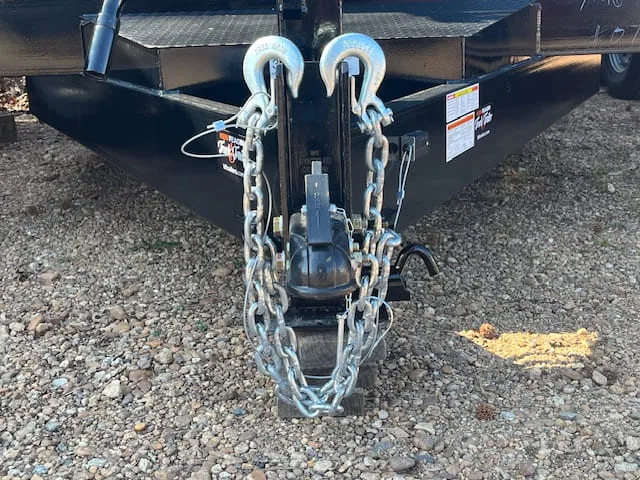
Towing a trailer requires more than just hitching it to your vehicle and hitting the road. To ensure safety, stability, and legal compliance, having the right equipment is essential. From proper lighting and braking systems to secure hitches and load restraints, each component plays a crucial role in preventing accidents and ensuring a smooth towing experience. In this guide, we’ll break down the key equipment required for towing a trailer, helping you stay safe and compliant with the law.
Equipment required for legal trailer towing
1. Lighting and reflectors
Proper lighting and reflectors ensure you remain visible to other drivers, especially in low-light conditions or at night.
Trailer taillights and brake lights
All 50 states require that trailers have working taillights, and some even require brake lights. These lights must be wired to activate in sync with your vehicle’s braking system to prevent rear-end collisions.
Turn signals
Turn signals are also required in many states. These signals can be integrated with the brake lights or function as separate amber-colored lights, depending on your trailer’s design and specific regulations.
Reflectors
Reflectors also play a vital role in visibility, particularly when the trailer is parked or being towed in low-light conditions. Red reflectors should typically be mounted on the rear, while amber reflectors should be placed along the sides to improve awareness for passing vehicles.
License plate light
Many states require that trailers are registered with a license plate. This depends on the type of trailer and/or the weight of the trailer. In cases where a license plate is required, most states also mandate a light to illuminate the license plate for clear visibility by other drivers and law enforcement. Without it, you could face fines or other penalties.
2. Braking system
A reliable braking system is crucial for trailer safety, especially when towing heavy loads. Trailers add significant weight and momentum, which can make stopping distances much longer if the braking system isn’t adequate. Trailers over a certain weight (typically 3,000 pounds) are legally required to have their own braking system to help prevent accidents and reduce strain on the towing vehicle.
Surge brakes vs. electric brakes
There are two main types of trailer brakes: electric brakes and surge brakes. Electric brakes are the most common type and require a brake controller installed in the towing vehicle. The controller sends an electrical signal to the trailer’s brakes when the driver applies the towing vehicle’s brakes, allowing for adjustable braking force and smoother stops.
Surge brakes, on the other hand, operate hydraulically and do not require a brake controller. These brakes activate when the trailer pushes against the hitch as the towing vehicle slows down, compressing a hydraulic cylinder that engages the trailer’s brakes. Surge brakes are often used on boat trailers because they don’t require electrical connections that could be affected by water exposure. However, they offer less control compared to electric brakes and aren’t suitable for all towing situations.
Learn more: How to Adjust Your Electric Trailer Brakes: Everything You Need to Know
Breakaway system
Another critical safety feature for trailers with braking systems is the breakaway system. This system is designed to engage the trailer’s brakes automatically if the trailer becomes disconnected from the tow vehicle. It typically consists of a small battery and a breakaway switch that activates the brakes when the trailer detaches. Breakaway systems are legally required on many larger trailers and are an essential safeguard to prevent runaway trailers in the event of an emergency.
3. Hitching and coupling devices
A secure hitching and coupling system is essential for safe towing, ensuring that your trailer remains firmly attached to your towing vehicle under all driving conditions.
Trailer hitch
The trailer hitch serves as the primary connection point and must be rated for the trailer’s total weight, including its cargo. Trailer hitches are classified into different categories (Class I to Class V) based on their weight capacity, with heavier loads requiring higher-rated hitches. A mismatched hitch can lead to instability, excessive strain, or even trailer detachment.
Coupler
At the heart of the coupling system is the coupler, which attaches to the towing vehicle’s hitch ball. The coupler and hitch ball should match in size for a secure fit. The coupler must be properly latched and locked in place to prevent the trailer from disconnecting while in tow. You may also use locking pins or hitch locks as an added security measure to prevent theft or tampering when parked.
Safety chains
Safety chains serve as a backup connection in case the primary hitch fails. Safety chains must be crossed underneath the trailer tongue when attached to the towing vehicle, forming a cradle that can help catch the tongue if it disconnects. This configuration prevents your trailer from dropping to the ground and allows you to maintain some control in an emergency. The chains should have enough slack for turning but not so much that they drag on the ground, which can cause wear and potential breakage.
Weight distribution hitch
If your trailer has a higher tongue weight, you may need a weight distribution hitch. This type of hitch helps distribute the trailer’s weight more evenly across the towing vehicle’s axles, improving handling, braking, and overall stability. Some setups also include sway control systems, which help prevent side-to-side trailer movement caused by wind, passing vehicles, or sudden maneuvers.
4. Tires and wheel safety
Tires and wheels play a crucial role in trailer safety, affecting stability, handling, and overall towing performance. Unlike regular vehicle tires, trailer tires are specifically designed to handle heavy loads and extended periods of inactivity.
Properly rated tires
Trailer tires are classified as Special Trailer (ST) tires, which differ from passenger (P) or light truck (LT) tires. ST tires have stiffer sidewalls to reduce sway and improve load-bearing capacity. Each tire has a load rating, which indicates the maximum weight it can safely support. Using tires that are underrated for the trailer’s gross weight can lead to overheating, blowouts, and dangerous handling. It’s also important to match all tires on the trailer for balanced performance.
Learn more: 5 Best Horse Trailer Tires & How to Choose
5. Load securement
Properly securing cargo on a trailer is essential for both safety and legal compliance. Unsecured or improperly restrained loads can shift, leading to loss of control, trailer instability, and even accidents. In many regions, load securement laws are enforced to prevent cargo from falling off and creating hazards for other drivers.
Tie-down points and anchor systems
Most trailers come with built-in tie-down points, like D-rings and stake pockets, designed to hold cargo in place. These anchor points must be structurally sound and rated to handle the weight and force of the secured load. If your trailer lacks adequate anchor points, installing additional E-track systems or recessed D-rings can provide more flexibility for securing cargo safely.
Straps, chains, and bungee cords
Choosing the right tie-down materials is crucial for effective load restraint. All tie-downs should be rated for the weight of the cargo and inspected for wear, fraying, or damage before each use.
There are several options for securing trailer cargo.
- Ratchet straps (tie-down straps): Ideal for securing general cargo, these straps provide a firm hold and are available in various weight ratings. They should be tightened securely but not overtightened to the point of damaging the cargo.
- Chains & binders: Used for heavy-duty loads, such as construction equipment and vehicles. Chains are stronger than straps and are typically required for hauling items over a certain weight. Load binders (ratcheting or lever-style) help apply the necessary tension.
- Bungee cords & rope: Suitable for light-duty applications but should not be relied upon for securing heavy cargo. They can stretch or break under stress.
Cargo covering and containment
For certain types of loads, additional containment methods are required.
- Tarps & cargo nets: Prevent loose materials (like gravel, sand, or debris) from falling off during transport.
- Side panels or racks: Help keep bulky or stacked items from shifting.
- Wheel straps & chocks: Essential for securing vehicles, motorcycles, or ATVs on a trailer.
Towing with confidence
Equipping your trailer with the right towing gear is not just a matter of convenience—it’s a necessity for safety and compliance. Proper lighting, braking, hitching, tires, and load securement all contribute to a safer and more controlled towing experience. Before every trip, be sure to inspect your equipment, follow legal requirements, and take extra precautions to secure your cargo. By investing in the right towing essentials and performing regular maintenance, you can enjoy worry-free hauling while keeping yourself and others safe on the road.
If you’re shopping for a trailer in Asheville or Greenville, SC, we’re right down the road in Campobello, SC. Come visit us, or give us a call—we’re always happy to help and answer any questions you have about safe, secure towing.
You might also like: