


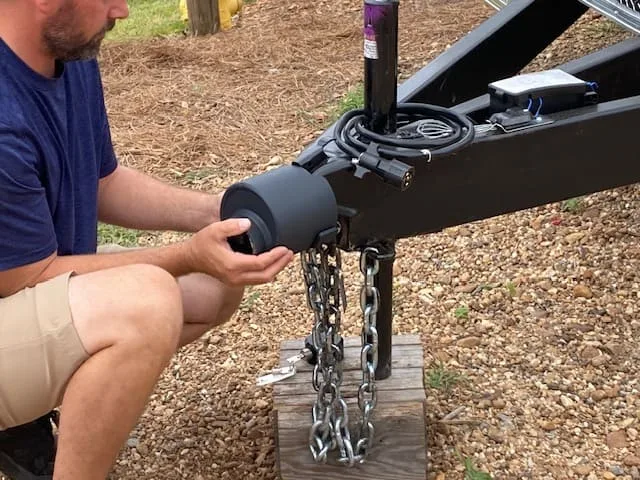
Whether you’re hauling equipment to a job or using your trailer for a weekend getaway, all trailer owners can agree on the importance of keeping your trailer and cargo safe and secure. In recent years, trailer theft has become more prevalent than ever. It can happen to anyone, but the more prepared you are, the less likely you are to become a victim.
In this guide, we’ll cover the essentials of trailer security, from trailer theft prevention strategies to the types of locks you can use. Let’s ensure your trailer stays where it belongs–with you.
What is the best way to secure a trailer?
Since most thieves are prepared with tools to cut through locks and other security devices, the most effective way to secure a trailer is to make theft look difficult to get away with. This might involve making it hard to get to, leaving it in plain sight of others, or using a variety of locks and chains that make it look secure. While these strategies can deter thieves on their own, they are most effective when used alongside other security measures.
In your driveway
Thieves target trailers parked in driveways or at businesses because they are often left unhooked. This makes it much easier for them to hook it up to their vehicle and tow it away. But when you’re at home, there are several ways to secure your trailer:
- Keep your trailer in the garage or behind the house. If you park out of view from the street, thieves won’t know there’s a trailer to steal.
- If your trailer is unhooked, park your vehicle in front of it. No garage? No problem! Park the trailer in your driveway, and block it in with a vehicle.
- Park in sight of someone you trust. If you’re going out of town, ask your neighbor or another business to keep an eye on your trailer, and park where they can see it.
- Install a motion detector with security lights. Security lights come in a variety of types and prices. Find one that works for your house and budget, and install it where you park your trailer.
- Put up a security sign and cameras. Indicate that your property is secured, even if it’s not. Place a security system sign and security cameras in plain sight to deter thieves from attempting to steal your trailer.
On the road
When parking your trailer in a public place, it can be difficult to secure your trailer the way you would at home. You may not be able to park in a garage or set up a security light and cameras, but there are other theft prevention measures you can take. Here are some of the best ways to secure your trailer on the go:
- Park against obstacles. When you’re finding a place to park, take an extra couple of minutes to find a strategic spot. By parking against a wall or building, you can block access to the trailer doors and hitch, making it more difficult to break into or move.
- Keep the trailer hitched. This creates more work for the thief. The more time it takes for them to unhook and hitch a trailer to their vehicle, the more likely they are to get caught.
- Park overnight in well-lit areas. If you’re staying at a hotel, ask the desk if they know of a place you can park with good lighting and video surveillance.
- When parking long-term, use extra security measures. Use multiple locks, chains, and other tools to make it look difficult to break into or detach. If possible, remove any equipment or other valuable items so there’s less motivation for theft.
12 security measures to protect your trailer
From locks to chains to alarms, there are many ways you can go about securing your trailer. Each varies in price and effectiveness, but we’ve put together a list of twelve of the best ways to prevent trailer theft. These security measures are most effective when used in conjunction with the parking strategies we shared above.
1. Buy quality, easy-to-use locks
Invest in locks that are sturdy and can withstand elements that cause damage. A good trailer lock is made of hardened steel, has a robust shackle, and comes with a protective cap to protect it from moisture, dirt, sand, and other elements. You should also make sure the lock you buy is one that you will actually use. If it is overly complex, you and others may not take the time to use it consistently. Research your options to find a lock that is not easily compromised but will be easy enough to use regularly. If you have a team that uses several different trailers, consider using a key that can access all trailer locks for added convenience.
2. Use a hitch lock
A hitch lock is a common and effective trailer security tool. There are several different types, and each of them makes it more difficult for a thief to detach your trailer from your vehicle or hitch your trailer to their vehicle. Whether you opt for a receiver hitch, coupler hitch, hitch pin, or latch pin lock, a hitch lock adds an extra layer of security while you’re away from your trailer.
Learn more about hitches: Types of Trailer Hitches Explained
3. Use a coupler ball lock
Coupler ball locks feature a ball that fits into the coupler and securely locks in place, preventing a thief from disconnecting your trailer. These locks are straightforward and relatively affordable, so they’re a great security option if you plan to keep your trailer connected to your tow vehicle.
4. Remove the hitch or ball mount
One effective yet often overlooked method to prevent trailer theft is simply removing the hitch or ball mount when your trailer is not in use. Though it may seem like a hassle, most thieves do not carry an extra hitch or ball mount, so they will not be able to tow your trailer if you remove these parts. Try using this security measure if you have to leave your trailer unhitched for an extended period of time.
Learn more: What Hitch Ball Size Do You Need?
5. Use wheel locks
Using wheel locks not only keeps your trailer from moving, but it acts as a visual deterrent as well. Wheel locks often come in bright colors that discourage theft attempts. While they may not be impossible to defeat with the right tools, wheel locks do slow thieves down and create the appearance of a secure trailer.
6. Run a chain through the tires
There are a few ways you can use chains to secure your trailer. One method is to run the chain from one tire to another to keep the wheels from moving. If you don’t have a chain, you can also do this with a cable. This security measure is most practical for when your trailer is parked at home.
7. Chain your trailer to an object
You can also use a chain or cable to secure your trailer to an immovable object. If you choose to use this method, be sure the chains are in plain sight. If a thief does not see the trailer is secured to something and attempts to drive away, it could cause damage to your trailer.
8. Immobilize equipment
If you’re keeping equipment or other valuable cargo in your trailer, secure it as much as you can. Lock up any equipment with built-in keys or keypads, and secure the rest with trailer straps or chains. If you have an enclosed trailer and are keeping equipment inside, ensure the door is locked.
9. Leave empty enclosed trailers unlocked
On the other hand, if you’ve taken your equipment out of your enclosed trailer, you should keep it unlocked. Thieves often damage enclosed trailers trying to break in. If you leave it open, they will see there is nothing inside for them to steal and move along.
Looking for an enclosed trailer? Check out our Enclosed Trailer Size Guide
10. Install an alarm system
If you would like to be notified when someone tries to break into or move your trailer, you can purchase a portable alarm system. These are great for enclosed trailers that store expensive equipment. When the door opens, the alarm goes off and you’re notified about the break-in. These alarm systems usually cost a couple hundred dollars, but it may be worth the price tag if it protects you from losing thousands of dollars of equipment.
11. Place a tracking device in the trailer
In case your trailer does get stolen, you can increase your chances for recovery with a GPS tracking device. These devices can be battery-powered or hard-wired and usually involve a service subscription. You can track your trailer from wherever you are, and if someone takes it, you can show the authorities its location. Plus, you can display decals on your trailer indicating it’s equipped with GPS tracking. Since thieves aim to steal items that cannot be traced back to them, these decals can be a great deterrent.
12. Customize your trailer
Trailers can be difficult to recover because they look similar to other trailers. Customizing your trailer not only helps with recovery if it is stolen, but it can discourage thieves from stealing it in the first place. A branded trailer will be a lot harder to sell and a lot easier to track down. Not to mention, your trailer is a great place to advertise your business.
Remember, trailer thieves are not looking for a challenge–they’re looking for items that are easy to steal and quickly sell. Make it as difficult as possible by using several security measures to protect your trailer and cargo. The more security measures you use, the more daunting theft looks, and the more tools the thief would need to successfully steal your trailer.
Reporting a stolen trailer
If your trailer is stolen, you should file a police report immediately and report the theft on the Stolen 911 website. Trailers are difficult to recover, but there are a few measures you can take to make your trailer easier to identify. When marking your trailer, make sure it’s permanent and in a location where the thief is unlikely to spot it. Otherwise, they will cover it up before selling it. Here is what you can do to aid in recovery:
- Mark your trailer and cargo with their serial numbers
- Place a unique marking on the top of your trailer
- Keep paperwork with your trailer’s VIN number
- Take photos of the trailer and equipment inside
After notifying the police of a stolen trailer, the next step is to speak with your insurance agency. If you have coverage for the items inside your trailer, the insurance agency will request extensive information about the items to estimate the value of what was stolen. Keeping a log or taking photos of what equipment and other valuables you usually keep in your trailer can give you the proof you need to get your claim approved.
Trailer insurance is not required, but if you want coverage, speak with your agent when you buy your trailer. Most of the time, trailers are not covered by the tow vehicle’s insurance, so your agent will probably write a new policy based on what you would like covered. You’ll need a separate policy to cover your cargo.
At Ken Feagin Truck & Trailer, we care about keeping your trailer–and the things it carries–safe from theft. If you have questions about securing your trailer or you’re shopping for a new or used trailer in Asheville or Greenville, SC, we’re right down the road in Campobello, SC. Come visit us, or give us a call–we’re always happy to help.
You may also like: