



If you own a trailer, you already know: one broken weld or bad bearing can ruin a full day’s schedule. We’ve seen everything roll through our lot, from near-new trailers with seized brakes to workhorses that lasted 20 years because their owners stayed on top of upkeep. Keeping your trailers in top shape protects your investment, keeps you safe on the road, and makes sure your equipment performs when the job’s on the line.
Regular maintenance doesn’t take long, but it pays off every mile. Here’s a breakdown of the daily, seasonal, and annual checks that make the difference between a dependable trailer and one stuck on the side of the road.
How often should you service a trailer?
In general, you should inspect your trailer before every trip, perform basic maintenance monthly, and schedule a full service once a year. This routine keeps your trailer safe, compliant, and ready to tow whenever you need it.
- Before each trip, do a brief safety check to make sure everything is secure and functioning as it should.
- Each month, perform a closer inspection and routine care. This is your chance to clean, lubricate, and look for wear that builds up over regular use.
- Once a year, commit to a full inspection or service to reset your trailer’s condition and prepare it for another year of use.
Your ideal service schedule can vary based on how often you tow, the loads you carry, and the conditions you drive in. Heavy use, off-road travel, or harsh weather may require more frequent checks. When in doubt, follow your owner’s manual or talk with our team to make sure your trailer stays road-ready year-round.
Ultimate trailer maintenance guide: daily, seasonal & annual checklist
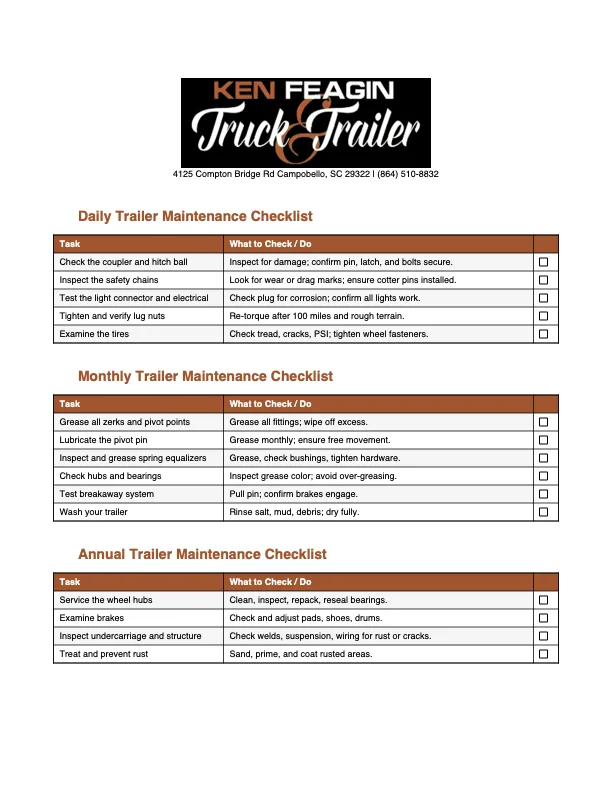
Download a printable PDF of these daily, monthly, and annual trailer maintenance checklists →
Daily trailer maintenance checklist
Before towing your trailer, it is worth taking a few minutes to walk around your trailer and check the essentials. Daily maintenance does not require tools or special training, and it helps you spot wear and tear early, tighten what can loosen, and confirm that everything functions as it should.
1. Check the coupler and hitch ball
- Check the coupler and hitch ball for visible damage or cracks.
- Confirm the pin is installed as a secondary latch and the latch locks fully in place.
- Verify mounting bolts are tight and torqued properly.
Learn about types of trailer hitches →
2. Inspect the safety chains
- Inspect the hooks and chains for wear or damage. Replace chains if they’ve been dragged or show visible stress.
- Confirm they’re pinned correctly and that cotter pins are installed.
Pro tip: If the chains have ever been dragged on the highway, they are compromised and no longer suitable to be used.
3. Test the light connector and electrical
- Inspect the plug and terminals for cleanliness and corrosion.
- Plug in securely and confirm that the latch seats completely.
- Verify all required trailer lights function (brake, tail, and reverse lights, turn signals, etc.).
Pro tip: Store the connector facing downward when not in use to prevent moisture buildup.
4. Tighten and verify lug nuts
- Check lug nut torque at 0, 25, 50, and 100 miles on a new trailer.
- Recheck torque after hitting potholes or rough terrain, especially on aluminum wheels.
- Inspect for looseness or missing nuts before every haul.
5. Examine the tires
- Check tire condition for wear, cracks, and uneven tread.
- Inspect tire pressure and adjust to the manufacturer’s recommended PSI.
- Tighten wheel fasteners with a torque wrench to ensure all lug nuts or bolts are tightened.
Taking a few minutes for these checks before every haul saves time and money in the long run. It also builds the habit of knowing your trailer inside and out, which makes it easier to catch changes early. The more consistent you are with daily maintenance, the safer, smoother, and longer your trailer will perform.
Monthly trailer maintenance checklist
Every 1-3 months, it is important to give your trailer a deeper inspection that goes beyond a once-over. Some trailer parts need lubrication, cleaning, and a closer inspection to stay in good working order. Setting aside time regularly for basic mechanical checks helps prevent wear, protect moving parts, and keep your trailer towing smoothly.
Use this checklist to keep your suspension, hubs, and other high-stress components performing reliably between full service intervals.
1. Grease all zerks and pivot points
- Apply grease to every zerk fitting to maintain smooth movement and prevent corrosion.
- Wipe away excess grease to avoid buildup that attracts dirt and debris.
2. Lubricate the pivot pin
- Apply grease monthly to push out moisture and prevent binding.
- Confirm the pin moves freely without excess play.
3. Inspect and grease the spring equalizers
- Apply grease to fittings.
- Check for cracks, worn bushings, or loose hardware.
- Ensure eyelets are tight on the springs (if equipped with spring-rod axles).
4. Check the hubs and bearings
- Remove the rubber caps and inspect the grease condition.
- Look for dark, white, or metallic grease, which can indicate internal wear.
- Avoid over-greasing to prevent grease from entering the brake drum, which can cause smoke or reduced braking power.
5. Test the breakaway system
- Jack the trailer up safely on level ground, then pull the breakaway pin and confirm the brakes engage on every wheel.
6. Wash your trailer
- Rinse off salt, mud, and road debris that can trap moisture and cause corrosion, including on the undercarriage. Check for hidden issues like rust, cracks, or loose hardware.
Pro tip: Let the trailer dry completely before storage or applying grease.
These steps take a little more effort than your daily walk-around, but they go a long way toward avoiding expensive repairs later. A consistent monthly routine keeps your trailer road-ready and extends the life of every part that keeps it rolling.
Annual trailer maintenance checklist
Even the toughest trailers need a deep inspection once a year, or, if you’re using your trailer heavily, every 12,000 miles. Annual maintenance is your chance to reset everything by cleaning, tightening, greasing, and replacing the parts that take the most abuse over time. This level of service keeps your trailer in top condition, prevents hidden wear from turning into major repairs, and helps you stay confident that every system is working as it should.
Perform these safety checks once a year (or every 12,000 miles):
1. Service the wheel hubs
- Disassemble each hub, clean thoroughly, and inspect bearings for wear or scoring.
- Repack with fresh, high-quality grease and replace seals as needed.
Pro tip: Neglected hubs can lead to wheel failure and an expensive spindle or axle replacement.
2. Examine brakes
- Check the brake shoes, drums, and pads for structural wear or damage and repair or replace trailer brakes as needed.
- Clean and adjust the brakes to ensure proper contact and stopping power.
3. Inspect the undercarriage and structure
- Check the floor, crossmembers, and welds for early signs of rust, cracks, or fatigue.
- Examine all connection points, lifting mechanisms, and suspension parts for wear or damage.
- Inspect brake wiring, hangers, and U-bolts securing the axles to the springs for tightness and corrosion.
Pro tip: Always support a raised dump trailer with a prop rod before working underneath.
4. Treat and prevent rust
- Sand any area affected with rust down to clean metal.
- Apply a rust-inhibiting primer or paint to seal the surface.
- Finish with a protective wax or coating.
Pro tip: Regularly cleaning and treating exposed metal helps prevent long-term corrosion and structural damage.
An annual inspection is the best insurance you can give your trailer. It keeps you ahead of wear, protects your investment, and makes sure your equipment is ready for another year of hard use. Whether you handle these checks yourself or bring your trailer to a certified service shop, staying consistent with yearly maintenance keeps you safe, compliant, and on schedule for the long haul.
Does regular trailer maintenance make a difference?
We’ve seen the difference that maintenance makes firsthand. The trailers that last the longest and perform the best are the ones that get consistent care. Whether you use a trailer for roofing, landscaping, or hauling weekend toys, regular maintenance protects your investment in more ways than one.
Regular maintenance:
- Protects your and others’ safety: A well-maintained trailer brakes, turns, and tows predictably, reducing the risk of accidents on the road.
- Keeps performance steady: Proper lubrication, tire pressure, and wiring keep everything operating like it should, with fewer surprises halfway through a haul.
- Extends your trailer’s life: Routine checks prevent rust, wear, and bearing damage that can cut years off your trailer’s lifespan.
- Stays regulation-compliant: Up-to-date lighting, brakes, and safety chains help you stay within DOT regulations and avoid costly citations.
- Preserves resale value: A clean maintenance record and preventative care make your trailer easier to sell or trade when it is time to upgrade.
- Saves money on expensive repairs: A neglected trailer is far more likely to have higher repair costs from broken or aging parts that could have had a longer lifespan.
A well-maintained trailer tows better, lasts longer, and holds its value. Smart maintenance prevents failures before they ever hit the road. Small checks now save major downtime later and keep your trailers ready for work every day of the week.
When to replace trailer tires
As a general rule, replace trailer tires every 3–6 years, regardless of tread depth. You can find the tire’s age by checking the DOT date code stamped on the sidewall: the first two digits indicate the week, and the last two show the year of manufacture.
Example: 34 / 23 = the tire was manufactured in the 34th week (third week in August) of 2023.
Trailer tires wear differently from truck or car tires because they often carry heavy loads and spend long periods sitting still. Even if the tread looks fine, the rubber can dry out, crack, or lose strength over time, especially when exposed to heat, sun, or road salt. Check the sidewalls for dry rot, bulges, or weather cracking, and keep an eye on uneven tread wear that could indicate alignment or load issues. Tires that show any of these signs should be replaced immediately.
Pro tip: Keep receipts for new tires, brakes, and other major parts. Having a paper trail helps you claim warranties if needed and shows solid maintenance history when it’s time to sell or trade your trailer.
Learn more: How to Change a Trailer Tire: A Step-by-Step Guide
Do trailer tires need to be rotated?
Yes, trailer tires should be rotated every 5,000 miles, or about twice a year. Regular rotation helps distribute wear evenly across all tires, improving handling, extending tire life, and reducing the chance of unexpected blowouts or uneven tread patterns. Follow the trailer or tire manufacturer’s rotation pattern for the best results.
Learn more: 5 Best Horse Trailer Tires & How to Choose
How to maintain your trailer type
Each type of trailer has specific servicing needs based on its design and function. Adding these specialized tasks to your maintenance checklist is key to keeping your trailer in peak condition and ensuring it remains dependable for years to come. Along with general upkeep, here are some additional maintenance steps to help you get the best performance and longevity out of your trailer.
Utility trailer maintenance
Many utility or equipment trailers come with wood floors that need extra care. At least once a year, inspect the floorboards for signs of rot or damage, replacing any planks that show significant wear. Then, apply a high-quality wood sealant to protect the flooring from moisture and wear, especially if you haul heavy equipment or debris. This simple step can add years to the life of your trailer floor and save you from costly repairs down the line.
Learn more: Flatbed Trailer Dimensions & Sizes Guide
Enclosed cargo trailer maintenance
Enclosed cargo trailers are designed to protect valuable items, so they need regular attention to prevent water damage and wear. Every few months, clean the interior and check for leaks. If you spot any cracks or gaps in the roof, seal them immediately to keep water out. Once a year, inspect the door seals and replace any that show signs of wear to keep the trailer fully weatherproof. And if the trailer has wood flooring, seal it annually to keep it in good condition.
Learn more: Enclosed Trailer Size Guide: Which Size Trailer is Right for You?
Horse trailer maintenance
Horse trailers come with a unique set of maintenance requirements to keep your horse safe. Regularly inspect ramps for broken welds, bent edges, or fraying cables to make sure they’re secure for safe loading and unloading. If your horse trailer is aluminum, polish it with WD-40 to prevent corrosion and protect the finish. Like other trailers, horse trailers with wood floors should be sealed yearly to guard against moisture.
Before winter, be sure to winterize your horse trailer by sealing any cracks in the structure, checking the door seals, opening the ventilation, and removing the battery. These measures protect your trailer from freezing temperatures and ensure a warm, comfortable ride for your horse when you’re ready to hit the road again.
Learn more: 4 of the Best Horse Trailers
Dump trailer maintenance
The hydraulic system is the core feature of a dump trailer, so it requires regular care. Check hoses, connections, and pumps for leaks or wear, and lubricate moving parts at least once a year to keep everything working smoothly. It’s also important to monitor hydraulic fluid levels and top them up when needed–low fluid can put extra strain on the system and affect performance. Finally, inspect the dump gates for any signs of damage, ensuring there are no broken welds, and make repairs promptly to keep heavy loads secure.
Learn more: Ultimate Dump Trailer Buyer’s Guide
How to store a trailer
When your trailer isn’t in use, proper storage prevents rust, tire rot, and corrosion that lead to costly repairs. Whether you’re parking it for a few weeks or the entire off-season, these steps help keep it in road-ready condition for the next job.
General storage tips:
- Clean thoroughly: Wash off dirt, mud, salt, and road grime. Let the trailer dry completely to prevent rust or mold.
- Inspect before parking: Check for loose bolts, worn tires, or damage that should be repaired before sitting idle.
- Choose a solid parking spot: Store on level ground with a firm footing. Avoid grass or soft soil, which can trap moisture and speed up corrosion.
- Chock the wheels: Use quality wheel chocks instead of the parking brake to relieve stress on the system.
- Disconnect the battery: If equipped, disconnect or use a maintainer to preserve charge and prevent corrosion on terminals.
- Protect the coupler and connectors: Cover electrical plugs and the coupler to block out moisture and dirt.
- Monitor tire pressure: Tires lose air slowly over time; check and inflate monthly to prevent flat spots or cracking.
Winter trailer storage tips
Cold weather and moisture can be tough on trailers, especially those stored outdoors. A few extra steps go a long way toward preventing springtime surprises.
- Grease moving parts: Apply grease to hinges, jacks, and couplers to keep moisture out and prevent freezing.
- Raise the trailer slightly: Use properly rated jack stands to take pressure off tires and suspension during long-term storage.
- Cover wisely: Use a breathable, weather-resistant cover to shield the trailer from snow and ice while avoiding trapped moisture.
- Seal openings: Block vents or small gaps where rodents might enter and damage wiring or insulation.
- Check periodically: After major weather changes, inspect the trailer to make sure the cover is secure and no moisture has built up inside.
Proper storage is part of good maintenance. A few preventive steps during downtime will help your trailer last longer, look better, and be ready to tow when you are.
Give your trailer the care it deserves
Regular maintenance keeps your trailer dependable and your business running smoothly. When it’s time to upgrade, downsize, or add another trailer, Ken Feagin Truck & Trailer is ready to help. We buy, sell, and stock a wide range of quality trailers built for real work.
Stop by or reach out to our team to find the right trailer—or to get a fair offer on the one you’re ready to sell. We’re happy to answer your questions and help you find exactly what you need. Whether you’re from Asheville, Hendersonville, Spartanburg, or Greenville, SC, you can find us located right down the road in Campobello, SC, off of exit 5 on I-26.
You might also like:
- Find the Perfect Trailer for Your Vehicle
- Towing Terms - Know Your Numbers
- 5 Best Enclosed Trailer Brands
- How to Adjust Your Electric Trailer Brakes: Everything You Need to Know