


From the smallest utility hauler to the longest commercial rigs, the Department of Transportation (DOT) sets strict lighting requirements that apply to every trailer on the road. All trailers share a core set of required lights, but as a trailer gets wider, longer, or heavier, the DOT checklist expands to include clearance lamps, side markers, midpoint reflectors, and conspicuity tape.
New trailers come equipped with the current light requirements, but lights wear out and need replacement, and used trailers may not meet current standards. This guide breaks down which lights are required, why they matter, and how to avoid the common mistakes that make a situation unsafe or illegal.
Why are trailer lights required?
Trailer lights aren’t for looks—they’re for safety, visibility, and legal protection. Some make sure drivers behind you know when you are braking or turning, and others outline the shape of your trailer at night so it does not disappear into the dark. If your lights are missing, wired wrong, or the wrong color, they can’t do their job, and that puts you and everyone else on the road at risk.
Proper lighting provides:
- Safety: Lights signal braking, turning, and lane changes so other drivers can react in time.
- Visibility: Reflectors and clearance lights outline the size and shape of your trailer at night or in poor weather.
- Accident prevention: Proper lighting reduces the risk of rear-end collisions, sideswipes, and close calls on the highway.
- Legal compliance: Lighting standards are set in place by the DOT to prevent unnecessary risk.
- Accountability: If your trailer is missing lights and you cause an accident, you can be held liable for operating an unsafe vehicle.
DOT regulations make sure every trailer follows the same standard so signals are clear and predictable. Following the rules not only protects you from legal repercussions, but also protects you, your equipment, and other drivers on the road.
Are trailer lights always required?
Yes, DOT-compliant trailer lights are always required on all public roads nationwide. There are no exceptions based on trailer size or how far you are traveling. The unique requirements on the type and placement of lights vary for different widths and lengths of trailers, but DOT-compliant lighting is always mandatory.
When is a trailer required to have brake lights?
Red brake lights are federally required on all trailers driven on public roads. Because trailers typically block the vehicle’s brake lights from view, trailer brake lights are necessary to communicate when your vehicle is slowing down or stopping. This is an especially important safety measure in driving conditions with low lighting and adverse weather conditions.
Federal DOT requirements by trailer size
Trailer lighting starts with a core set of requirements, then increases as the trailer gets wider and longer. A small 5x8 trailer may have about a dozen required lights/reflectors, but that number quickly doubles the longer and wider a trailer gets.
Lights required for all trailers
Regardless of size, all trailers are required to have these lights:
- Tail lamps (red, rear-mounted)
- Stop lamps (red, rear-mounted, brighter than tail lamps)
- Turn signals (amber or red, rear-mounted)
- Rear reflectors (red, rear-mounted, one on each side)
- License plate light(s) (white, must illuminate each state-required plate at night)
Lights required for trailers over 80 inches wide
If your trailer is over 80 inches wide (6.7 feet), it’s required to have these additional lights and reflectors:
- Front clearance lamps (amber, show vehicle width at front corners)
- Rear clearance lamps (red, show vehicle width at rear corners)
- Front side marker lamps and reflectors (amber, near the front sides)
- Rear side marker lamps and reflectors (red, near the back sides)
- Conspicuity tape (the red-and-white reflective strips) if over 10,000 lbs GVWR.
Lights required for trailers over 30 feet long
If your trailer is over 30 feet long, it’s required to have these additional lights and reflectors:
- Intermediate side marker lamps (amber, midway along each side)
- Intermediate side reflectors (amber, midway along each side)
Note: Some standards may be unique or have exceptions for specific situations. If you’re unsure about specifications on your trailer, you can check the DOT requirements chart for more information.
Types of required trailer lights
The DOT refers to four main categories of trailer lights: tail-end lighting, marker and clearance lights, reflectors, and conspicuity treatments. Understanding what each type does makes it easier to see why they are required and how they work together to keep your trailer visible. Here’s a breakdown of each type of light, its required color(s), and its placement.
1. Tail-end lighting

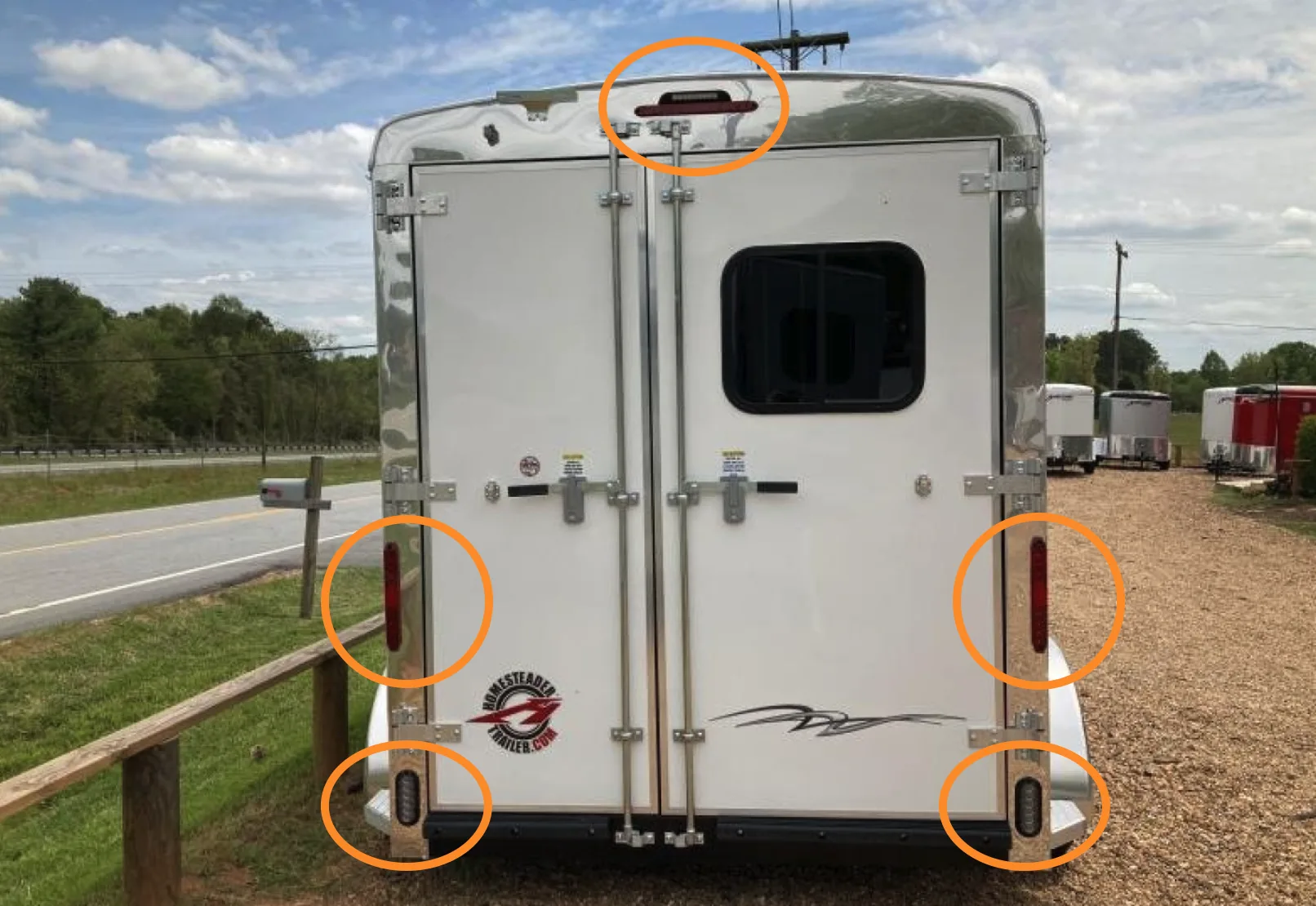
Five types of tail-end lighting serve different purposes on the rear of your trailer.
- Tail lamps are red and always on when headlights are on. These lights mark the dimensions and position of your trailer tail at all times.
- Stop lamps (brake lights) are red, brighter than tail lamps, and illuminate when you brake.
- Turn signals are amber or red, and flash when you activate the turn signal in your vehicle.
- The license plate light is white and illuminates the plate at night. This light isn’t required in states where a rear license plate is not required.
- Back-up lamps are white and illuminate when your vehicle and trailer are in reverse.
2. Marker & clearance lights
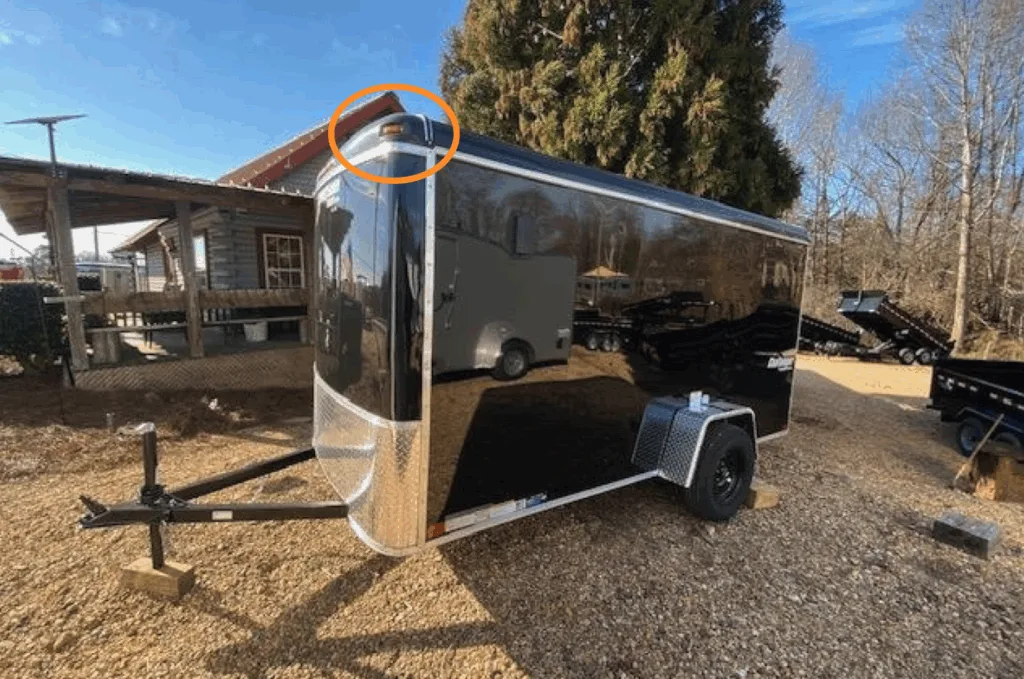
Marker and clearance lights mark the outline of your trailer so other drivers can see the size and shape of your trailer.
- Front clearance lamps are amber and affixed at the widest front corners.
- Rear clearance lamps are red and placed at the widest rear corners.
- Side marker lamps are amber on the front sides and red on the rear sides.
- Intermediate side marker lamps are amber and placed halfway down each side (if trailer is over 30 ft).
Especially in the dark, properly marking the outline of your trailer lowers the risk of other drivers accidentally merging, changing lanes, or approaching too closely to your vehicle.
3. Reflectors
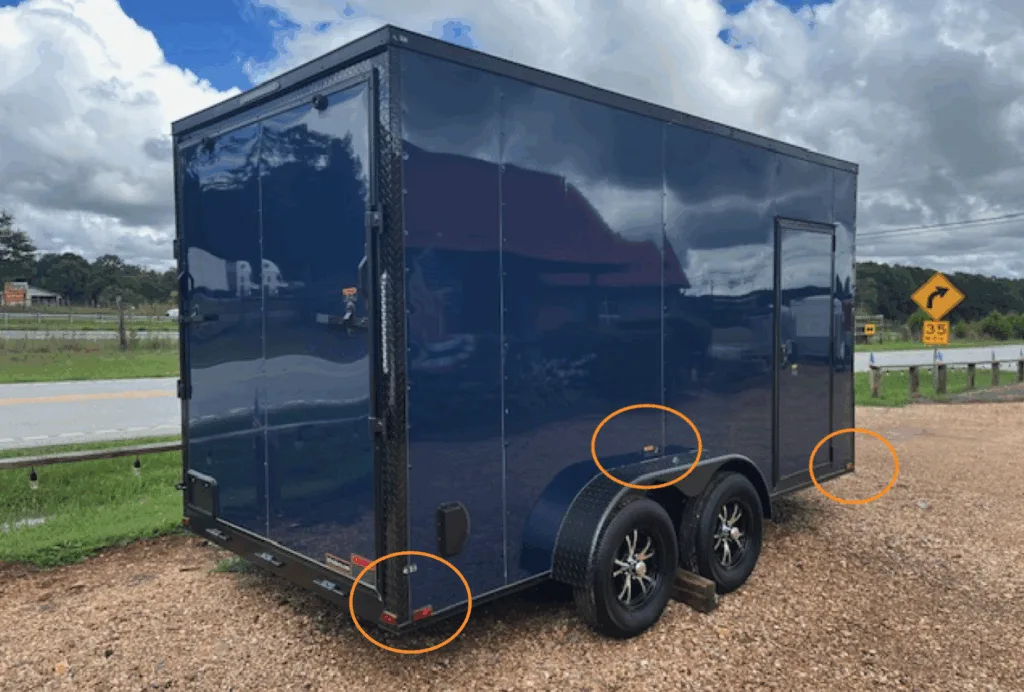
Reflectors serve as a secondary measure of safety without requiring power. Even if your lights aren’t in working order, well-placed reflectors will use the ambient light of street lights or headlights to clearly mark your trailer.
- Rear reflectors are red and placed on each side at the rear.
- Side reflectors are amber near the front and red near the back.
- Intermediate side reflectors are amber and placed at mid-length for trailers longer than 30 ft.
4. Conspicuity treatments
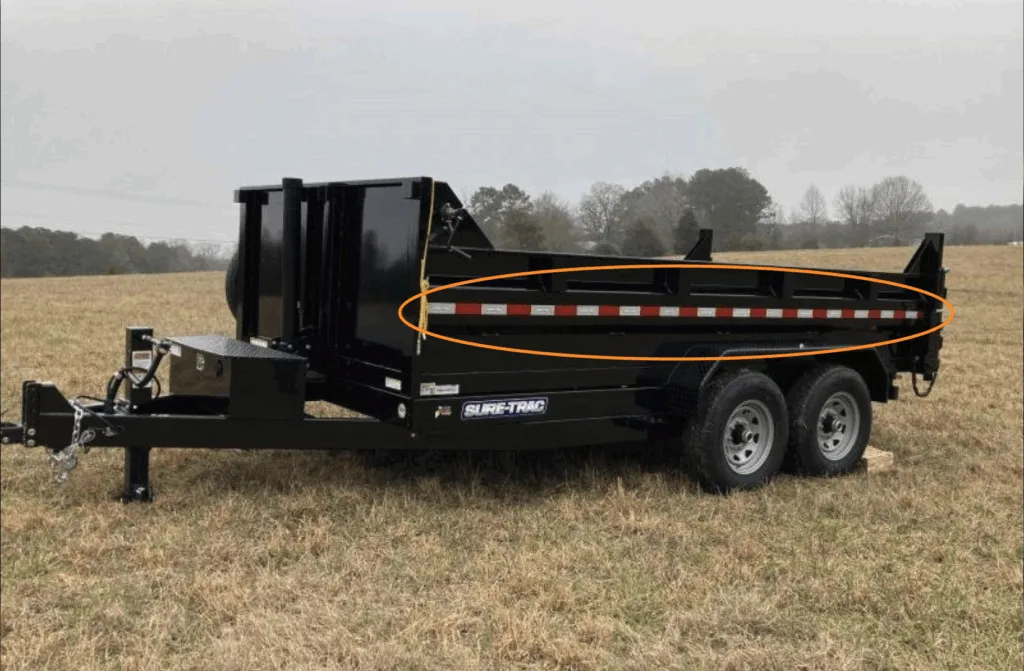
Conspicuity treatments are red-and-white reflective tape or reflectors required on trailers over 10,000 lbs GVWR and wider than 80 inches. Applied along the sides and across the rear, these treatments make a large trailer safely visible at night.
Common compliance mistakes
Staying compliant with trailer lighting is easier than it sounds, as long as you avoid a few common mistakes. Here’s what to avoid:
1. Using the wrong color
The colors of lights and reflectors are standardized by location to avoid miscommunication with other drivers. For example, color is what differentiates between a vehicle braking and backing up. Before you install or replace a light or reflector on your trailer, make sure it’s the required color.
2. Placing in the wrong spot
Where you mark your trailer matters as much as the color of the light. For example, especially if you have a wide trailer or an oversized load, marking the very edge of your trailer is important for communicating clearly with other drivers. If you place a light or reflector too far in from the edge, another driver may miscalculate where your trailer is and risk an accident on the road.
3. Ignoring DOT updates
DOT updates its requirements periodically to ensure the best methods with new technology and safety methods. Keep an eye out for any trailer light updates to make sure your trailers are up to date with the latest requirements.
4. Skipping trailer maintenance
Trailers typically come with the required lighting and reflectors from the manufacturer, but if your trailer is an older model or if you’re buying a used trailer, you’ll want to inspect the lights and reflectors regularly to make sure they’re securely mounted, working properly, and code-compliant.
Inspection checklist before trips
Once you’re familiar with the requirements for your trailer, the best way to stay compliant is to build a quick inspection into your pre-trip routine.
- Walk around your trailer and check that every light and reflector is present, the right color, securely mounted, and working as intended.
- Test your brake lights, turn signals, and hazard flashers with a spotter if possible.
- Make sure your reflective tape is clean, visible, and complete.
Catching a burned-out bulb or missing reflector before you hit the road can keep you and everyone else on the road safer.
Stay road-ready with the right trailer
You don’t have to figure out DOT lighting rules alone. Our team makes sure the trailers we sell are equipped with the right lights and reflectors for safe, legal towing, and we’ll walk you through what to look for when buying new or used.
Whether you’re hauling for work or heading out on the weekend, we’ll help you choose a trailer that keeps you visible, compliant, and road-ready. Please come by or give us a call—we’re happy to answer your questions and help you find exactly what you need. Whether you’re from Asheville, Hendersonville, Spartanburg, or Greenville, SC, we’re located right down the road in Campobello, SC, off of exit 5 on I-26.
You might also like: