


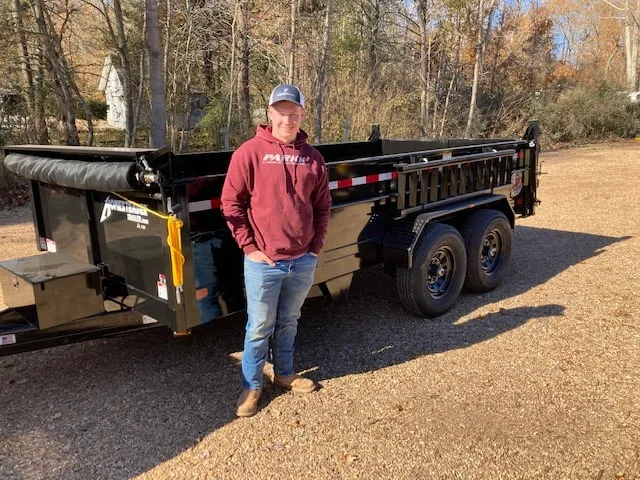
Roofing jobs leave zero room for wasted time, and cleanup can make or break your schedule. Between shingles, underlayment, flashing, nails, and debris, the waste adds up quickly. If you are still relying on manual loading or makeshift solutions, you are spending extra time and labor on something a dump trailer could handle in minutes. Dump trailers are a cost-effective tool for roofing that improve efficiency, cut down on crew fatigue, and keep job sites safer and more professional.
6 reasons to use a dump trailer for roofing
Roofing projects generate a huge amount of waste in a short amount of time, and handling that debris can slow your crew down if you don’t have the right setup. A dump trailer gives you an easier, safer, and more professional way to manage cleanup while also serving as a versatile tool for other hauling needs.
1. Maintain control of your schedule
Without your own dump trailer, you’re at the mercy of a third party’s pickup and drop-off schedule. That kind of dependency creates bottlenecks that ripple through your schedule and annoy customers who want their driveway back, especially during holidays or over weekends.
Owning your own dump trailer gives you complete control. You decide when it arrives, where it sits, and when it leaves. That reliability eliminates a frustrating need for coordination, which keeps projects moving and lets you immediately close up shop when the work’s done.
2. Expand your hauling capability
A dump trailer combines the hauling capacity of a flatbed with the disposal efficiency of a roll-off, giving you one piece of equipment that solves multiple problems on and off the jobsite. That versatility reduces your dependence on rentals, cuts down on wasted trips, and adds long-term value to the multiple demands of your business.
Haul jobsite materials
When materials aren’t delivered to the site, hauling them yourself can turn into multiple trips with an undersized trailer or overloaded truck bed. A dump trailer gives you the capacity to haul shingles, plywood, underlayment, and other heavy materials in a single load. With its lower platform, crews can also load and unload more efficiently, saving time while reducing wear on your crew.
Transport machinery and equipment
For contractors who do more than roofing, the ability to move machinery is a big advantage. A well-sized dump trailer makes it possible to bring machinery like skid steers and excavators along without renting a flatbed or overloading a utility trailer. Dump trailers also enable you to haul your large extension ladders that are hard to haul with your pickup or tool trailer.
Unlike a standard utility trailer, a dump trailer can carry heavy loads of materials, machinery, and equipment, and still serve as your main work trailer between roofing jobs. That versatility makes it an investment that pays off across multiple projects.
Learn more: Contractor Trailer Buyer’s Guide (+ Top Choices)
3. Invest in a company asset
A dump trailer is a long-term asset that adds lasting value to your business. Beyond handling your own tear-off debris, it can pull double duty to generate extra income. You can rent it out to other contractors on days your crew isn’t using it, or offer haul-off services to homeowners as an add-on to your roofing jobs. It also cuts what you spend on rental bins or third-party hauling, keeping more profit in-house. The upfront price is offset by labor savings, faster turnarounds, and the capacity to take on more jobs with the crew and equipment you already have.
4. Reposition to save time and labor on cleanup
If a dumpster is not next to your crew, you waste time picking debris back up at the end of the day. Depending on the work site, you can reposition a dump trailer mid-job and throw debris directly into the trailer. That flexibility helps crews work smarter and reduces fatigue, which means higher productivity and safer worksites.
5. Protect customer property
Reducing the risk of damage keeps homeowners happy and liability risk low. One of the biggest complaints homeowners have about dumpsters and dump piles is the damage they can leave behind. A dump trailer can be positioned carefully to avoid damaging driveways or landscaping.
6. Present a more professional jobsite
A tidy worksite reflects directly on your company. With a dump trailer, debris is ready to be hauled off quickly at the end of each day or as soon as the job is finished. A cleaner property builds trust with homeowners, reinforces your professionalism, and increases the likelihood of referrals and repeat business.
With a dump trailer on site, you save hours of manual labor, protect the property you’re working on, and get more use out of your equipment beyond roofing jobs. It is one of the smartest upgrades you can make for your business if you want to work faster, safer, and with less hassle.
What to look for in a dump trailer
The wrong dump trailer can limit your payload, slow down your crew, or create unnecessary headaches on the jobsite. When buying a dump trailer for roofing work, keep these features in mind:
- Truck compatibility: The best dump trailer is only useful if your truck can tow it. Match the trailer’s GVWR to the towing capacity of your pickup to avoid overloading.
- High GVWR rating: Aim for at least 14,000lbs if you can tow it. Remember to subtract the trailer’s weight from its GVWR to determine your true payload.
- Barn doors: Wide barn doors at the back give you full access to the trailer, which makes unloading debris faster and cleaner.
- Proper sizing: A trailer that is too small forces extra trips, while one that is too large can be difficult to maneuver in residential neighborhoods. If carrying machines, a 14- to 16-foot trailer strikes the right balance between capacity and mobility.
- Tall walls: Trailer wall height directly affects capacity. The taller the walls, the fewer trips and more material per load.
Pro insight from Josh, contractor:
“My trailer is 7’x16’ with 3’ walls. It allows me to haul about 10,000 lbs of material. I purchased a 16’ dump trailer so I could also load equipment like a skid steer or excavator. Smaller trailers don’t always fit the larger machines, but anything over 14’ usually gives you the capacity you need.”
Learn more: Who Makes the Best Dump Trailers? 12 Most Reliable Dump Trailer Brands
Best 4 dump trailers for roofers
Not all dump trailers are created equal, and roofers need trailers that can handle the heavy, uneven loads that come with roofing tear-offs and material hauling. The best models balance durability, payload capacity, and smart features like tall walls and barn doors that make unloading faster and easier. Here are some of the best dump trailer options for roofing contractors.
1. Homesteader 610MB (Deckover w/ Drop-Down Side Wall)

The Homesteader 610MB is the small-crew efficiency play. Its compact footprint is easy to position on tight residential sites, and the drop-down side wall gives broad side access for loading shingles and supplies without fighting a narrow opening.
Homesteader 610MB features:
- GVWR: 9,950 lbs
- Size: 10 ft length × 6 ft width
- Wall height: 24 in (2 ft) with drop-down side wall for side loading and staging
- Door type: Rear barn/spreader gate with auto-latch system
- Features: Stake pockets, tarp kit, LED lighting, enclosed wiring
- Required towing capacity: A properly rated half-ton pickup (payload plus trailer weight reaches about 10,000 lbs)
If you’re looking for an affordable trailer that delivers solid performance without excess bulk, the 610MB is a smart investment. It’s maneuverable, cost-conscious, and well-suited for roofing crews that want reliable hauling capacity without overspending.
2. Hawke 6x12 Low Pro 10K

The Hawke 6×12 LP is built for roofers who need a tough trailer in a smaller footprint. Its compact size makes it easy to maneuver in residential neighborhoods, while the 10,000-lb GVWR and steel construction give it the strength to carry a full load at every job.
Hawke 6×12 LP features:
- GVWR: 10,000 lbs
- Size: 12 ft length × 6 ft width
- Wall height: 24 in (2 ft) steel walls
- Door type: Two-way tailgate for bulk dumping or spreading; slide-in loading ramps stored underneath
- Features: 12-gauge steel floor/walls, hydraulic lift, stake pockets, epoxy primer and polyurethane finish
- Required towing capacity: Half-ton truck at minimum, but a ¾-ton pickup is preferred for towing at max weight
For contractors working in tighter spaces, the 6×12 LP delivers strength without unnecessary bulk. It’s a durable, no-nonsense option that keeps jobs moving smoothly and provides reliable service year after year.
3. Sure-Trac 7x14 12K

This is the “sweet spot” daily driver. With enough capacity to haul heavy shingle loads and even small equipment, it still handles well on residential streets where larger trailers can be a challenge. Built with Sure-Trac’s reputation for durability, this trailer is built for repeated use so crews can dump, reset, and keep working without babying the trailer.
Sure-Trac 7x14 12k features:
- GVWR: 12,000–14,000 lbs (depending on model)
- Size: 14 ft length × 7 ft width
- Wall height: 24–48 in (2–4 ft) depending on side option
Door type: Barn/spreader combo gate; underbody ramps for equipment loading
Features: Telescopic or scissor hoist, stake pockets, integrated tarp kit, structural steel frame, 10-gauge steel floor - Required towing capacity: ¾-ton truck minimum for 12K; full one-ton truck recommended for 14K models
For roofers who want one trailer that does it all, the 7×14 hits the sweet spot. It combines strength, capacity, and usability in a package that keeps projects moving efficiently without overcommitting to an oversized rig.
Learn more: Sure-Trac vs. Big Tex: Which Dump Trailer Is Best for You?
4. Hawke 7x16 High Side 16K
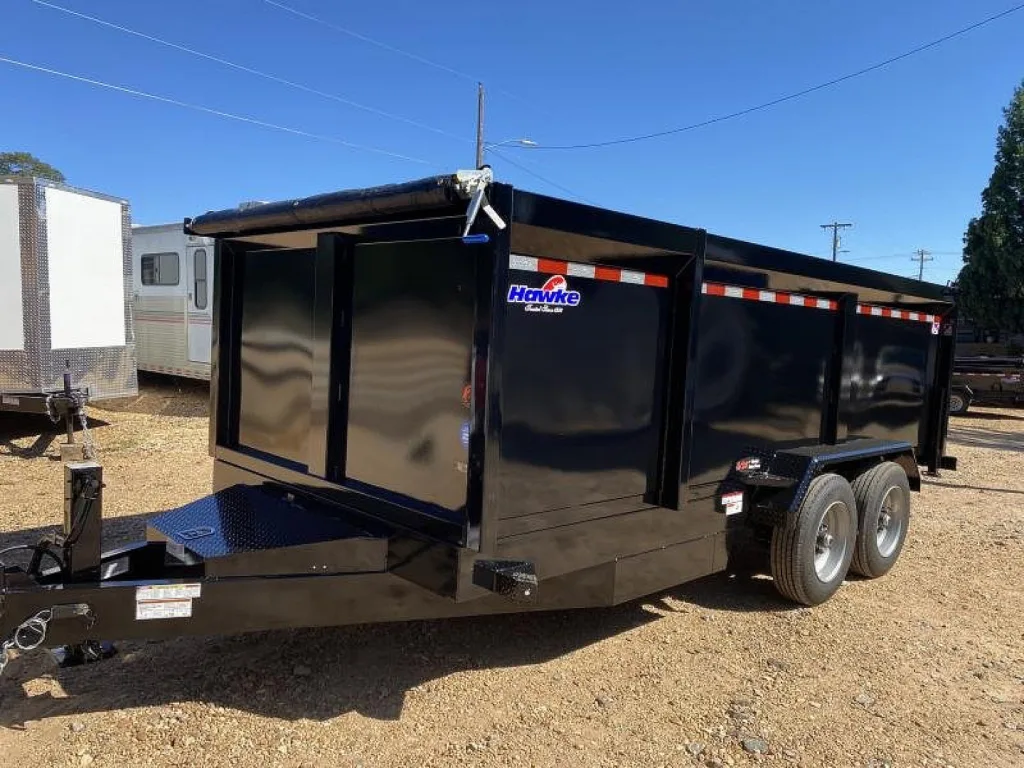
The Hawke 7×16 High Side is built for roofing crews that deal with the biggest jobs and heaviest debris. Its 16,000-lb GVWR and four-foot steel walls give it the capacity to handle bulky tear-offs, mixed loads, and equipment without breaking stride. Fewer dumps, fewer trips, more material per haul.
Hawk 7 x 16 High Side features:
- GVWR: 16,000 lbs
- Size: 16 ft length × 7 ft width
- Wall height: 48 in (4 ft) high steel walls
- Door type: Heavy-duty barn/spreader combo gate; includes ramps for equipment loading
- Features: Dual 8,000-lb axles, hydraulic lift, bumper pull design
- Required towing capacity: One-ton truck or larger, rated for at least 16,000 lbs GVWR
The 7×16 High Side is made for contractors who measure jobs by the ton. With its high walls and heavy-duty build, it keeps debris contained, cuts down on trips, and delivers the capacity needed to finish large projects without interruption.
Comparing top dump trailers for roofing
The right dump trailer gives your roofing business a serious edge by saving labor hours, keeping your sites organized, and helping you haul more in fewer trips. Choosing the type of dump trailer that matches your workflow, whether it is maximizing payload or getting the versatility of tall walls and barn doors, ensures you are investing in a tool that pays for itself project after project.
Reference the comparison chart below to choose the best dump trailer best for your needs:
| Dump trailer | Standout feature | Key features |
| Hawke 7×16 High Side 16K | Highest capacity |
|
| Sure Trac 7×14 14K | Best heavy-duty value |
|
| Homesteader 610MB | Highest ROI |
|
| Hawke 6×12 LP | Best compact option |
|
Learn more: Ultimate Dump Trailer Buyer’s Guide
Renting vs. purchasing a dump trailer for your roofing business
Deciding whether to rent or purchase a dump trailer comes down to frequency of use and control. Renting may be cost-effective for occasional jobs, while ownership gives you long-term savings and flexibility. Understanding the trade-offs helps you choose the option that best supports your roofing business.
Pros and cons of renting a dump trailer
Renting a dump trailer pays off if you only need one occasionally or if your workload is unpredictable. It keeps costs low up front and takes the burden of maintenance off your shoulders. But, there are factors to consider that can add frustration and hidden expenses.
Pros
- Lower upfront cost compared to buying
- Flexible option for one-off or seasonal jobs
- No long-term storage needed
- Repairs and upkeep are handled by the rental company
Cons
- Costs add up quickly if you rent frequently
- Limited availability during peak seasons
- You may not get the size or features you need for roofing work
- Hassle of pickup, cleanup, and return
- Liability for damage, including flat tires from roofing nails
- Extra fees if the trailer is not cleaned out properly
Renting can be useful for small roofing businesses or for one-time projects, but for steady roofing work, the compounding costs and lack of control often outweigh the convenience.
Pros and cons of purchasing a dump trailer
Unlike rentals, which drain money without building equity, purchasing a dump trailer gives you an asset that works for you year after year. With ownership comes independence and long-term savings—but it also brings responsibility.
Pros
- Payments on a purchased trailer are often comparable to regular rental costs
- Creates a company asset that retains resale value
- Independence from rental schedules and fees
- Ability to choose the right size and features for your needs
- Versatility for hauling equipment and materials aside from roofing jobs
Cons
- Higher upfront investment
- Responsibility for maintenance, security, storage, and insurance
For contractors who use a dump trailer regularly, ownership pays off. The trailer quickly becomes a tool that saves labor, cuts costs, and strengthens your business operations, all while holding value as a company asset.
Pro insight from Stephen, roofing contractor:
“If you only have one or two roofing jobs every now and then, you don’t want to be buying a dump trailer for it. But if it’s your living, it’s definitely worth the investment in your business.”
Dump trailers vs. roll-off containers for roofing
Both dump trailers and roll-off containers can handle the heavy debris roofing projects create, but they serve different types of contractors. The right choice comes down to the scale of your jobs, how long they last, and whether you want to manage hauling yourself or outsource it to a container service.
You should consider a dump trailer if:
- Most of your projects are residential or small-to-medium commercial jobs that wrap up in one to three days.
- You want control over your own schedule instead of relying on third-party dumpster drop-offs and pickups.
- You want flexibility to reposition the trailer close to the tear-off area, saving your crew time and reducing fatigue.
- You want to avoid cracked driveways from heavy roll-offs by using a wheeled trailer that spreads out weight.
- You own a heavy-duty pickup truck capable of towing it.
- You want constant availability of a trailer that does more than collect debris, from hauling extension ladders to moving shingles, plywood, or even small machines.
You should consider a roll-off container if:
- Your work is primarily large-scale commercial jobs that take weeks to months to complete.
- You don’t own a vehicle that can haul the right size dump trailer you need.
- Outsourcing hauling is preferable to managing disposal yourself.
- You don’t have the space to store a trailer or don’t want the added responsibility of towing and maintaining one.
- You don’t want the hit to your fuel economy that comes with pulling one between jobs.
Roll-off containers make sense for large commercial projects that run for weeks, but they sacrifice flexibility. For the majority of roofing jobs that last only a few days, a dump trailer is the better fit. It gives you control over scheduling, cuts down on labor, protects client property, and adds hauling versatility that roll-offs can’t match.
Shop durable dump trailers for your roofing business
Dump trailers are one of the smartest investments a roofing contractor can make. They save time, reduce labor, and keep your projects running smoothly. At KFTT, we offer dump trailers built for durability and sized for the demands of roofing jobs. No matter how tough the job, our trailers deliver long-term value project after project.
Here’s what JD Dugger, roofing contractor, had to say about his experience with KFTT:
“I highly recommend these guys for all of your trailer needs. I had a 5-star experience with Michael and the Bruce brothers. The whole team was very helpful and professional. They helped me select the best trailer that met my needs as a roofing contractor. I will go see them when I need another one for sure!”
Please come by or give us a call—we’re happy to answer your questions and help you find exactly what you need. Whether you’re from Asheville, Hendersonville, Spartanburg, or Greenville, SC, we’re located right down the road in Campobello, SC, off of exit 5 on I-26.
You might also like: