


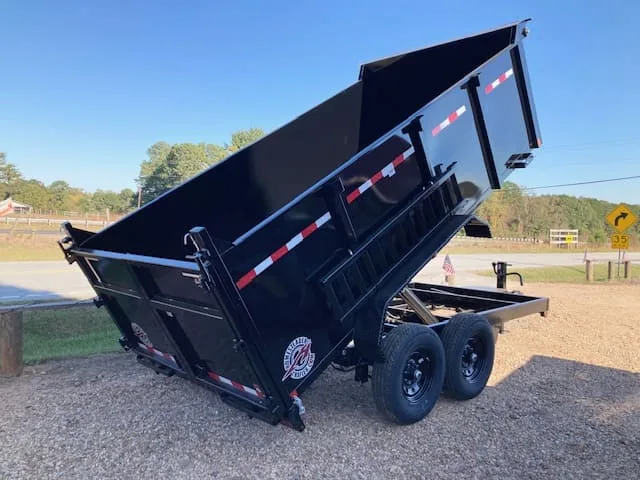
If you’re in the landscaping or construction business, you already know just how essential a good dump trailer can be. Whether you’re moving piles of dirt, building materials, or heavy machinery, dump trailers make loading and unloading a breeze. But not all dump trailers are created equal. While they all serve the same purpose–moving materials and equipment from one site to another–each type is designed to meet specific needs.
Before buying your next dump trailer, it’s important to understand the differences between each type. In this guide, we’ll break down the three most common types, explain how they work, and help you confidently choose the right one for the job.
3 types of dump trailers
When it comes to dump trailers, the right one depends on what you plan to use it for. The three main types–end dump, side dump, and belly dump trailers–each offer unique advantages for certain tasks and materials. Dump trailer types differ in volume and weight capacity, unloading methods and speed, which materials they can hold, and maneuverability. Let’s explore what each has to offer.
End dump trailers
What is an end dump trailer?
An end dump trailer has a dump box that lifts from the front to unload materials from the back. Its high walls offer higher capacity than side dump or belly dump trailers, allowing you to tow more volume and weight per load. Commonly used in the agriculture and construction industries, end dump trailers can haul many different types of materials.
Advantages of end dump trailers
End dump trailers are the most common type because they’re versatile and efficient. Here are a few advantages to using this type of dump trailer:
- Availability: End dump trailers are readily available in various sizes and hoist systems.
- Versatility: End dump trailers can handle a variety of materials, including difficult materials like heavy rocks, demolition debris, roofing shingles, mulch, and semi-liquid materials.
- Capacity: Thanks to their higher walls, end dump trailers can transport heavy equipment and greater amounts of materials.
- Navigating tight spaces: End dump trailers are the best type for unloading when space is limited, making them ideal for confined job sites.
- Quick unloading: They unload in under a minute for maximum efficiency on the job.
Disadvantages of end dump trailers
However, the way end dump trailers function presents challenges for certain applications:
- Stability: Because the dump box tilts backward, unloading can cause some instability, especially on uneven ground.
- Sealing required: When using an end dump trailer to haul semi-liquid materials, you must seal the back tailgate to prevent spillage.
Side dump trailers
What is a side dump trailer?
A side dump trailer tilts to unload materials to the left, right, or either side of the trailer. They can dump before the air ride suspension has deflated, speeding up the unloading process. Side dump trailers are also more stable than end dump trailers, easy to use, and can hold semi-liquids, making them useful for applications like waste disposal, excavating, or building roads.
Advantages of side dump trailers
Side dump trailers are a popular choice, boasting stability and versatility. Here are some key advantages:
- Stability: Unlike end dump trailers, side dumps are much less prone to tipping over, making them safer for use on uneven or soft ground.
- Quick unloading: They unload in as few as 10 seconds, making them ideal for jobs where there’s lots to transport in little time.
- Versatility: Side dumps can handle bulky materials like boulders and are watertight, making them suitable to carry semi-liquid materials.
- Easy to use: These trailers are easy to operate and do not require specialized drivers.
- Windrowing: Side dump trailers are capable of windrowing larger and bulkier materials compared to belly dump trailers.
Disadvantages of side dump trailers
While side dump trailers offer many benefits, they do have some limitations:
- Availability: Side dump trailers are more specialized and less available than end dump trailers.
- Less capacity: With their tub design, side dump trailers typically carry less material than end or belly dump trailers.
- Not suited for tight spaces: Their larger turning radius makes them difficult to maneuver in confined job sites.
- Site restrictions: Job sites in some areas do not allow for side dumping, putting a regional limitation on where these trailers can be used.
Belly dump trailers
What is a belly dump trailer?
Also known as a “bottom dump,” a belly dump trailer opens from the bottom to release materials. The dump gates open like a clam shell to enable windrowing, or dropping materials in a neat line instead of a pile. Belly dump trailers are used to evenly and efficiently spread materials for applications like laying asphalt, graveling roads, or stockpiling.
Advantages of belly dump trailers
Belly dump trailers offer a stable and efficient solution for specific hauling needs. Here are some of their strengths:
- Stability: With no need to raise the bed for unloading, belly dump trailers are highly stable with very little risk of tipping over.
- Windrowing: Their design allows for controlled unloading, making them ideal for spreading materials in even patterns.
- Efficiency: Belly dumps are built for quick, continuous operation, dumping large loads over short distances to save valuable time.
- Weight capacity: They’re lighter than other types of dump trailers, which means they can haul more material per load.
Disadvantages of belly dump trailers
Despite their advantages, belly dump trailers have a few limitations:
- Availability: Belly dump trailers are more specialized and less readily available than end dump trailers.
- Not suited for tight spaces: Belly dump trailers operate best in open spaces, making them difficult to use in confined job sites.
- Less versatile: Belly dumps are not ideal for hauling bulky items that might get stuck in the gates or fine or semi-liquid materials that may spill through the bottom.
- Axle clearance: These trailers require enough clearance for their axles, limiting their use with larger materials or on uneven surfaces.
Which type of dump trailer is best for your industry?
While dump trailers are incredibly versatile, each type performs best in specific industries and situations. The best choice for your business depends on factors like the materials or equipment you’re hauling, their weight, whether you need to stockpile or spread them, and the terrain you’re working on. End dump trailers may be the most common, but they aren’t always the best option for every job. Let’s take a closer look at the uses for end dump, side dump, and belly dump trailers to help you determine which is right for your industry.
End dump trailer uses
Able to handle heavy materials and unload quickly, end dump trailers are widely used in industries where versatility and capacity are key. Here are some common uses for end dump trailers:
- Construction: End dump trailers excel at hauling heavy materials like dirt, gravel, and debris, making them ideal for construction sites where large amounts of material need to be moved efficiently.
- Road building: For road construction projects, end dump trailers are beneficial for transporting and unloading materials like asphalt, gravel, and road base. Their quick unloading time helps maintain the pace of large-scale projects.
- Landscaping: End dump trailers can haul items like debris, soil, gravel, and bulky equipment. Their high walls and large capacity make them perfect for handling large volumes of landscaping materials.
- Aggregate stockpiling: End dump trailers are commonly used to stockpile aggregates like sand or gravel. They unload quickly and can easily handle dense materials, making them perfect for creating large, neat piles.
Side dump trailer uses
Side dump trailers offer fast unloading and excellent stability, making them ideal for jobs in challenging conditions like uneven terrain. Here are some of the most common uses for side dump trailers:
- Road building: Side dump trailers are used for spreading materials like gravel or asphalt. Their lateral unloading design allows for even distribution, which is crucial for road surfaces.
- Waste disposal: Side dump trailers can easily haul and unload large volumes of waste, offering stability for safely unloading hazardous loads on uneven terrain.
- Pit mining and excavating: These trailers are best for mining and excavation projects where materials like rocks, dirt, and minerals need to be removed efficiently. With a sturdy design, they’re well suited for jobs on rugged landscapes.
- Transporting semi-liquids: Side dump trailers feature a watertight tub that allows them to carry semi-liquid materials without leakage, making them useful for tasks like hauling wet soil or slurry.
Belly dump trailer uses
Belly dump trailers are known for their ability to efficiently spread materials in an even pattern while moving. Though less versatile, they’re particularly suited for applications that require controlled material distribution. Here are common uses for belly dump trailers:
- Stockpiling: Belly dump trailers can quickly deposit materials like sand, gravel, or soil in precise areas, making them useful for building stockpiles efficiently.
- Road maintenance: Belly dump trailers are perfect for repairing and maintaining roads. Their ability to evenly distribute materials like gravel or asphalt helps ensure smooth surfaces.
- Graveling roads: Belly dump trailers are ideal for graveling roads since they can spread gravel evenly while driving, covering large areas quickly.
- Windrowing materials: Belly dump trailers can create long, narrow piles of materials by releasing materials in a controlled stream. This makes them perfect for uses where precise layering or grading is required.
Still not quite sure which type of trailer will be the best asset for your business? The Ken Feagin Truck & Trailer team is friendly, knowledgeable, and here to answer your questions. If you’re shopping for a dump trailer in Asheville or Greenville, SC, we’re right down the road in Campobello, SC. Come visit us, or give us a call–we’re always happy to help.
You might also like: