



Tilt trailers may seem similar to trailers with attached or stowed ramps, but their strengths differ when it comes to the type and frequency of work you do. Stowaway or attached ramps are a practical choice for loads of bulky equipment, whereas a tilt trailer might make a better investment if you’re regularly carrying heavy machinery. In this article, we compare the pros and cons of tilt trailers and ramps so you can make an informed decision on which is a better choice for your workload.
What is a tilt trailer?
A tilt trailer is a mechanical flatbed trailer that can tilt its bed toward the ground, creating a ramp for safely loading machinery, equipment, and other heavy cargo. Once loaded, the bed is lowered and locked back into a horizontal position for towing.
Tilt trailers are most commonly used for regular loads of heavy machinery, manufacturing supplies, and cargo loads. Vehicles or machinery use the slope to roll onto the flatbed before being secured for transportation, and forklifts ride up the slope to carry and place cargo onto the flatbed.
Types of tilt trailers
Aside from size and hitch type, tilt trailers differ primarily in their mechanisms and deck types. The different types of mechanisms and decks can make each type of tilt trailer more suitable for certain types of cargo.
Hydraulic vs. sliding tilt trailer
A hydraulic tilt trailer functions using cylinders and a pump, providing a smooth and controlled tilt that’s simple to operate from a 2-button controller.
A sliding tilt trailer uses a lever to manually adjust the degree of tilt and lock your trailer in place, typically offering a gentler slope and lower loading angle that can be better for loading vehicles with low ground clearance.
Full tilt vs. split tilt trailer
A full tilt trailer tilts the entire deck from front to back. This type is most helpful for longer machinery or equipment that requires a longer ramp to be fully loaded.
A split tilt trailer has a stationary front portion and a back section that tilts. The stationary portion can be a convenient storage place for gear and supplies that are used regularly.
Pros and cons of a tilt bed trailer
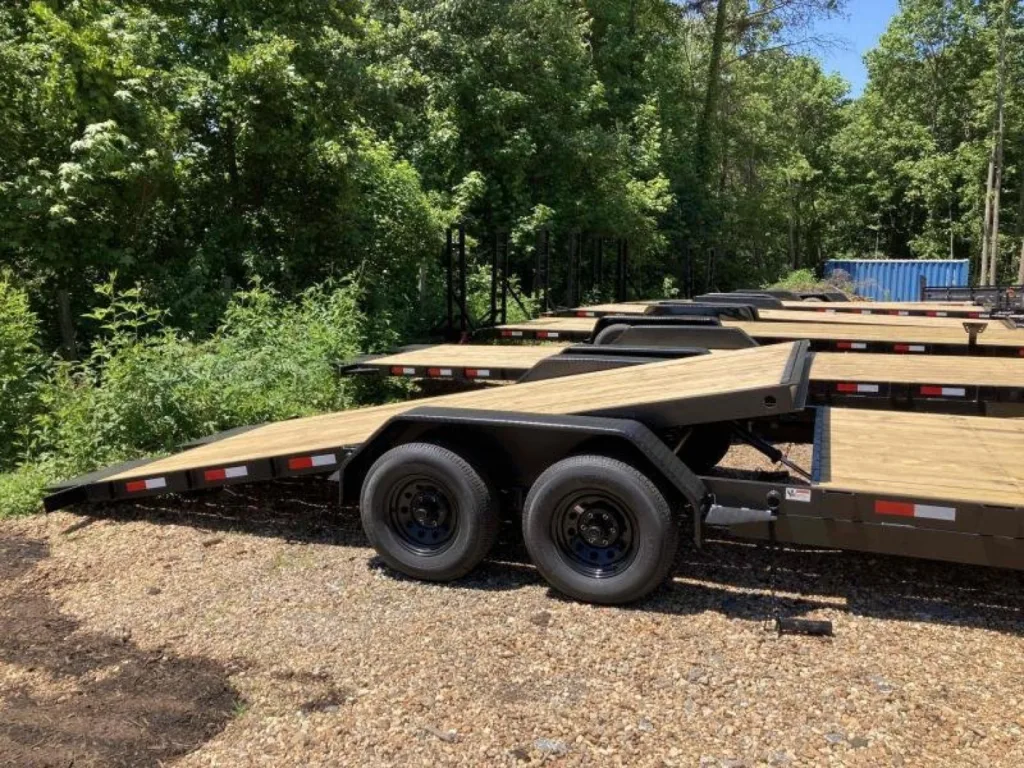
Tilt trailers can be a valuable asset, especially for contractors who regularly load and unload heavy machinery. Let’s walk through the pros and cons of choosing a tilt trailer.
Pros
Tilt bed trailers are a popular choice for those who want an easier loading and unloading experience, a more efficient work process, a lowered risk of accidents, and more deck space.
Easier loading/unloading
The key feature of tilt bed trailers is how much they simplify the process of loading and unloading. Tilt trailers reduce the number of steps required to load a trailer using trailer ramps. Instead of pulling out your ramps, setting up each one, and then carefully aligning your load with the ramps, you can simply roll your load directly onto the bed of the trailer.
More efficient
Because they’re mechanical, tilt bed trailers lower the number of people necessary to load and unload cargo, meaning you’re able to work faster and more independently.
Lower safety risk
Without a tilt bed trailer, you’re forced to put yourself and your product at risk by heavy lifting and unstable loads on trailer ramps. A tilt trailer significantly lowers the risk of product damage and physical injuries by creating a wide, stable surface for loading and unloading.
More deck space
Because of the standard deckover design and ramp extension of tilt bed trailers, the deck space on a tilt bed trailer is larger than standard trailers.
Cons
Before you invest in a tilt bed trailer, keep in mind that they typically require regular maintenance and can carry a higher price tag.
More maintenance
The electrical system and mechanical parts on a tilt trailer will require more regular maintenance than trailer ramps. The electrical system may eventually need repair, and some parts on the trailer will need regular lubrication to perform smoothly.
Initial expense
A tilt trailer is typically a more expensive trailer than a flatbed trailer of comparable size, as well as a higher expense than purchasing trailer ramps to attach to your current flatbed trailer.
What trailers have built-in ramps?
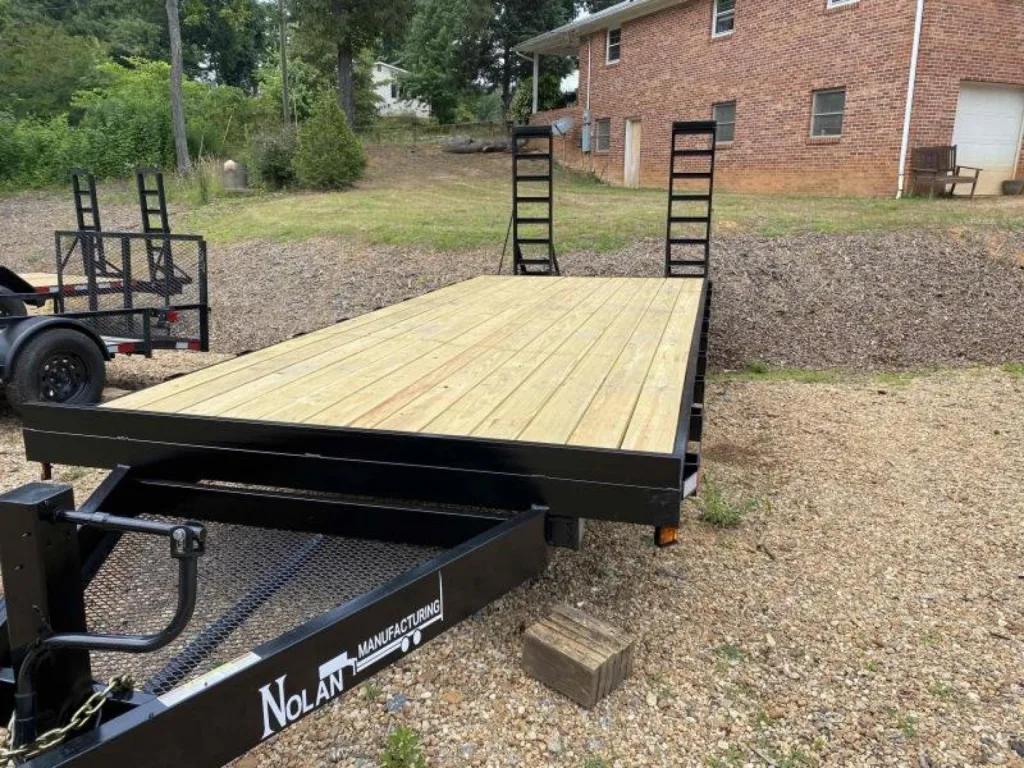
Two of the most common trailer types with attached or stowed ramps are equipment trailers and car haulers. These ramps are either stored under the trailer or folded up vertically when not in use, making them convenient for quick setup and transport. You’ll also find them on many utility and landscape trailers, especially those designed for hauling mowers, ATVs, or smaller machinery.
Ramps can come in different lengths and styles—flip-up, fold-out, or slide-in—depending on the trailer model. When paired with a dovetail deck, ramps help reduce the angle for smoother loading, especially for equipment with low ground clearance.
Types of trailer ramps
Not all ramps are built the same, and understanding the differences can help you choose the right setup for your loading needs. From how they’re stored to how steep they are, ramp type plays a role in convenience, loading angle, and overall usability. Here are the most common ramp styles and configurations found on trailers.
Attached vs. stowed ramps
Attached ramps are fixed to the trailer and typically fold up or swing into place when not in use. These are convenient for frequent loading because there’s nothing to store separately. However, they can add weight to the rear and create wind drag while towing.
Stowed ramps are separate from the deck and slide or store underneath the trailer bed when not in use. This option keeps the trailer more streamlined and reduces rear weight, but it does require pulling the ramps out and setting them up when you load.
Flip-up ramps
Flip-up ramps hinge at the base and stand vertically when not in use. They're common on equipment trailers and are quick to deploy, but can limit visibility or access to the rear when raised.
Fold-out ramps
These ramps fold in the middle, usually in two or more sections, to create a longer overall ramp when unfolded. The extended length means a lower loading angle, which is helpful for wheeled equipment or low-clearance vehicles.
Slide-in ramps
Slide-in ramps store in pockets beneath the trailer deck and pull out when needed. They're a clean, low-profile option that protects the ramps from the elements, though they can be heavier and take more effort to set up.
Pros and cons of trailers with attached or stowed ramps
If you’re considering a standard trailer setup with ramps, it’s worth weighing the practical benefits and trade-offs before you decide. While ramps are widely used across different trailer types, they come with their own set of advantages and limitations depending on how often you load equipment and what you’re hauling. Here’s a closer look at what to expect from a ramp-equipped trailer.
Pros
Trailers with ramps are a practical option for many haulers, especially if you don’t need to load heavy equipment every day. Here’s what makes them a smart fit for certain jobs.
Lower upfront cost
Trailers with ramps tend to cost less than tilt trailers, making them a practical choice if you don’t need to load heavy machinery every day.
Simpler maintenance
Without the hydraulic or electrical components of tilt trailers, ramp setups are generally easier to maintain over time. While ramps do need minimal maintenance and can be damaged, the simplicity of the design is less of a repair risk than tilt bed trailers.
More common in light-to-medium duty trailers
Ramps are widely available across trailer types and sizes, which gives you more flexibility if you're shopping for a used trailer or on a budget.
Cons
Despite their simplicity, ramps can come with a few trade-offs. These drawbacks may not matter for occasional use but can add up quickly with daily work.
Higher loading angle
Compared to a tilt deck, ramps can create a steeper incline, which isn’t ideal for long or low-clearance equipment. The sharper angle increases the chance of bottoming out or scraping during loading.
Higher safety risk
Driving or rolling equipment up narrow or uneven ramps can pose a safety risk if the alignment is off or the surface is wet or unstable. Even a small slip in steering can lead to damaged equipment or injury during loading.
What to know about detached trailer ramps
If you’re using or purchasing a trailer that doesn’t have a tilt bed or built-in ramps—like a standard flatbed or equipment trailer—detached ramps are a practical alternative to bridge the gap. Detached trailer ramps are metal structures that connect to the back of a trailer, creating a sloped surface for loading heavy loads like lawnmowers, ATVs, appliances, and furniture. They’re typically 12–16 inches wide, though some heavy-duty ramps can reach 36 inches.
Safety tips for using detached trailer ramps
Using detachable trailer ramps can be a convenient way to load and unload machinery and cargo, but it comes with its risks. Here are some safety tips:
- Avoid steep ramp angles: loading on an incline or decline or using the incorrect size ramps for your trailer can strain your ramps.
- Set trailer ramps on a level surface: in some cases, the weight of the load on an uneven trailer ramp can cause it to wobble and unhook from the trailer, posing a serious safety risk to you and your cargo.
- Properly attach to your trailer: trailer ramps that are wobbling, damaged, or partially connected risk disconnecting while your trailer is being loaded and unloaded.
A few extra seconds spent securing your ramps can prevent serious damage to your equipment or yourself, so double-check your setup before loading.
Pros and cons of detached trailer ramps
Trailer ramps can be a reliable option for loading and unloading trailers without requiring a significant financial investment. But, trailer ramps are also less efficient, and they may not be well-suited for your type of work. Here is a summary of the factors to consider before choosing trailer ramps:
Pros
- Affordable: Trailer ramps cost far less than tilt trailers.
- Versatile: One set may work with multiple trailers.
- Low maintenance: No mechanical parts to service.
Cons
- Safety risks: Misalignment or detachment can lead to injury or damage.
- Slower to use: Requires setup, removal, and careful positioning.
- Storage required: Ramps need to be stored separately when not in use.
- Weight limits vary: Some ramps can’t handle the full load your trailer can.
Choosing between a tilt trailer and a trailer with ramps? We’re here to help
The choice between tilt trailers and a trailer with ramps comes down to what best suits your work. If you would like more information before making your choice or are ready to explore trailer options, please come by or give us a call—we’re happy to answer your questions and help you find exactly what you need. Whether you’re from Asheville, Hendersonville, Spartanburg, or Greenville, SC, we’re located right down the road in Campobello, SC, off of exit 5 on I-26.
You might also like: