


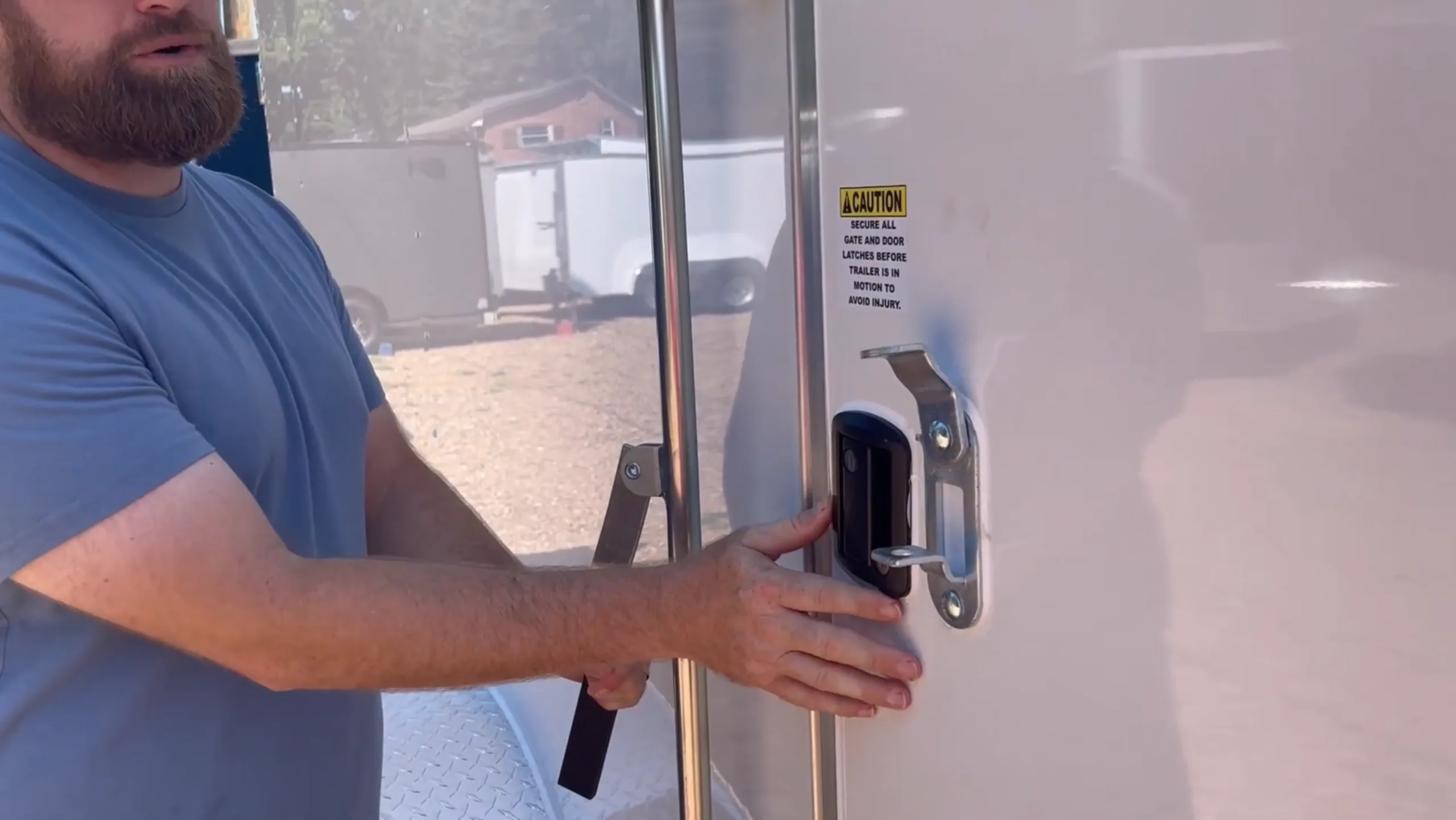
The right accessories turn a basic cargo trailer into a mobile workshop where everything has a place, stays secure, and is ready to use the moment you arrive at the job site.
This guide covers the most useful storage, tie-down, lighting, electrical, and security accessories for contractor trailers—plus how to decide between factory-installed options and aftermarket add-ons.
How much does it cost to outfit a contractor trailer?
The cost of outfitting a contractor trailer depends on the items, materials, and whether you get them professionally installed.
- Accessories: Cost depends on the type and brand of the item. For example, locks and interior lights can cost $50–$150 each, while exterior ladder racks can cost between $80–$400 for basic, adjustable off-the-shelf kits or $400–$1,000+ for heavy duty kits.
- Materials: Aluminum costs more, but saves 30–50% weight and resists corrosion; powder-coated or galvanized steel is less expensive, but heavier.
- Professional install: Professional labor typically runs $75–$125/hour, especially for electrical and cabinetry. A complete contractor build—cabinets, E-track, electrical, lighting, flooring, and security—typically lands between $3,000 and $8,000+, depending on trailer size and customization.
Cost may also be affected by the size of your trailer, adding or lessening cost depending on square footage.
Will adding accessories void my trailer warranty?
Generally, properly installed accessories won’t void a manufacturer’s warranty for defects in materials and workmanship. Problems arise when the add-on damages the trailer or defeats factory systems.
Common warranty stoppers:
- Improper mounting: Drilling into frames or structural members, or installs that weaken the shell.
- Bad wiring: Incorrect 12V/110V work that fries harnesses or creates fire risk.
- Overloading: Adding weight that pushes the trailer past GVWR, straining axles, suspension, and frame.
- Safety deletions: Modifying or removing DOT lighting, reflectors, or required equipment.
How to protect your coverage:
- Use a qualified tech or dealer for electrical and any install that penetrates the structure.
- Document parts and labor with receipts and photos.
- Review your warranty; some makers require written approval for specific mods.
- Use trailer-rated hardware and sealed fasteners to prevent water intrusion.
- Verify final weight against GVWR/axle ratings after upgrades.
Trailer accessories for storage and organization
The most popular contractor trailer accessories are E-track tie-down systems, ladder racks, lockable toolboxes, interior shelving, and cargo straps. Adding the right combination of storage and organization accessories ensures every tool has a place and nothing shifts during transport.
1. Cabinets and wall-mounted shelving
Lockable aluminum or steel cabinets mount directly to trailer walls and keep power tools, fasteners, and supplies secure. Most cabinets feature adjustable shelves, so you can reconfigure the layout as your tool collection grows or changes.
Look for powder-coated finishes, which resist rust and scratches better than bare metal, and locking doors add security when the trailer sits overnight at a job site.
2. Mobile workbenches
Some contractors add fold-down workbenches that create a flat surface for cutting, measuring, or staging materials inside the trailer. A workbench that folds flat against the wall when not in use keeps floor space open for larger equipment like compressors or miter saws.
3. Tongue-mounted storage boxes
Weatherproof boxes that mount on the trailer tongue work well for items you grab frequently: chains, wheel chocks, spare straps, and emergency gear. Tongue boxes keep frequently used items accessible without opening the main trailer doors.
Pro tip: Tongue boxes add weight forward of the axle, which can actually improve trailer stability. Just factor that weight into your tongue weight calculations before loading.
4. Parts bins and small-item organizers
Wall-mounted bins with clear fronts let you sort screws, fittings, connectors, and small parts by size or type. Electricians and plumbers who carry hundreds of small components find clear-front bins especially useful because you can see what's inside at a glance. Also, bins that snap onto a rail system can be rearranged as your inventory changes from job to job.
Ladder, pipe, and equipment racks
Racks free up interior floor space and make long materials easier to load and unload. Whether you carry extension ladders, conduit, or trim boards, the right rack system keeps materials secure and out of the way during transport.
1. Exterior ladder racks
Roof-mounted or side-mounted ladder racks on enclosed trailers keep ladders accessible without taking up interior space. Most racks include tie-down points and are rated for specific load capacities, typically ranging from 200 to 500 pounds depending on the design.
Before loading multiple ladders or heavy extension models, check the rack's weight rating on the manufacturer's label.
2. Interior pipe and conduit racks
Ceiling-mounted or wall-mounted racks hold PVC, copper pipe, electrical conduit, and trim in adjustable cradles. Sorting materials by size speeds up job-site setup and prevents damage during transport. Plumbers and electricians can run pipe racks along the full length of the trailer ceiling to maximize floor space below.
3. Cordless tool and battery charging stations
Wall-mounted charging stations keep cordless tool batteries organized and topped off between jobs. Having fully charged batteries ready to go eliminates downtime when you arrive at the site. Keep in mind charging stations do require trailer power.
Cargo control and tie-down accessories
Proper cargo control prevents load shift, protects equipment, and keeps you safe on the road. Even a short trip can damage unsecured tools or send a compressor sliding into your shelving.
1. E-track and strap track systems
E-track is a steel rail with slots that accept hooks, straps, and cargo bars. You can mount E-track horizontally along walls or vertically near doors. L-track, sometimes called strap track, works similarly and accepts the same accessories.
Common E-track accessories include:
- Ratchet straps with E-track fittings: Secure heavy items directly to the track
- O-rings: Provide quick tie-off points for lighter loads
- Rope hooks: Hold bungee cords or rope for flexible securing
- Shelf brackets: Snap into the track to create adjustable shelving
2. D-rings and recessed floor anchors
Surface-mount D-rings bolt to the trailer floor and provide anchor points for straps. Recessed anchors sit flush with the floor, eliminating trip hazards and making it easier to slide equipment into position. D-rings and recessed anchors are especially useful for securing compressors, generators, and wheeled equipment that might roll during transport.
3. Ratchet straps and load bars
Ratchet straps come in various working load limits, typically ranging from 500 to 3,000 pounds. Adjustable load bars, also called cargo bars, brace between trailer walls to prevent shifting.
You’ll want to keep a few spare straps on hand. Straps wear out over time, and you never want to be short when you're loading up for a job.
4. Wheel chocks and equipment locks
Rubber or aluminum wheel chocks secure wheeled equipment like hand trucks, mowers, and pressure washers. Equipment locks pin wheels or handles in place for added security during transport.
Interior and exterior trailer lighting
Good lighting improves safety, speeds up loading in low-light conditions, and lets you work inside the trailer when natural light is limited.
1. Interior LED dome and strip lighting
12V LED dome lights and strip lights provide bright, even illumination inside the trailer. Motion-activated options turn on when you open the door, while switch-operated lights give you manual control.
LED fixtures draw less power and last longer than incandescent alternatives, which matters if you're running lights off a trailer battery.
2. Exterior work and scene lights
Flood lights or scene lights mounted on the trailer exterior illuminate the job site during early-morning or evening work. Exterior lights typically wire to a trailer battery or shore power connection.
3. DOT-compliant tail, marker, and clearance lights
Tail lights, side markers, and clearance lights are legally required on trailers. LED upgrades improve visibility and durability compared to standard incandescent bulbs.
If you ever submerge your trailer at boat ramps or in wet conditions, look for submersible-rated lights.
Power, outlets, and electrical upgrades
Electrical upgrades turn a basic trailer into a mobile workshop where you can charge batteries, run power tools, and operate lights without relying on the job site's power supply.
1. Shore power inlets and breaker panels
A shore power inlet is an external plug that connects your trailer to a building's electrical supply. A breaker panel inside the trailer distributes that power safely to outlets and lights throughout the interior.
With a shore power setup, you can plug in at a shop or job site and have full power inside the trailer immediately.
2. 110V outlets and interior wiring
Adding standard household outlets inside the trailer lets you run power tools, chargers, and work lights. Wiring for 110V outlets involves running circuits from the breaker panel to outlet boxes mounted on the trailer walls.
Have a qualified technician or dealer handle the wiring to ensure safety and code compliance.
3. Onboard generators and battery banks
Portable or mounted generators provide off-grid power when shore power is not available. Deep-cycle battery banks with inverters offer a quieter alternative for lighter loads like charging stations and LED lights.
Pro tip: Secure generators with floor anchors to prevent theft and reduce vibration damage during transport.
Door, ramp, and floor accessories
Ramp, door, and floor upgrades improve durability and make loading heavy equipment easier and safer over the life of the trailer.
1. Ramp door spring assists and extensions
Spring-assist kits make heavy ramp doors easier to lift, reducing strain on your back and speeding up access. Ramp extensions lower the loading angle, which helps when rolling heavy equipment like floor jacks or welders into the trailer.
2. Step plates
Fold-down steps or step plates help prevent slips when entering and exiting, especially in wet or muddy conditions.
3. Rubber flooring, coin mats, and wall liners
Rubber coin mats and roll-out flooring protect trailer floors from tool drops, spills, and heavy foot traffic. Wall liners in aluminum, FRP (fiberglass reinforced panel), or plywood shield sidewalls from dings and scratches.
Floor and wall protection extends the life of your trailer and makes cleanup easier at the end of the week.
Security and anti-theft accessories for contractor trailers
Contractor trailers are frequent theft targets because of the valuable tools inside. A layered security approach combines physical locks with electronic monitoring for the best protection.
1. Puck locks and door reinforcements
Puck locks, sometimes called hockey-puck locks, resist cutting and prying better than standard padlocks because the shackle is hidden inside the lock body. Hasp reinforcements and locking bars add extra protection to rear doors.
2. Coupler and hitch locks
Coupler locks prevent the trailer from being hitched to another vehicle when parked. Receiver hitch locks secure the connection when the trailer is attached to your truck.
Using both types of locks together provides protection whether the trailer is connected or disconnected.
3. GPS trackers and trailer alarms
Battery-powered or hardwired GPS trackers report your trailer's location in real time through a smartphone app. Motion-activated alarms alert you if the trailer moves unexpectedly.
4. Window bars and lockable vents
Security bars for trailer windows and vents allow airflow without easy entry. Lockable vents let you ventilate the trailer while maintaining security when parked overnight.
How much do accessories add to trailer weight?
Weight varies by material and quantity. A full interior buildout with cabinets, E-track, flooring, and electrical can add 200 to 400 pounds or more to the trailer's empty weight. If you’re trying to limit extra weight, you can choose aluminum and other lightweight materials where possible.
Can you move accessories to a new trailer later?
Yes, most trailer accessories can be transferred to a different trailer. Many bolt-on accessories like E-track, shelving, and racks can be unbolted and reinstalled. Hardwired electrical components take more effort to relocate but can often be reused with some rewiring.
Find the right contractor trailer with Ken Feagin Truck and Trailer
If you're outfitting a new trailer or upgrading an existing one, come on by or give us a call. We've been helping contractors in the Carolinas match trailers to their work for nearly 50 years.
Whether you're looking for an enclosed cargo trailer with a full interior buildout or a utility trailer with basic tie-downs, we can help you find the right setup. We're located in Campobello, SC, off exit 5 on I-26.
You might also like: