


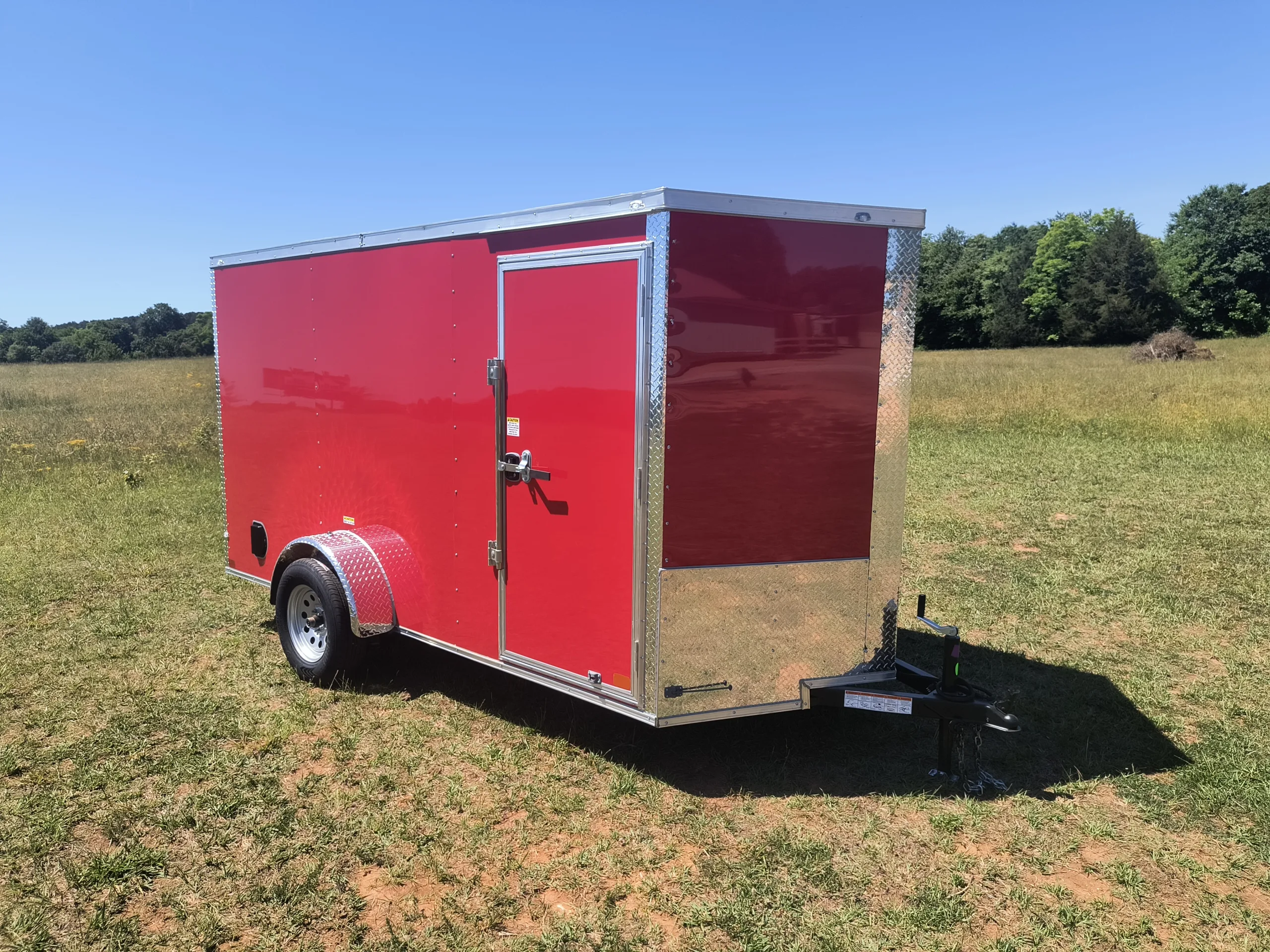
Buying a motorcycle trailer sounds straightforward until you realize how many sizes, configurations, and weight ratings are out there. Get it wrong, and you're stuck with a trailer that doesn't fit your bike, overwhelms your tow vehicle, or takes up more storage space than you have.
Fortunately, choosing the right motorcycle trailer doesn't have to be complicated. Once you understand how you'll use it, how much you need to haul, and what your tow vehicle can safely handle, it becomes much easier to narrow down your options. This guide will walk you through the key considerations so you can choose a trailer that fits your motorcycle and the way you ride.
Not every motorcycle trailer fits every rider
The right trailer depends on how you plan to use it. How many motorcycles you're hauling, what type of bikes you own, and whether you need open or enclosed transport all influence the best choice.
Before comparing specific trailer models, think through your typical use case first.
- Dirt bike rider: Frequent trips to trailheads; lightweight construction, easy loading, and lower cost matter most.
- Cruiser or touring bike owner: Weekend trips and longer hauls; weather protection and gear storage become priorities.
- Track day rider: Hauling multiple motorcycles; capacity, workspace, and security are critical.
- Dealer or repair shop: Transporting customer bikes regularly; essentials include professional-grade tie-downs and multi-bike capacity.
Once you understand how you'll use the trailer, it's much easier to narrow down the right size. For example, a 5x8 or 6x10 trailer is often a practical choice for hauling one standard motorcycle. If you need to transport two large touring bikes, such as a Harley-Davidson or Honda Goldwing, a 7x14 or 7x16 enclosed trailer typically provides the space needed to safely load, stagger, and secure both bikes without crowding.
How many motorcycles will you haul?
Don't just buy for today's needs. If you think you may eventually add another motorcycle, ride with family or friends, or upgrade to a larger bike, it's often worth sizing up now rather than trading trailers later.
If you need one bike now but possibly two later, a 6x12 or 7x12 gives you flexibility. If you’re riding with family or friends regularly, a 7x14 is worth the investment. And if you’re going strictly solo with no plans to change, a 5x8 or 6x10 keeps costs and storage footprint low.
Open vs. enclosed motorcycle trailers
The right choice depends on how you ride, how far you travel, the value of your motorcycle, and whether you need space for gear and equipment.
Open trailers cost less upfront, weigh less, and take up less storage space. They're easier to load from the sides and work well for short trips or bikes that don't require weather protection. On the other hand, open trailers expose your motorcycle to rain, road debris, and theft risk, especially for expensive bikes.
Enclosed trailers provide full weather and road debris protection. They're lockable, which improves security, and offer interior space for riding gear, tools, fuel cans, and spare tires. Enclosed trailers are better suited for long-distance travel and high-value motorcycles. The tradeoffs include higher purchase price, heavier weight, larger storage footprint, and higher tow vehicle requirements.
For many riders, an open trailer is a practical and economical choice. But if you own a high-value motorcycle, travel frequently, or spend nights on the road, the added protection and security of an enclosed trailer often make the extra investment worthwhile.
Key factors when choosing a motorcycle trailer size
Before choosing a trailer size, take a few measurements of your motorcycle. Sport bikes, cruisers, touring bikes, and adventure motorcycles all have different dimensions, and choosing a trailer that's either too small or unnecessarily large can create loading, towing, and storage challenges.
Several measurements determine whether a trailer will fit your setup:
- Deck length: Your motorcycle's wheelbase determines the minimum trailer length. Measure from the front axle to the rear axle, then add clearance for the front wheel chock and rear tie-down space.
- Interior width: Account for handlebar width plus clearance for walking beside the bike during loading and strapping. A 6-foot or 7-foot wide trailer makes loading much easier than a 5-foot wide deck.
- Interior height: For enclosed trailers, factor in the bike sitting on a wheel chock plus vertical clearance for handlebars and any accessories.
Beyond physical dimensions, weight ratings matter just as much. Here's how to think about them:
- GVWR (Gross Vehicle Weight Rating): The maximum allowable loaded weight of the trailer. Your motorcycle weight, gear, tools, and accessories all count toward this limit.
- Payload capacity: GVWR minus the trailer's empty weight. This is the actual weight you can load.
- Tongue weight: Typically 10–15% of total loaded trailer weight. Your hitch and tow vehicle rating covers this number.
Example: A trailer with a 2,990 lb GVWR and an empty weight of 1,200 lb has a payload capacity of 1,790 lb. If your motorcycle weighs 700 lb and your gear adds another 200 lb, you have capacity to spare. You'll still want to confirm your tow vehicle's hitch and tow rating cover the full loaded trailer weight.
Common motorcycle trailer sizes chart
While there's no one-size-fits-all motorcycle trailer, certain sizes work well for most riders. The table below shows the advantages of each common open and enclosed trailer size.
| Trailer size | Open trailer advantages | Enclosed trailer advantages |
| 5x8 | Fits one sport bike or cruiser for occasional trips with minimal gear. | Fits one motorcycle in a compact trailer with weather protection and secure storage. |
| 6x10 | Adds room for riding gear and basic tools alongside one motorcycle. | Adds protected interior space for helmets, riding gear, and basic tools. |
| 6x12 | Adds capacity for a second standard motorcycle or more cargo. | Adds secure, weather-protected room for a second bike, camping gear, or spare tires. |
| 7x12 | Adds space around two motorcycles for riding gear and tools. | Provides wider protected storage for one or two motorcycles during frequent travel. |
| 7x14 | Adds room for more tools, gear, or equipment alongside two motorcycles. | Adds secure space for a workbench and often tandem axles for larger bikes and highway travel. |
| 7x16 | Adds capacity for multiple motorcycles and more equipment. | Adds weather-protected space for cabinets, spare parts, and track-day equipment, with support for heavier loads and long trips. |
Enclosed motorcycle trailer advantages
Using an enclosed motorcycle trailer provides weather protection, long term storage, and security that open trailers can’t offer. Here are the most common sizes:
5x8 enclosed motorcycle trailer
A 5x8 trailer is a practical choice for riders who haul a single motorcycle a few times a year. It's lightweight, easy to tow, and simple to store, making it ideal if you don't need extra room for gear or equipment.
6x10 enclosed motorcycle trailer
A 6x10 trailer offers a little more breathing room for solo riders who want space for helmets, riding gear, and basic tools without stepping up to a significantly larger trailer. It's a versatile option for regular weekend riding.
6x12 enclosed motorcycle trailer
A 6x12 trailer strikes a balance between maneuverability and flexibility. It's a good choice if you may eventually haul a second motorcycle or want additional room for camping gear, spare tires, or other equipment. At this size either single or tandem axles may be featured. The tandem axle provides greater stability and higher weight capacity.
7x12 enclosed motorcycle trailer
A 7x12 provides the added protection and security of an enclosed trailer while comfortably accommodating one or two motorcycles. It's a strong option for riders who travel frequently or simply want to keep their motorcycles and gear protected from the elements.
7x14 enclosed motorcycle trailer
One of the most popular sizes for motorcycle owners, a 7x14 offers room for two motorcycles plus tools, riding gear, or a small workbench. Many trailers in this size feature tandem axles, providing greater stability and higher weight capacity for larger motorcycles and frequent highway travel.
7x16 enclosed motorcycle trailer
For riders who regularly attend races, rallies, or track days, a 7x16 provides generous space for multiple motorcycles, cabinets, spare parts, and other equipment. Most trailers in this size are equipped with tandem axles, making them well suited for heavier loads and long-distance towing.
Browse all motorcycle trailer sizes →
Make sure your vehicle is up to the task
When evaluating a trailer, don't focus on its empty weight. What matters is the total loaded trailer weight—the trailer plus your motorcycle(s), fuel, riding gear, tools, and any other cargo you'll be hauling.
Before committing to a trailer, make sure your tow vehicle can safely handle the load:
- Check your vehicle's tow rating in the owner's manual or door jamb sticker.
- Confirm your hitch class and its tongue weight rating.
- Factor in tongue weight, which is typically 10–15% of total trailer weight.
- Account for the trailer's empty weight plus your motorcycle(s), fuel, gear, tools, and accessories.
Keep in mind that towing requirements vary by trailer size. A midsize SUV or crossover can often pull a smaller open trailer carrying one motorcycle, while larger enclosed trailers may require a half-ton or three-quarter-ton truck. Depending on your trailer's weight and where you live, trailer brakes may also be required.
Features worth paying for
Not every upgrade is worth the extra cost. Focus on the features that improve safety, make loading easier, and help your trailer last longer.
Safety
These features help protect both your motorcycle and everyone on the road.
- Quality loading ramp: A sturdy, non-slip ramp makes loading safer and more stable.
- Reliable tie-down points: Properly rated D-rings keep your motorcycle securely strapped in.
- LED lighting: Brighter, longer-lasting lights improve visibility.
- Trailer brakes: Recommended—and often required—for heavier trailers to improve stopping performance.
Convenience
If you load your motorcycle often, these upgrades can save time and frustration.
- Wheel chocks: Hold the front wheel upright, making it much easier to load and tie down a bike by yourself.
- E-track system: Provides flexible tie-down locations for different motorcycles and cargo.
- Interior lighting and side door (enclosed trailers): Make it easier to access gear and load after dark.
- Spare tire and stabilizer jacks: Helpful additions that can prevent roadside headaches and make loading more stable.
Durability
A well-built trailer costs more upfront but typically requires fewer repairs over time.
- Powder-coated or corrosion-resistant construction
- Quality flooring that resists moisture and wear
- Heavy-duty suspension and axle components
If your budget is limited, prioritize wheel chocks, an E-track system, and quality tie-down points. These upgrades make loading easier, keep your motorcycle more secure, and provide the biggest day-to-day benefit for most riders.
Learn more: Smart Trailer Upgrades Worth the Investment
Find the right motorcycle trailer at Ken Feagin Truck & Trailer
The best motorcycle trailer is one that fits your motorcycle, your tow vehicle, and the way you ride. Taking the time to choose the right trailer now can make every trip safer, easier, and more enjoyable.
At Ken Feagin Truck & Trailer, we've been helping riders and trailer owners make confident buying decisions for nearly 50 years. Whether you're looking for a lightweight open trailer for weekend trail rides or an enclosed trailer with room for multiple motorcycles and gear, we'll help you compare your options and find the trailer that's the best fit—not just the one with the most features.
Visit us in Campobello, SC, just off Exit 5 on I-26, or browse our inventory online to explore our selection of motorcycle trailers from trusted manufacturers like Sure-Trac, Homesteader, and E-Z Hauler.
Shop our selection of motorcycle trailers →
You may also like: